
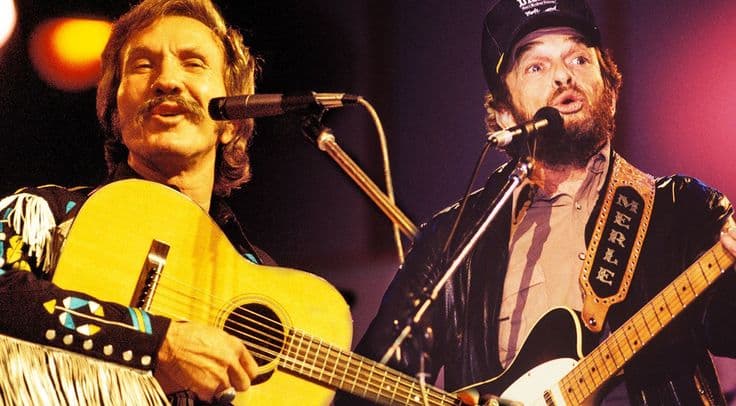
In a City Built on Competition, Merle Haggard and Marty Robbins Chose Respect Instead of Rivalry
Country music history is filled with feuds, fragile egos, and battles for recognition, but the relationship between Merle Haggard and Marty Robbins stood apart because it was built not on competition, but on mutual admiration. At a time when Nashville rewarded strong personalities and fiercely guarded legacies, these two giants of American music recognized something deeper in one another: authenticity. Their bond was not loud or heavily publicized. It revealed itself quietly through interviews, performances, stories from fellow musicians, and above all, through the reverence Haggard consistently showed toward Robbins throughout his life.
By the time their paths fully crossed within the country music world, both men had already reshaped the genre in very different ways. Marty Robbins, propelled by landmark recordings such as “El Paso,” “Big Iron,” and “Don’t Worry,” had become one of country music’s great storytellers. His groundbreaking 1959 album Gunfighter Ballads and Trail Songs expanded what country music could sound like, blending Western imagery, cinematic songwriting, and emotional drama into something timeless. Robbins possessed extraordinary versatility, moving effortlessly between cowboy ballads, country pop, rockabilly, and even Hawaiian influences without losing his artistic identity.
Merle Haggard, meanwhile, emerged from far harsher circumstances. Rising from poverty, prison, and personal instability, he became the defining voice of the Bakersfield Sound through albums like Mama Tried, Branded Man, and Okie from Muskogee. Where Robbins often carried the polished mystique of a Western troubadour, Haggard sang with the scarred realism of someone who had lived every word. Yet despite their differences in style and temperament, Haggard viewed Robbins with enormous respect, often speaking about him not merely as a successful artist, but as one of the finest singers country music ever produced.
That admiration mattered because Merle Haggard was not easily impressed. Few artists understood country music more deeply than Haggard, and his praise carried unusual weight among musicians. He recognized Robbins’ technical brilliance as a vocalist, particularly the effortless smoothness of his phrasing and the emotional precision in his storytelling. Haggard frequently acknowledged that Robbins possessed a level of vocal control many singers could never replicate. In an industry where praise is often exaggerated for politeness, Haggard’s respect felt sincere and earned.
Part of their connection also came from shared artistic values. Both men understood country music as storytelling first and foremost. Neither approached songs as disposable entertainment. They treated them as emotional documents rooted in ordinary human experience. Robbins told stories through cinematic imagery and melodic elegance, while Haggard grounded his work in hard truths about labor, regret, loneliness, and redemption. Different paths led them toward the same artistic principle: honesty.
There was also an unspoken honor culture surrounding older generations of country musicians that shaped relationships like theirs. Nashville during the mid-20th century could be intensely competitive, but among genuine craftsmen, there remained a deep code of respect for artistry itself. Merle Haggard admired artists who paid their dues, wrote meaningful songs, and carried themselves with authenticity. Marty Robbins embodied those qualities completely. Despite his enormous success, Robbins never projected arrogance. He remained approachable, disciplined, and deeply committed to the music rather than celebrity mythology.
One of the most revealing aspects of Haggard’s admiration was how often he referenced Robbins when discussing vocal excellence. Haggard himself possessed one of the most emotionally expressive voices in country history, yet he openly acknowledged Robbins’ gifts with almost boyish reverence. That humility reveals something important about both men. Truly great artists are often the first to recognize greatness in others because they understand how difficult true mastery actually is.
After Robbins’ death in 1982, the emotional weight of that loss lingered within the country music community. Haggard, like many others, understood that country music had lost more than a successful performer. It had lost one of its purest stylists, one of the last artists capable of making storytelling feel mythic without sacrificing emotional sincerity. In many ways, Robbins represented a bridge between traditional Western romanticism and modern country songwriting. His absence left a creative void difficult to replace.
Looking back now, the relationship between Merle Haggard and Marty Robbins feels increasingly significant because it reminds listeners of a different kind of Nashville, one where artistic respect still carried more weight than branding strategies or public image management. Their connection reflected a generation of musicians who valued craft above spectacle and who understood that honoring another artist’s greatness did not diminish their own.
It strengthened it.
And perhaps that is why the bond between Haggard and Robbins still feels so meaningful today. Beneath the chart success, the fame, and the mythology stood two men who recognized something timeless in each other: the rare dignity of artists who sang honestly because they did not know any other way to live.
 Music Legend