
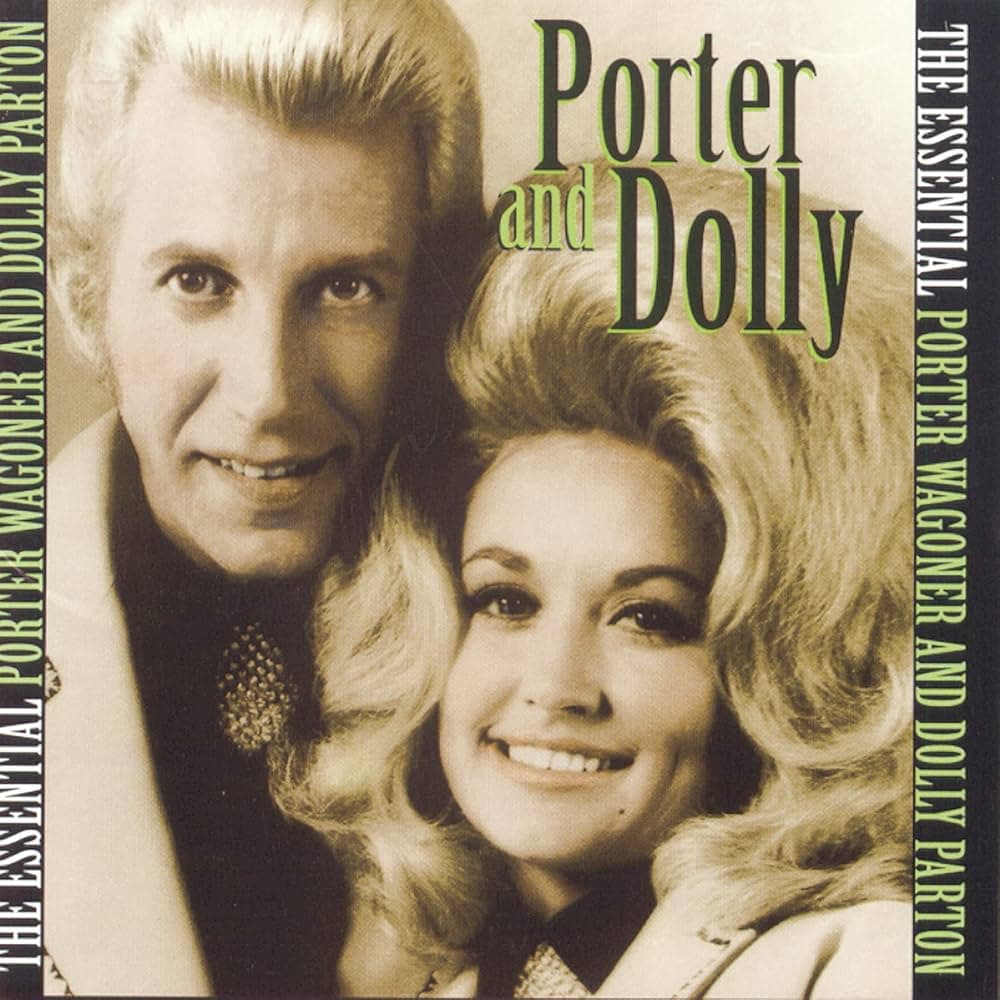
A Song That Spoke the Language of the Heart
There are songs that don’t just tell a story — they become one. “Please Don’t Stop Loving Me”, recorded by Porter Wagoner & Dolly Parton, is one of those rare duets where every note feels like a quiet promise, every harmony like a shared heartbeat. Released in 1974 as part of their album Porter ‘n’ Dolly, the song climbed to No. 1 on the Billboard Hot Country Singles chart, marking one of the most memorable peaks in the celebrated partnership between the two country icons. It was their only duet to reach the top of the charts, yet it encapsulates everything that made their collaboration timeless — honesty, tenderness, and emotional truth wrapped in simplicity.
From its opening lines, “Please don’t stop loving me, you were born to love me,” the song pulls you into a world that feels both personal and universal. It’s not the plea of a fleeting romance; it’s the quiet voice of someone who’s known love deeply and fears its absence like losing air. The melody moves gently, neither rushed nor restrained, as though it understands the fragile nature of what it’s describing. There’s an intimacy in the phrasing — a sense that the singers are not merely performing, but speaking to each other, heart to heart, across the microphone.
Porter Wagoner, by then a towering figure in country music, and Dolly Parton, whose star was rapidly rising, had already built a musical partnership that transcended simple harmony. Between 1967 and 1974, they recorded a string of duet albums that explored every shade of human emotion — longing, devotion, regret, reconciliation. But “Please Don’t Stop Loving Me” stands apart. It captures the moment when two voices, so different in tone and texture, found their purest blend. Porter’s steady, resonant baritone anchors the song in emotional gravity, while Dolly’s crystalline soprano soars above, carrying both vulnerability and strength. Together, they sound like opposites that were always meant to meet in the middle.
The production of Porter ‘n’ Dolly, released under RCA Victor, reflected the shift in country music during the mid-1970s — moving from its raw honky-tonk roots toward a smoother, more polished sound. Yet beneath the gentle strings and clean arrangement, there is an unmistakable ache. The song’s simplicity is deceptive; it’s not just a love song, but a meditation on connection itself — on how fragile and precious love becomes when you realize how easily it can fade.
What gives “Please Don’t Stop Loving Me” its lasting power is its emotional sincerity. There’s no grand drama here, no fiery confrontation or heartbreak. Instead, the song captures that quiet moment of fear and gratitude that lives inside every enduring love — the awareness that affection, once given, is both a gift and a responsibility. It’s a song that speaks to anyone who has ever looked across a lifetime at someone they love and thought, silently, “Please, stay.”
As time passed, the duet took on an even deeper resonance. When Porter and Dolly eventually went their separate ways — both professionally and personally — songs like this became echoes of an era when their musical bond defined what a country duet could be. And though life carried them down different roads, the tenderness of “Please Don’t Stop Loving Me” endures as a reminder of the human connection they shared — not just as singers, but as two souls who understood how to turn emotion into music.
Listening to it today feels like stepping back into a world where songs still had patience — where emotion unfolded softly, without rush, and where two voices could tell an entire love story in three and a half minutes. The lyrics, the melody, and the harmony all rest on a single truth: love, once found, is worth holding onto with both hands.
“Please Don’t Stop Loving Me” remains a defining moment in country music’s golden age — a song that captures the delicate balance between strength and vulnerability, devotion and longing. It’s a melody that drifts gently through time, reminding listeners that even in a changing world, the heart’s deepest desires remain the same.
And as their voices fade together in that final refrain, you can still hear the unspoken plea — not just between two singers, but between two hearts that, for a little while, beat in perfect harmony.