
A quiet surrender to heartbreak, where leaving becomes the only dignity left when love no longer answers
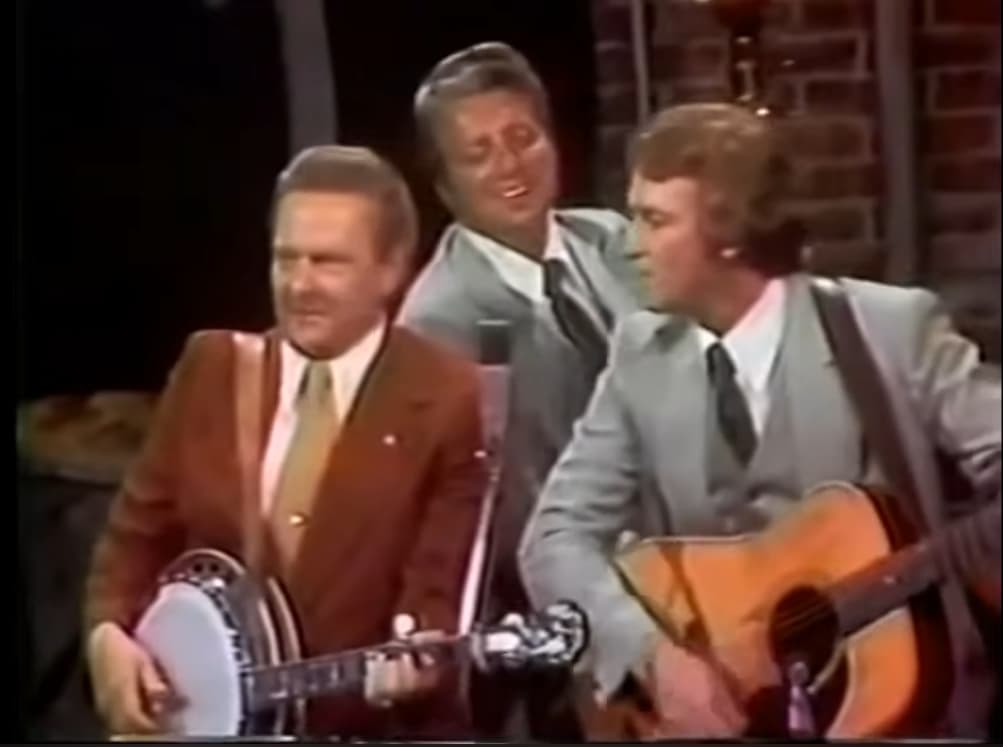
There are songs that speak loudly of heartbreak, and then there are those that retreat into silence, carrying their sorrow with a kind of worn-out grace. I Just Think I’ll Go Away, performed by Ralph Stanley and Keith Whitley, belongs firmly to the latter. It is not a chart-topping anthem in the traditional sense—indeed, it did not enter Billboard rankings upon release—but its importance lies elsewhere, in the deep currents of bluegrass tradition and emotional truth that cannot be measured by numbers alone.
The song emerged from the early years of Keith Whitley, long before he became a household name in country music. During the 1970s, Whitley was a member of Ralph Stanley’s band, the Clinch Mountain Boys, where he honed his craft within the raw, unpolished world of Appalachian bluegrass. It was here that his voice—already carrying that unmistakable ache—found its first true home. Under Stanley’s guidance, Whitley absorbed not only the technical discipline of the genre, but also its emotional language: one of restraint, humility, and quiet storytelling.
“I Just Think I’ll Go Away” reflects that apprenticeship. The song itself is built on a simple but devastating premise: when love has faded and words no longer reach the heart, the only remaining act of self-respect is to leave—quietly, without confrontation, without spectacle. There is no anger here, no dramatic farewell. Just a soft decision, almost whispered, as if even speaking it aloud might break something fragile.
What makes this recording so enduring is the interplay between Ralph Stanley’s high, lonesome tenor and Keith Whitley’s smoother, deeply emotive delivery. Stanley’s voice, rooted in the oldest traditions of mountain music, carries a kind of spiritual weight—timeless, unwavering. Whitley, on the other hand, brings a gentler sorrow, a sense of vulnerability that feels almost too personal to witness. Together, they create a dialogue that feels less like a duet and more like an echo across generations—one voice weathered by time, the other still discovering its depths.
Musically, the arrangement is unmistakably bluegrass: sparse, acoustic, and unembellished. The banjo rolls steadily beneath the melody, the fiddle weaves in and out like a memory that refuses to settle, and the guitar keeps time with quiet insistence. There is no room here for excess. Every note serves the story, and every pause carries meaning. It is in these spaces—between the chords, between the lines—that the song truly breathes.
The absence of chart success, in this case, feels almost appropriate. Songs like this were never meant for wide commercial appeal. They belong to front porches, to late evenings, to moments when reflection comes uninvited. They speak to experiences that are deeply personal, yet universally understood—the slow realization that something once cherished has slipped beyond reach.
For Keith Whitley, this recording stands as an early testament to the emotional depth he would later bring to songs like “Don’t Close Your Eyes.” Even then, there was a sincerity in his voice that could not be taught—only lived. And for Ralph Stanley, it reaffirms his role as a guardian of a musical tradition that values honesty over polish, feeling over form.
Listening to “I Just Think I’ll Go Away” today is like opening an old letter never sent. The words are simple, but the weight behind them is immense. It invites the listener not to react, but to reflect—to sit with the quiet understanding that sometimes, the most profound decisions are the ones made without a sound.
In the end, this song does not seek to resolve its sorrow. It simply acknowledges it, with dignity and grace. And perhaps that is why it lingers—because it understands that not all endings are meant to be explained. Some are only meant to be felt, and then gently carried forward, like a melody that fades but never truly disappears.