
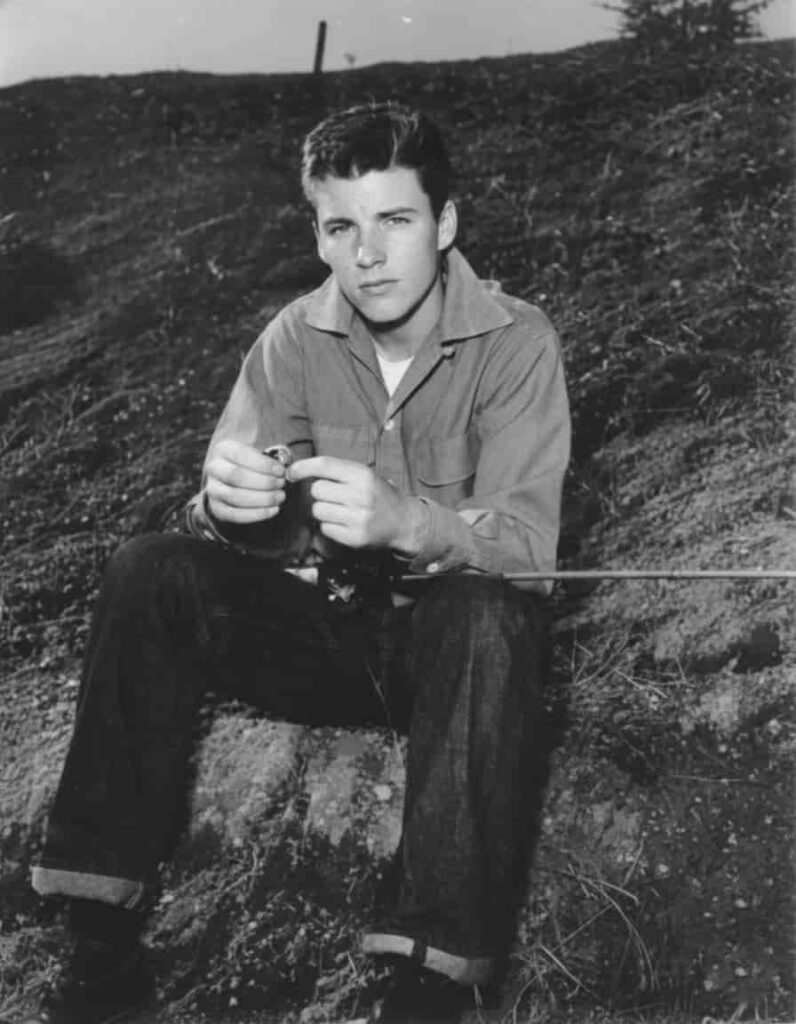
A Portrait of Youthful Heartbreak and Early Rock ’n’ Roll Innocence
When “Stood Up” burst onto the airwaves in 1957, it captured a moment when rock and roll was still young, earnest, and emotionally direct. Performed by Ricky Nelson, the song arrived at a crossroads in popular music, where teenage vulnerability met professional musicianship, and where heartbreak could be expressed with a gentle voice rather than bravado. Released as a single in 1957, “Stood Up” quickly became one of Nelson’s most enduring early hits, reaching No. 2 on the Billboard pop chart, No. 4 on the R&B chart, No. 8 on the country chart, and No. 27 on the UK Singles Chart. Its popularity extended well beyond its initial run, earning a place at No. 16 on Billboard magazine’s Top 50 Songs of 1958, a testament to its lasting appeal.
At first listen, “Stood Up” seems deceptively simple. Written by Dub Dickerson and Erma Herrold, the lyrics revolve around a universal teenage experience: waiting, hoping, and realizing that love has quietly slipped away. “Well, I’ve been waitin’ ever since eight,” Nelson sings, his voice calm but wounded. There is no anger here, no dramatic confrontation. Instead, the song lingers in that lonely space where disappointment settles in slowly, almost politely. This restraint is precisely what gives the song its emotional power.
Ricky Nelson, still in his teens at the time, brought a natural sincerity to the performance. Known to millions from television as part of The Adventures of Ozzie and Harriet, Nelson could easily have been dismissed as a manufactured star. Yet records like “Stood Up” proved otherwise. His delivery feels unforced, conversational, and deeply human. He does not oversell the pain. He simply states it, trusting the listener to recognize the feeling from personal experience.
Musically, “Stood Up” stands out for its elegant simplicity and exceptional guitar work. James Burton and Joe Maphis, two giants of American guitar, played on the track, with Joe Maphis delivering the song’s distinctive guitar solo. The playing is clean, melodic, and restrained, reinforcing the song’s emotional tone rather than overpowering it. This balance between youthful vocals and seasoned musicianship became a hallmark of Ricky Nelson’s early recordings and helped bridge the gap between country, rhythm and blues, and the emerging rock and roll sound.
The song’s success across multiple charts is especially telling. Its strong showing on the pop, R&B, and country charts reflects a rare crossover appeal, suggesting that “Stood Up” spoke to listeners of many backgrounds. In an era before carefully segmented radio formats, such reach indicated something timeless at work. The song was not tied to a single trend. It addressed a shared emotional reality.
Beyond its chart performance, “Stood Up” represents a broader moment in American popular culture. The late 1950s were a time when youth voices were beginning to shape the musical conversation, yet innocence still lingered. Heartbreak was portrayed not as bitterness but as quiet resignation. The narrator accepts being “stood up” not with rage, but with a sad understanding that love is unpredictable and often unfair.
Today, listening to “Stood Up” feels like opening a faded photograph. The sound is clean, the emotions understated, and the sentiment painfully familiar. It reminds us of a time when a three minute song could say everything that needed to be said about longing, disappointment, and growing up. For Ricky Nelson, it was one of the early recordings that defined his place in music history. For listeners, it remains a gentle reminder that some feelings never change, no matter how much the world does.
 Music Legend