
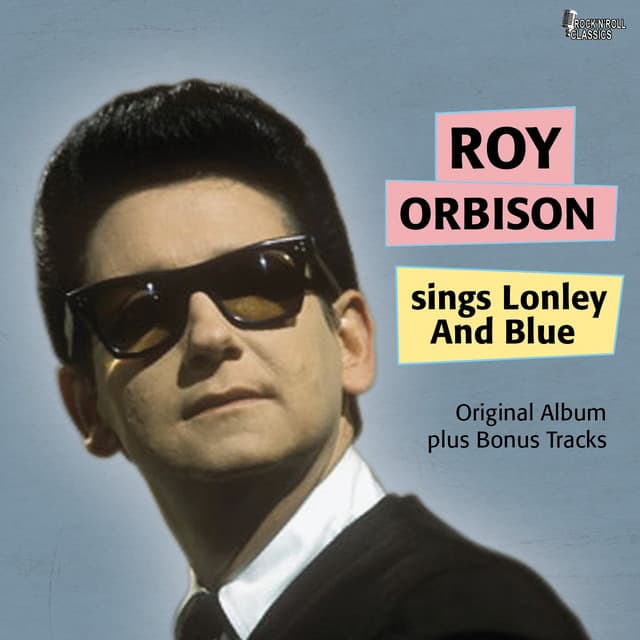
ROY ORBISON – “ONLY THE LONELY”: THE RECORD THAT GAVE A LONELY VOICE TO EVERY HEARTBREAK
In 1960, Roy Orbison stood at the beginning of the transformation that would make him one of the most distinctive voices in popular music. On March 25, 1960, at RCA Victor Studio B in Nashville, Orbison recorded “Only the Lonely (Know the Way I Feel),” a song he had written with Joe Melson and produced by Fred Foster for Monument Records. Released on May 9, 1960, it became Orbison’s first major international breakthrough. The record climbed to No. 2 on the Billboard Hot 100, No. 14 on the R&B chart, and then went all the way to No. 1 in Britain, where it remained at the top for two weeks. It was a remarkable achievement for a singer whose earlier recordings had not yet revealed the extraordinary sound that was about to become his trademark.
The story behind the song is almost as important as the recording itself. Orbison and Melson had been working together on songs, but they were searching for something that would give Roy a new identity. “Only the Lonely” became that breakthrough. Rather than following the straightforward structure of the rock and roll records dominating radio, the song moved toward something far more dramatic. The arrangement gradually expands around Orbison’s voice, with The Anita Kerr Singers, piano, guitars, bass, drums and strings creating a sound that seems to rise underneath him. The musicians included Nashville session greats such as Floyd Cramer on piano, Bob Moore on bass, Hank Garland and Harold Bradley on guitars, and Buddy Harman on drums. Engineer Bill Porter helped shape the recording with an unusual approach that placed the backing vocals prominently in the mix before allowing the rhythm section to sit further back.
Then came that voice. Orbison had always possessed remarkable vocal ability, but “Only the Lonely” revealed a different dimension. The song begins with restraint before suddenly reaching into a high, almost startling vocal register. It was not the swaggering confidence of early rock and roll. It was vulnerability transformed into power. Orbison sounded as though he were singing from inside the loneliness rather than merely describing it. That was the beginning of the style that would later define classics such as “Crying,” “In Dreams,” “Running Scared,” and “It’s Over.” Joe Melson’s own account of their partnership describes “Only the Lonely” as the record that launched Orbison’s international stardom and established the dramatic vocal approach he would carry throughout the rest of his career.
There is also a fascinating story involving Elvis Presley hidden behind the record. Before Orbison and Melson recorded the song, Orbison had hoped to sell some of their material to Elvis, who was then one of the biggest young stars in America. Orbison was passing through Memphis and tried to see him, but it was early in the morning and Elvis did not want to meet at that hour. Orbison therefore continued with the song himself. It is one of those small turns in music history that could easily have changed everything. Had Elvis recorded “Only the Lonely,” the song might have become part of another legend. Instead, Orbison kept it, and in doing so found the musical identity that had been waiting for him.
The commercial response was extraordinary. In America, “Only the Lonely” reached No. 2 on the Billboard Hot 100, held from the top spot by Brenda Lee’s “I’m Sorry.” In Britain, however, Orbison reached the summit. The song hit No. 1 on October 20, 1960, remaining there for two weeks and spending a total of 24 weeks on the UK singles chart. It became the longest charting single of Orbison’s career. The success also proved that a song built around loneliness, vulnerability and an almost operatic vocal approach could compete with the energetic rock and roll records of the day.
What makes the recording even more remarkable is that Orbison was not simply singing about loneliness as a temporary sadness. His voice turns the word into an entire emotional landscape. The song speaks directly to people who have loved and lost, but it does so without explaining their pain away. There is no easy resolution. The narrator is simply asking those who have experienced the same emptiness to understand him. That direct appeal is part of what made the song so universal. It does not require the listener to know anything about Roy Orbison’s private life. The feeling is enough.
And the song’s influence continued long after its original chart run. The 1960 recording of “Only the Lonely” was inducted into the Grammy Hall of Fame in 1999, recognizing its lasting importance to recorded music. By then, Orbison’s voice had become instantly recognizable, and the dramatic style first heard so clearly on this record had influenced generations of singers.
Listening to “Only the Lonely (Know the Way I Feel)” today, it is easy to forget how unusual it must have sounded in 1960. Roy Orbison was not trying to shout louder than rock and roll. He went somewhere more vulnerable. He took heartbreak, gave it an enormous melody, surrounded it with Nashville musicians and soaring harmonies, and then placed his extraordinary voice right in the center. That was the moment Roy Orbison truly found himself as an artist. The man in the dark glasses had not yet become the legendary figure the world would remember, but the voice was already there, reaching upward from the loneliness and refusing to come back down.