
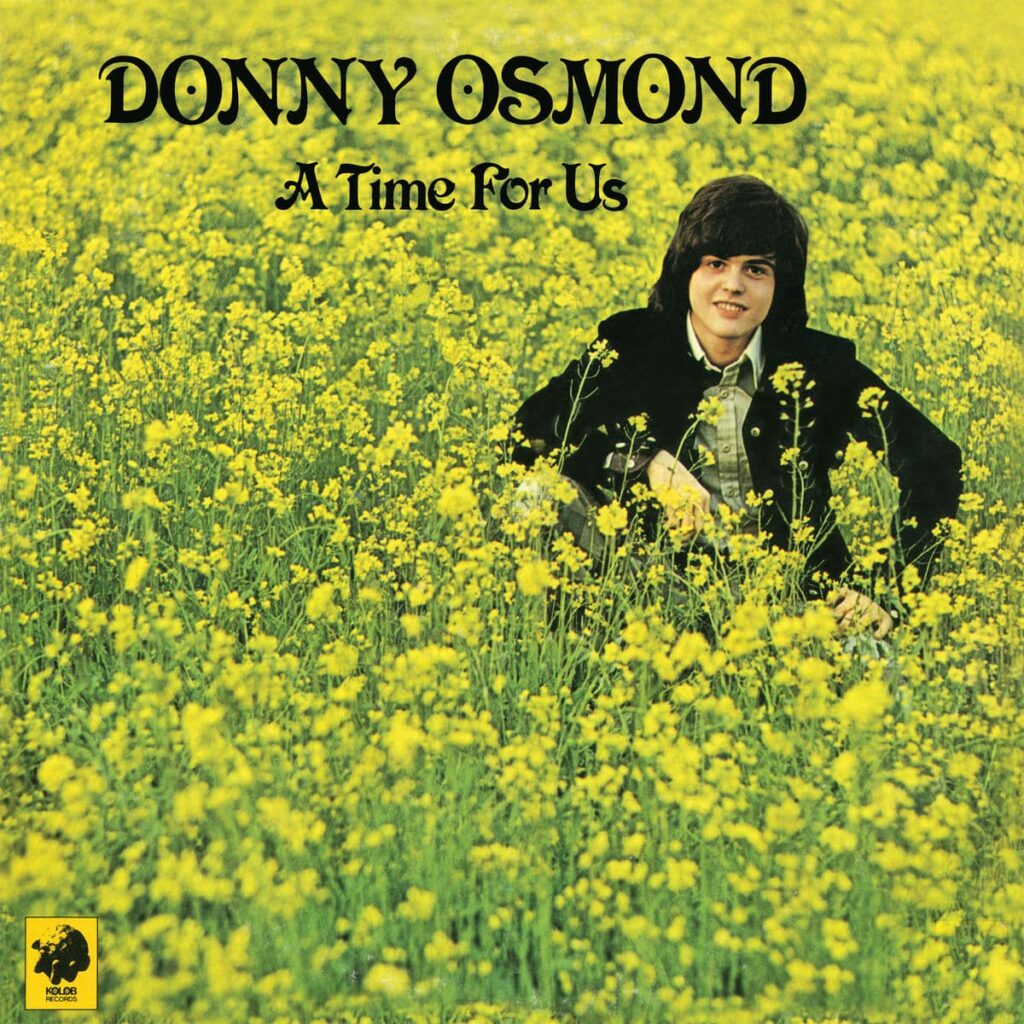
A gentle promise of love and patience, carried through harmony and time rather than urgency
When The Osmonds released “A Time for Us” in 1970, the song arrived not as a bold declaration, but as a quiet reassurance. Their version entered the Billboard Hot 100, eventually peaking inside the Top 40, a respectable showing that reflected how deeply the song resonated rather than how loudly it demanded attention. In a period dominated by louder pop statements and rapidly changing musical trends, “A Time for Us” stood apart by offering something rarer: tenderness, restraint, and faith in love’s ability to endure waiting.
Originally written by Nino Rota with English lyrics by Eugene Walter, “A Time for Us” was first introduced as the love theme from Franco Zeffirelli’s 1968 film Romeo and Juliet. In its earliest form, the song carried the tragic beauty of young love pressed against impossible odds. When The Osmonds chose to record it, they transformed that cinematic sorrow into something more hopeful and universally accessible. Their interpretation softened the tragedy and leaned into the idea of love as something patient, something that survives not because it rushes forward, but because it waits.
By 1970, The Osmonds were already navigating the delicate transition from wholesome family performers to serious pop artists. Known primarily for their polished harmonies and youthful image, they approached “A Time for Us” with restraint and respect for its emotional gravity. Rather than dramatizing the song, they allowed its melody to breathe. The arrangement is gentle, almost floating, anchored by clean vocal lines that emphasize unity rather than individual display.
The heart of the song lies in its central promise. There will be a time for laughter, a time for dreams, a time when love is no longer hidden or postponed. It speaks directly to anyone who has ever loved under difficult circumstances, where patience becomes an act of devotion. In The Osmonds’ hands, this message feels sincere rather than theatrical. Their voices convey belief rather than desperation, as if love itself is something calm and trustworthy, not fragile or fleeting.
Musically, the recording reflects a careful balance between pop accessibility and classical elegance. The melody retains its lyrical, almost timeless quality, while the production grounds it firmly in the early 1970s. There is no excess here. Every harmony serves the song’s emotional center. This simplicity is precisely what allows “A Time for Us” to linger long after the final note fades.
The song’s success on the charts was significant not because it dominated radio, but because it expanded how audiences perceived The Osmonds. It revealed a maturity beneath their youthful presentation, suggesting an emotional awareness that went beyond catchy hooks. “A Time for Us” showed that they could handle material rooted in longing and reflection without losing authenticity.
Over time, this recording has taken on a life beyond its original release. It is often remembered less as a pop single and more as a moment of stillness in a decade defined by movement. Listening now, the song feels like a pause, an invitation to trust that not everything meaningful arrives immediately. Some things require time, faith, and quiet endurance.
What makes “A Time for Us” endure is its refusal to hurry love along. It does not promise easy answers or immediate fulfillment. Instead, it offers hope shaped by patience. In doing so, The Osmonds delivered a performance that remains emotionally intact decades later. The song does not age because its message does not belong to any single era. It belongs to anyone who has ever believed that love, given enough time, will find its moment.