
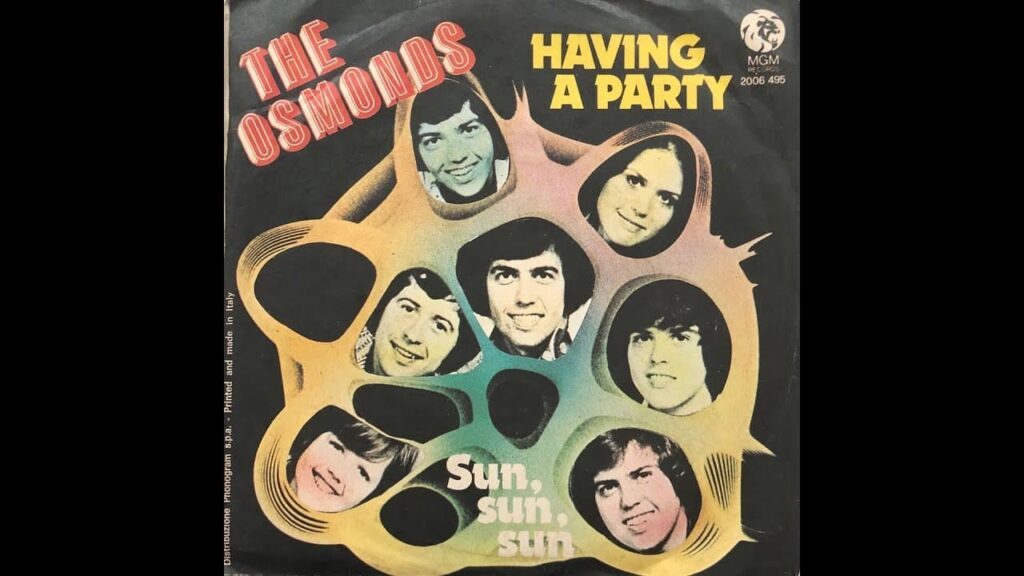
A bright yet questioning anthem where youthful optimism begins to sense the shadows behind the light
When The Osmonds released Sun, Sun, Sun in the summer of 1972, it arrived wrapped in radiant melodies and buoyant harmonies, yet beneath its brightness lay a more searching spirit. This was not simply another cheerful pop offering from a family group already synonymous with exuberance. It was a song that hinted at transition, at curiosity about the wider world, and at the realization that even the warmest light can cast long shadows.
Sun, Sun, Sun was issued as a single from the album Crazy Horses, a record that marked a pivotal moment in The Osmonds’ artistic evolution. Upon release, the song climbed to No. 2 on the UK Singles Chart, becoming one of the group’s most successful British hits. In the United States, it reached No. 14 on the Billboard Hot 100, confirming the band’s continued international appeal at a time when pop tastes were shifting rapidly. These chart positions placed the song firmly among the defining pop records of 1972.
Written by Alan Osmond, Sun, Sun, Sun reflects an expanding worldview. While earlier Osmonds hits often centered on uncomplicated joy and youthful romance, this song subtly widens the lens. Its lyrics speak of sunshine as both a literal presence and a metaphor for hope, guidance, and belief. Yet there is also an undercurrent of uncertainty, a suggestion that the world is larger and more complex than it first appears.
Musically, the song is instantly recognizable. Its opening harmonies feel open and expansive, carried by layered vocals that had become the group’s signature. The rhythm is light but purposeful, propelled by acoustic textures and a gentle pop drive that keeps the song airborne. Unlike the harder edged energy that would define tracks like Crazy Horses, Sun, Sun, Sun remains melodic and inviting, choosing warmth over force.
What gives the song its lasting resonance is its balance between innocence and awareness. The repeated invocation of the sun feels almost devotional, as if the narrator is searching for something constant in a changing world. This was a period when The Osmonds were beginning to assert greater creative control, writing more of their own material and engaging with themes that extended beyond teen pop formulas. Sun, Sun, Sun sits at that crossroads.
The album Crazy Horses itself was a statement of intent. While the title track embraced a heavier rock sound and environmental urgency, Sun, Sun, Sun offered contrast, reminding listeners that melody and harmony remained central to the group’s identity. Together, these songs painted a picture of a band in motion, no longer content to remain within narrow expectations.
Lyrically, Sun, Sun, Sun can be read as a meditation on faith in continuity. The sun rises regardless of human confusion, offering light even when understanding feels incomplete. This theme resonated deeply in the early 1970s, an era marked by social change and uncertainty. Without preaching or dramatizing, the song suggested reassurance through repetition and belief.
Vocally, the performance is pure Osmonds. The blend is precise, almost effortless, yet emotionally sincere. There is a communal quality to the singing, as though the message is meant to be shared rather than proclaimed. That sense of togetherness became one of the group’s most enduring strengths.
Over time, Sun, Sun, Sun has come to represent more than a chart success. It captures a fleeting moment when optimism was still central, but questions were beginning to form. It reflects youth standing at the edge of broader awareness, holding onto light while sensing complexity beyond it.
Listening now, the song feels like a memory preserved in melody. Its harmonies still glow, its message still comforts, but its meaning has deepened with time. The Osmonds did not abandon their brightness here. They simply allowed it to coexist with thoughtfulness.
In the long story of pop music, Sun, Sun, Sun endures as a gentle reminder that hope does not have to be loud to be powerful. Sometimes it arrives quietly, carried on harmony, asking only that we keep looking toward the light, even as we learn to understand the world that surrounds it.