
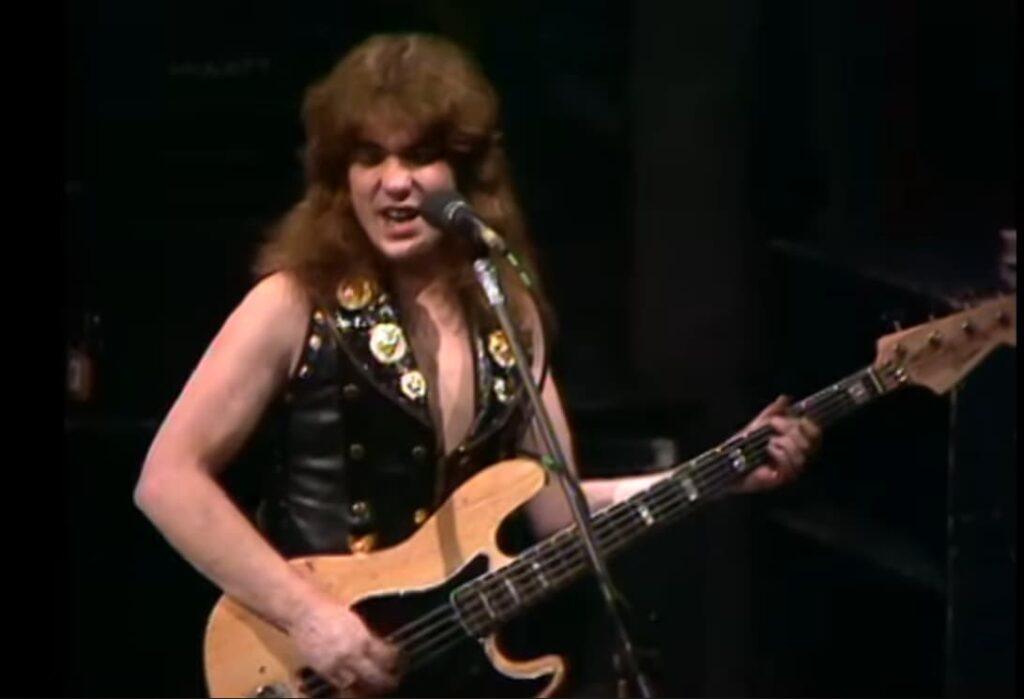
A song that dressed teenage longing in glitter and rhythm—“The Six Teens” captured innocence just before it slipped away
By the time Sweet performed “The Six Teens” on the German television program Musikladen on November 11, 1974, the song had already secured its place among the defining sounds of glam rock’s golden moment. Released earlier that year as a single, “The Six Teens” reached No. 9 on the UK Singles Chart, reaffirming the band’s remarkable ability to balance commercial success with a growing sense of musical depth. It also found moderate success across Europe, further cementing The Sweet as one of the era’s most recognizable acts.
At first listen, the song seems deceptively simple—a bright, rhythmic track driven by a pulsing beat and layered harmonies that feel instantly familiar. Yet beneath its polished surface lies something far more reflective. Written by the prolific duo Nicky Chinn and Mike Chapman, who were responsible for many of the band’s early hits, “The Six Teens” stands apart in tone. It does not celebrate youth as a carefree escape, but rather presents it as something fragile, fleeting, and already slipping into memory even as it unfolds.
The lyrics revolve around a group of teenagers—rebellious, restless, and searching for identity in a world that offers more confusion than clarity. There is a quiet tension running through the song, a sense that these young lives are shaped not only by dreams but also by pressures they barely understand. It reflects the early 1970s with subtle honesty, touching on themes of social unrest, generational divide, and the uneasy transition from innocence to awareness. Unlike many glam rock songs that thrived on flamboyance and escapism, “The Six Teens” carries an undercurrent of realism that feels almost unexpected.
The Musikladen performance itself adds another layer to this narrative. Broadcast in a setting that emphasized live performance over spectacle, it allowed The Sweet to present the song with a certain immediacy. There were still traces of their signature glam aesthetic—vivid costumes, confident stage presence—but what stands out more is the band’s tightening grip on their own musical identity. Brian Connolly’s voice carries both clarity and restraint, while the instrumentation feels more grounded, less reliant on studio polish. It is the sound of a band beginning to look beyond the image that first brought them success.
In hindsight, this period marks a subtle turning point. While The Sweet had built their reputation on infectious, chart-driven hits like “Block Buster!” and “Hell Raiser,” songs like “The Six Teens” hinted at a broader artistic ambition. There is a maturity here—not overwhelming, not fully realized, but undeniably present. It suggests a group aware that the world they were singing about was changing, and perhaps that they themselves were changing with it.
What gives “The Six Teens” its lasting resonance is not its chart position or even its melody, but the way it quietly captures a universal moment—the realization that youth does not last, and that its meaning often becomes clearer only in retrospect. It does not dramatize this idea. Instead, it lets it unfold naturally, almost gently, leaving space for reflection rather than insisting on it.
Watching that November 1974 performance today, there is a sense of distance, but not detachment. The faces, the sound, the atmosphere—they belong to another time, yet the feeling remains familiar. It is the recognition of something once lived, something that cannot be returned to but can still be remembered with a kind of quiet clarity.
In the end, “The Six Teens” stands as more than just another entry in The Sweet’s catalog. It is a reminder that even within the glitter and energy of glam rock, there were moments of introspection—moments where the music paused just long enough to acknowledge the passing of time. And in that pause, something lasting was created, something that continues to echo long after the final note fades.