
A Gentle Reflection on Youthful Longing and the Echoes of First Love
There is something quietly enduring about the idea of a “first crush”—that delicate, almost sacred moment when emotion first finds its voice. In “My First Crush”, performed by Shaun Cassidy, we are drawn back into that tender space where innocence and yearning meet. Though not among his most commercially dominant hits like “Da Doo Ron Ron” or “Hey Deanie,” this piece carries a different kind of weight—less about chart positions and more about emotional resonance. It is the kind of song that lingers not because it topped rankings, but because it quietly found a home in the hearts of those who listened closely.
Emerging during a time when Cassidy’s career was already defined by teenage adoration and pop success in the late 1970s, “My First Crush” reflects a more introspective layer of his artistry. While precise chart data for this particular track remains limited—suggesting it may not have been released as a major single—it nonetheless embodies the spirit of an era when music served as a diary for fleeting but unforgettable emotions. Cassidy, known for his clean-cut image and melodic sensibilities, channels a sincerity here that feels unguarded and genuine.
The story behind songs like this often lies not in grand production or commercial ambition, but in the quiet spaces between life’s louder moments. Cassidy himself, having risen to fame at a young age, understood the intensity of early emotional experiences—how they can feel all-consuming, even when they are simple. In “My First Crush,” that understanding translates into a performance that feels almost conversational, as if he is confiding in the listener rather than performing for them.
The lyrics, though understated, carry a universal truth: that first love—or even the first hint of it—never quite leaves us. It becomes a reference point, a gentle echo that shapes how we understand affection and vulnerability in later years. Cassidy’s delivery avoids dramatics; instead, he leans into a soft, reflective tone, allowing the listener to fill in their own memories between the lines. It is this restraint that gives the song its lasting power.
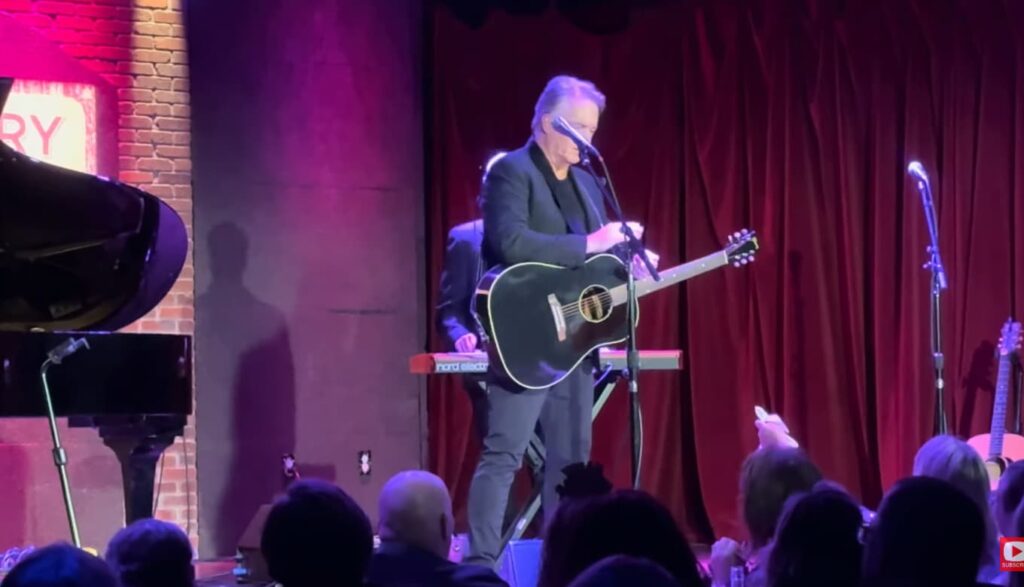
Interestingly, the mention of Julie Newmar and a New Year’s Eve performance at City Winery in Boston adds another layer of cultural texture. Newmar, an iconic figure known for her elegance and timeless presence, represents a different but complementary era of entertainment. The setting—City Winery, an intimate venue known for blending music with atmosphere—suggests a moment not of spectacle, but of reflection. A New Year’s Eve performance is, by its nature, a threshold between past and future, making it a fitting backdrop for revisiting themes of memory and emotional beginnings.
In that imagined or remembered evening in Boston, one can almost hear the quiet clinking of glasses, the murmur of an attentive audience, and the warmth of music filling the room. Songs like “My First Crush” do not demand attention; they invite it. They ask the listener to slow down, to remember, and perhaps to feel again something long tucked away.
What makes this piece particularly compelling is how it resists the passage of time. While musical trends shift and production styles evolve, the essence of a first emotional awakening remains unchanged. Cassidy’s work here becomes less about a specific moment in his career and more about a shared human experience—one that transcends decades.
In revisiting Shaun Cassidy through this lens, we are reminded that not all meaningful music is measured by its commercial success. Some songs live quietly, carried forward by memory rather than metrics. And in that quiet persistence, they often say the most.