
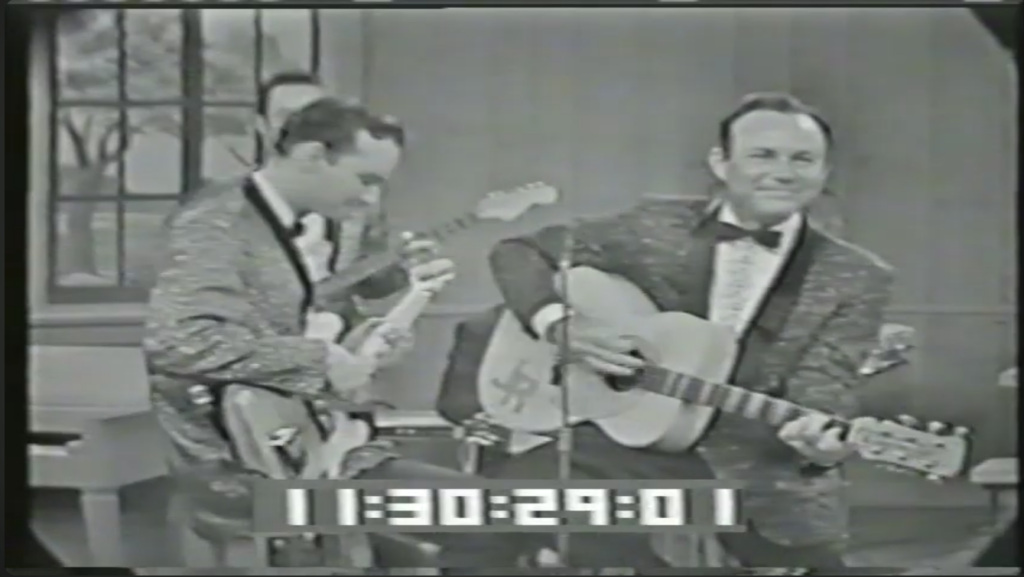
A quiet promise of redemption—“I’m Gonna Change Everything” captures the moment when regret turns into determination, wrapped in the warm, steady voice that made Jim Reeves unforgettable.
Few voices in country music carried the same calm authority and emotional sincerity as Jim Reeves, and his 1962 hit “I’m Gonna Change Everything” stands as one of the finest examples of his ability to turn a simple confession into something deeply moving. Released at the height of Reeves’ popularity, the song quickly climbed to No. 1 on the Billboard Hot Country Singles chart and crossed over to reach the Top 20 on the Billboard Hot 100, a testament to how widely his smooth “Nashville Sound” resonated with listeners beyond traditional country audiences.
By the early 1960s, Jim Reeves had already established himself as one of country music’s most refined voices. Unlike the rougher honky-tonk styles that dominated earlier decades, Reeves’ approach was gentle, polished, and almost conversational. In “I’m Gonna Change Everything,” that style becomes the perfect vessel for a story of remorse and renewal. The song speaks from the perspective of a man who realizes—perhaps too late—that he has taken love for granted. The lyrics are simple but powerful: a heartfelt vow to become better, to repair what has been broken, and to prove that love still deserves another chance.
The song was written by Buddy Killen, a respected Nashville songwriter and producer who understood how to craft songs that allowed Reeves’ voice to shine. Killen would later become an influential figure in the country music industry, but here his songwriting brilliance lies in restraint. The melody moves gently, almost like a quiet conversation at the end of a long day, while the arrangement—strings, soft rhythm, and understated backing vocals—creates the elegant atmosphere that defined the Nashville Sound of the era.
When “I’m Gonna Change Everything” was released, audiences immediately recognized something familiar in its sentiment. The early 1960s were a time when country music was beginning to reach a broader audience, and Reeves’ voice carried a universal quality. His delivery never feels dramatic or forced. Instead, it feels reflective—like someone sitting alone, replaying memories, and finally admitting where he went wrong. That sincerity is what made the song linger in the hearts of listeners long after the final note faded.
Musically, the track also represents an important moment in Reeves’ career. His recordings from this period balanced traditional country storytelling with the smoother production that Nashville producers were experimenting with. The orchestration in “I’m Gonna Change Everything” is subtle but effective, wrapping Reeves’ baritone in warm instrumentation that feels timeless even decades later.
Yet beyond charts and production, the enduring power of the song lies in its emotional truth. The theme of regret—of realizing the value of love only after it has begun to slip away—is something that resonates deeply across generations. Reeves doesn’t portray a dramatic heartbreak; instead, he offers a quiet realization. That calm sincerity gives the song its lasting weight.
Listening today, the voice of Jim Reeves still carries the same gentle authority it did in 1962. “I’m Gonna Change Everything” feels less like a performance and more like a personal promise spoken aloud. It reminds us that country music, at its best, tells stories that feel intimately human—stories about mistakes, reflection, and the hope that tomorrow might still offer a chance to make things right.
And in the warm echo of Reeves’ voice, that promise feels believable.
 Oldies Songs