
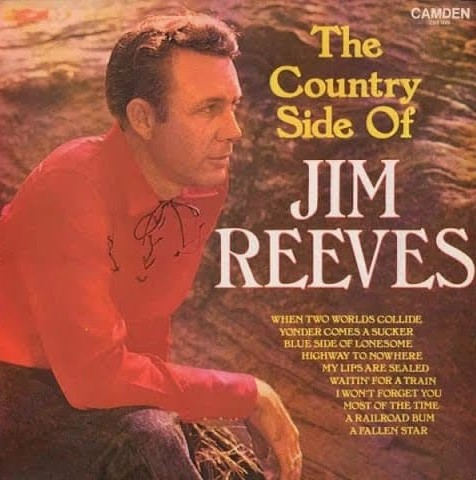
A lonely road stretched into infinity, where love fades and silence becomes the only companion
Within the posthumous catalogue of Jim Reeves, Highway to Nowhere stands as one of those quietly haunting recordings that never achieved major chart prominence upon release, yet carries the unmistakable emotional signature that defined his career. Issued during the mid-1960s following his passing, and associated with the era of albums such as Distant Drums, the song reflects the continued effort to preserve and share the voice of an artist whose smooth baritone had already become synonymous with refined country elegance.
There is something profoundly unsettling in the simplicity of Highway to Nowhere. Unlike many of Reeves’ more commercially celebrated recordings, which often leaned into lush orchestration and crossover appeal, this song feels more exposed, more intimate. It is built on a stark emotional premise: a journey with no destination, a life unmoored from purpose or companionship. The “highway” here is not merely a physical road but a metaphorical passage through isolation, regret, and quiet resignation.
Jim Reeves was often referred to as “Gentleman Jim,” a title earned through his polished vocal delivery and restrained emotional expression. Yet restraint, in his case, never meant detachment. In Highway to Nowhere, that restraint becomes the very mechanism through which the song’s sorrow is conveyed. He does not plead or cry out; instead, he sings as though the outcome is already accepted. That calm acceptance gives the track its haunting power. It is not the drama of heartbreak, but the stillness that follows it.
The production style aligns with the Nashville Sound that Reeves helped popularize, characterized by smooth backing vocals and understated instrumentation. However, in this recording, those elements feel less like embellishments and more like distant echoes, reinforcing the sense of emotional emptiness. The arrangement never overwhelms the vocal; instead, it frames it like an open landscape, vast and quietly desolate.
Lyrically, the song inhabits a space between motion and stagnation. The act of traveling suggests escape, yet the destination “nowhere” implies futility. This paradox lies at the heart of the composition. The protagonist continues forward, not out of hope, but because there is nothing left behind to return to. It is a theme that resonates deeply within the broader tradition of country music, where roads, trains, and journeys often symbolize both freedom and loss.
In the context of Jim Reeves’ legacy, Highway to Nowhere serves as a poignant reminder of the artist’s ability to communicate profound emotion with minimal flourish. It lacks the immediate recognition of his biggest hits, yet it reveals something equally important: the depth of his interpretive skill and the enduring intimacy of his voice.
Listening today, one does not hear a relic of a bygone era, but a timeless meditation on solitude. The highway stretches on, endless and unchanging, and somewhere along it, Jim Reeves continues to sing with a quiet dignity that refuses to fade.
 Oldies Songs