
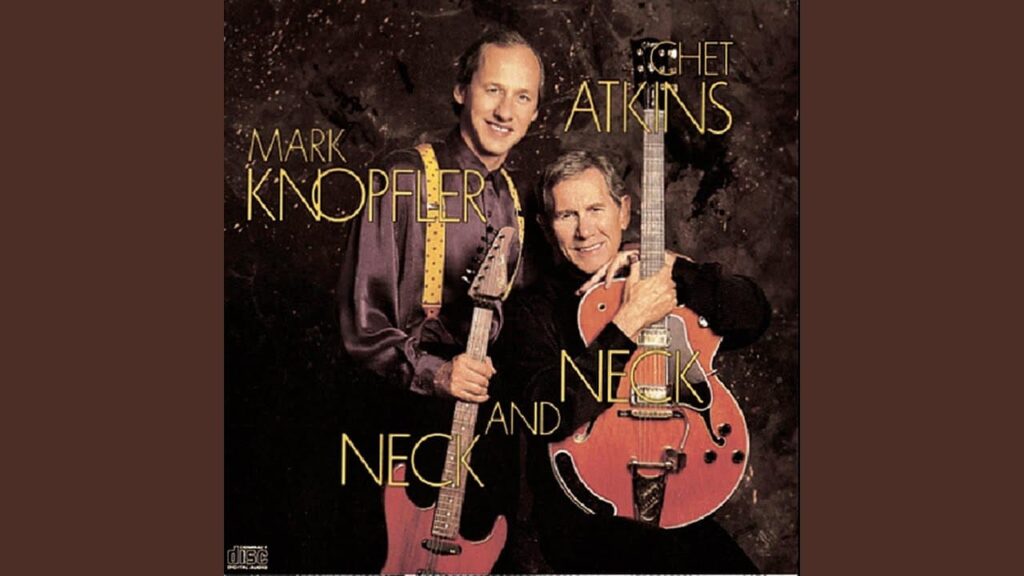
A Gentle Journey on Steel Strings — “Freight Train” Reveals the Quiet Mastery and Storytelling Guitar of Chet Atkins
Among the many instrumental pieces associated with the golden age of American guitar music, “Freight Train” holds a special and enduring charm. When performed by Chet Atkins, the legendary Nashville guitarist and producer, the song becomes far more than a simple folk melody. In his hands, “Freight Train” transforms into a graceful meditation on movement, memory, and the soft rhythm of American life.
The composition itself was originally written in the early 1900s by Elizabeth Cotten, a self taught folk musician whose distinctive fingerpicking style would later become widely known as “Cotten picking.” The song gained renewed attention during the American folk revival of the late 1950s and early 1960s, eventually becoming one of the most beloved acoustic guitar standards. By the time Chet Atkins recorded and performed “Freight Train,” the piece had already become a quiet anthem for guitarists who appreciated subtle technique and melodic clarity.
Although instrumental guitar recordings rarely appeared prominently on major pop charts, Chet Atkins consistently achieved remarkable commercial success throughout his career. Many of his albums charted on the Billboard Country Albums rankings, and his reputation as a guitarist was so strong that his recordings sold steadily across decades. By the time he interpreted “Freight Train,” Atkins had already become one of the most influential figures in American music, both as a performer and as a producer who helped shape the famous Nashville Sound.
Listening to Chet Atkins play “Freight Train” reveals the extraordinary control and musical sensitivity that made him legendary among guitarists. Unlike performers who rely on speed or dramatic flourish, Atkins built his style on elegance and precision. His famous fingerstyle technique, often called the “Atkins style,” allowed him to perform bass lines, chords, and melody simultaneously on a single guitar.
In “Freight Train,” this technique becomes especially captivating. The steady alternating bass pattern creates the gentle sensation of a train rolling along distant tracks, while the melody floats above it with quiet warmth. Each note feels carefully placed, as though the guitarist is telling a story rather than simply demonstrating technical skill.
Part of the beauty of Chet Atkins’s interpretation lies in its restraint. There is no rush, no unnecessary complexity. The melody unfolds naturally, leaving space for listeners to absorb the atmosphere of the piece. One can almost imagine the slow rhythm of wheels on rails, the long horizon of American countryside passing quietly outside a train window.
The historical context surrounding Atkins’s career makes performances like this even more meaningful. During the late 1950s and 1960s, Chet Atkins was not only recording his own music but also producing countless artists for RCA Victor, helping Nashville evolve into one of the most important recording centers in the world. His work with artists such as Jim Reeves, Don Gibson, and The Everly Brothers helped define a smoother, more polished style of country music that appealed to wider audiences.
Yet despite his immense influence behind the studio console, Atkins always remained devoted to the guitar itself. Instrumental recordings like “Freight Train” offered him a chance to return to the simple pleasure of playing—allowing the instrument to speak without words.
There is something timeless about that simplicity. The melody carries a sense of gentle nostalgia, reminding listeners of an era when travel meant long train journeys across open landscapes and when music often traveled quietly through front porches, living rooms, and small gathering places.
Even today, guitarists around the world continue to study Chet Atkins’s recordings, seeking to understand the subtle elegance of his technique. His interpretation of “Freight Train” remains one of those performances that feels almost effortless on the surface, yet reveals deeper layers of artistry the more closely one listens.
As the final notes fade away, the song leaves behind a soft echo—like the distant sound of a train disappearing into the horizon. In that quiet moment, Chet Atkins reminds us that sometimes the most powerful music does not demand attention. Instead, it simply travels beside us, steady and reassuring, like a familiar journey that never truly ends.