
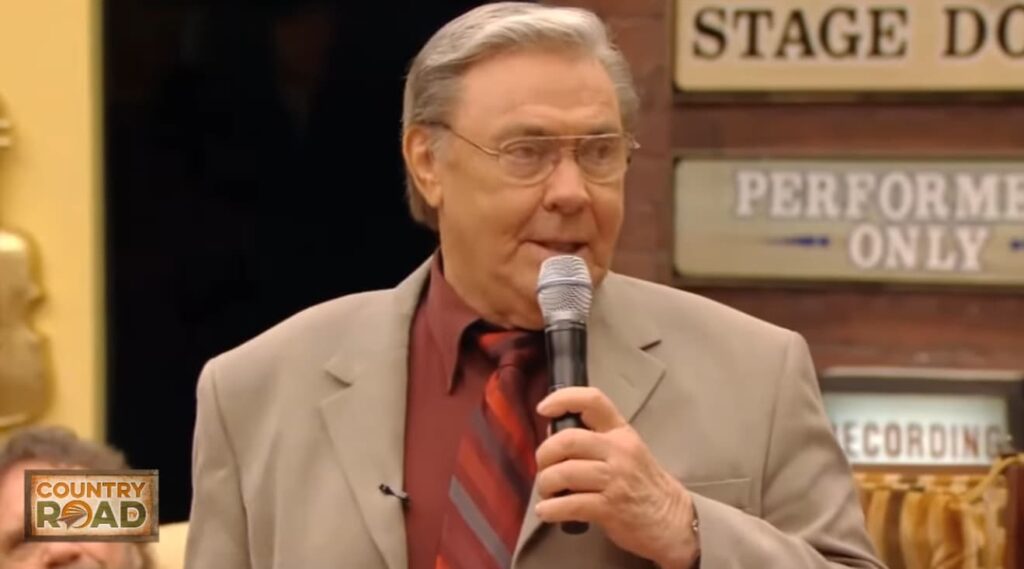
A Song of Loneliness and Honest Reflection — “Bottle, Bottle” Reveals the Emotional Storytelling Strength of Jim Ed Brown
When Jim Ed Brown recorded “Bottle, Bottle,” he was already one of the most respected voices in classic country music. The song became a defining moment in his solo career, capturing the deep emotional honesty that had long distinguished his music. Released in 1968, “Bottle, Bottle” climbed to No. 10 on the Billboard Hot Country Singles chart, confirming that Brown’s storytelling style could resonate powerfully with listeners who recognized the quiet struggles hidden within everyday life.
Long before that success, Jim Ed Brown had already built a strong musical foundation as part of the family trio The Browns, alongside his sisters Maxine and Bonnie Brown. Their biggest breakthrough arrived in 1959 with the beautifully melancholic single “The Three Bells,” which became an extraordinary crossover hit. The song reached No. 1 on the Billboard Hot 100, No. 1 on the Billboard Country chart, and No. 10 on the UK Singles Chart, making it one of the rare recordings of the era to dominate multiple audiences at once.
But by the mid 1960s, Jim Ed Brown had begun to explore a solo career that would reveal an even deeper emotional dimension in his voice. His warm baritone carried a natural sincerity that made him particularly effective with songs about heartbreak, longing, and the quiet complexities of human relationships. “Bottle, Bottle” would soon become one of the finest examples of that gift.
The song itself tells a simple yet powerful story. The narrator turns to a bottle not out of celebration but out of loneliness. The bottle becomes a silent companion, a place where pain and memory are temporarily softened. In country music tradition, the image of the bottle has long symbolized both escape and regret, and “Bottle, Bottle” captures that emotional tension with remarkable clarity.
What makes the song so compelling is the way Jim Ed Brown approaches the lyric. There is no sense of melodrama in his delivery. Instead, he sings with a calm, reflective tone, as if the narrator has already lived through many nights of quiet conversation with that familiar glass on the table.
Musically, the arrangement remains rooted in the classic Nashville Sound that defined country music during the late 1960s. Soft background vocals, gentle steel guitar lines, and understated orchestration create a warm sonic landscape that allows Brown’s voice to remain at the center of the story. The production never overwhelms the emotional message. It simply supports it.
Songs like “Bottle, Bottle” remind listeners why Jim Ed Brown was admired not only as a singer but as a storyteller. His voice carried a natural empathy for the characters in the songs he performed. Rather than portraying heartbreak as something dramatic or theatrical, he presented it as a quiet reality many people understood all too well.
That sense of authenticity would continue to shape Brown’s career in the years that followed. In the 1970s, he achieved additional chart success through a series of popular duets with Helen Cornelius, including “I Don’t Want to Have to Marry You,” which reached No. 1 on the Billboard Hot Country Singles chart in 1976. Those recordings revealed another side of Brown’s artistry, one filled with warmth and playful chemistry.
Yet songs like “Bottle, Bottle” remain especially memorable because they capture the deeper emotional currents running through classic country music. They speak about vulnerability without shame and about loneliness without exaggeration.
Listening to “Bottle, Bottle” today, the song feels like a quiet scene from another time. Perhaps a dimly lit bar late in the evening, or a solitary kitchen table where memories arrive more easily than sleep. The melody moves gently, and Jim Ed Brown’s voice carries the weight of experience without ever sounding defeated.
In that delicate balance between sorrow and dignity lies the true strength of the song.
Through “Bottle, Bottle,” Jim Ed Brown reminds us that country music has always been at its best when it tells the truth about the human heart — even when that truth is spoken softly, across the rim of a lonely glass.
 Oldies Songs