
A Quiet Plea for Redemption, Where Love Is Not Lost but Gently Asked for Again
There is a certain stillness that settles in when listening to “One More Chance to Be with You” by Johnny Rodriguez—a feeling that this is not a song meant to impress, but one meant to be understood. Released in 1976 as part of the album “You Always Come Back (To Hurting Me)”, the track stands among the more reflective corners of Rodriguez’s catalog. While it was not issued as a major standalone single and therefore did not secure a notable position on the Billboard charts, its presence within that body of work reveals something essential about the artist at that time—a quiet turning inward, a willingness to sit with emotion rather than push past it.
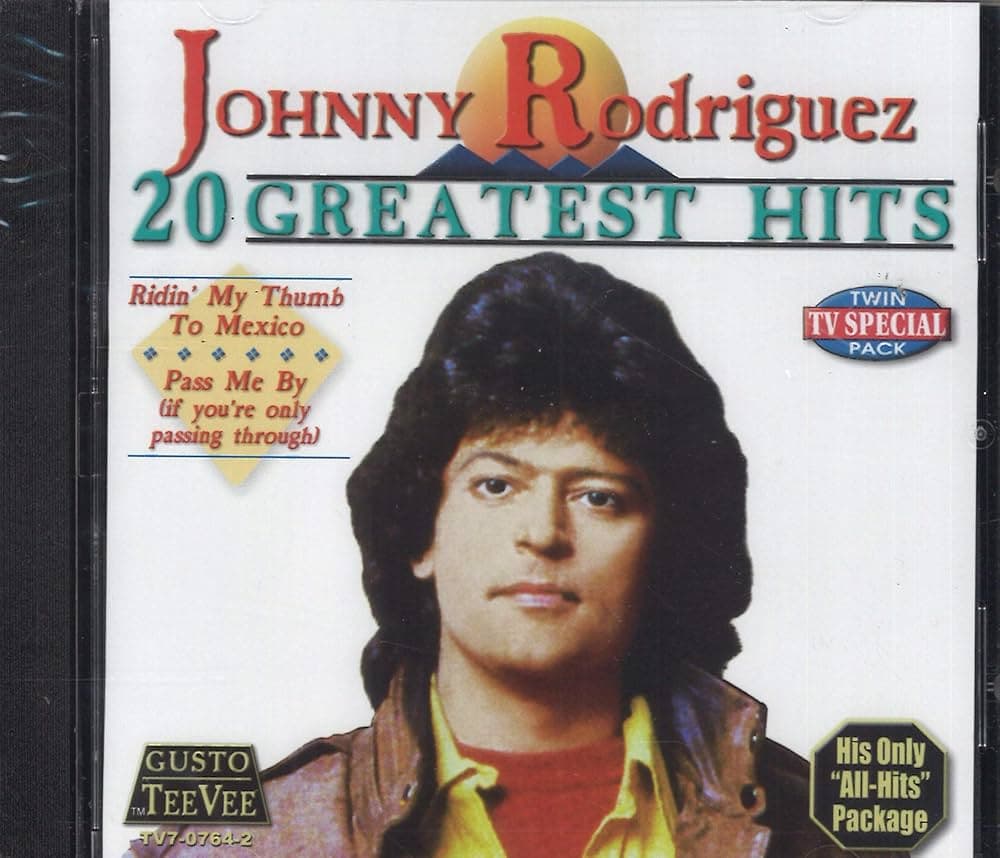
By the mid-1970s, Johnny Rodriguez had already established himself as one of country music’s most distinctive voices. With earlier successes like “Ridin’ My Thumb to Mexico” and “That’s the Way Love Goes”, he had built a reputation for blending traditional country storytelling with subtle influences of Latin phrasing and phrasing that felt both natural and deeply personal. But “One More Chance to Be with You” does something slightly different. It slows everything down. It removes any sense of forward motion and replaces it with reflection.
The song itself unfolds like a conversation that has been delayed for too long. There is no dramatic introduction, no attempt to frame the situation in grand terms. Instead, it begins as though the speaker has already spent countless hours thinking, replaying moments, searching for the right words. What remains is a simple request—not for forgiveness in the abstract, but for time. One more chance.
In Rodriguez’s voice, that request carries a weight that cannot be easily dismissed. There is no desperation, but there is vulnerability. He does not raise his voice or stretch the emotion beyond its natural limits. Instead, he allows it to remain contained, almost fragile. This restraint is what gives the song its authenticity. It feels less like a performance and more like a moment overheard.
Musically, the arrangement reflects this same sense of quiet sincerity. The instrumentation is understated—soft guitar lines, gentle steel accents, and a rhythm that moves slowly, as if careful not to disturb the atmosphere. There is space in the music, and in that space, the listener is given room to reflect. Nothing feels rushed. Nothing feels forced.
What makes “One More Chance to Be with You” particularly enduring is its perspective on love. It does not speak of beginnings or endings, but of something in between—a moment where the outcome is uncertain, where the past cannot be changed, but the future has not yet been decided. This is a space that many songs avoid, perhaps because it lacks the clarity of resolution. But here, it becomes the entire focus.
The narrator does not attempt to justify his actions or rewrite what has already happened. There is an understanding that mistakes have been made, that something has been lost. And yet, there is also a quiet belief that not everything is beyond repair. That belief is not expressed loudly. It is offered gently, almost cautiously, as though aware that it may not be accepted.
This is where Johnny Rodriguez shows his strength as an interpreter of emotion. He understands that the most powerful moments in music are often the smallest ones—the pauses between words, the slight hesitation in a phrase, the way a line is delivered without emphasis. These details, though subtle, create a connection that feels deeply personal.
Listening to the song now, it carries a different kind of resonance. What might once have been heard as a simple plea becomes something more reflective. It speaks to the passage of time, to the understanding that relationships are not defined by single moments, but by the accumulation of many—some remembered clearly, others only faintly.
And in that accumulation, there is always the possibility of return.
Not necessarily to what once was, but to something that still holds meaning.
“One More Chance to Be with You” does not promise that such a return will happen. It does not offer reassurance or closure. Instead, it leaves the question open, allowing the listener to sit with it, to consider what it means to ask for another chance—and what it means to give one.
In the end, the song remains where it began: quiet, thoughtful, and deeply human.
A simple request, carried gently, and left unanswered.