
A Quiet Folk Beginning That Time Nearly Forgot — Yet Still Echoes Through Gordon Lightfoot’s Legacy
There are songs that define an era, and then there are songs that quietly begin one. “Spin, Spin” by Gordon Lightfoot belongs firmly to the latter — a recording that, while often overlooked today, carries within it the unmistakable DNA of a legendary career just taking shape.
Released in 1966, “Spin, Spin” marked one of Lightfoot’s earliest moments of recognition on the Canadian music scene. The song climbed to No. 6 on the Toronto charts, a notable achievement for an artist who, at the time, was still far from becoming the towering figure of folk music he would later be known as. This was a period when the airwaves were filled with shifting sounds — British Invasion rock, evolving pop, and the lingering poetic spirit of folk revival. Yet somehow, Lightfoot’s voice cut through with a sincerity that felt grounded, almost timeless.
For many listeners, the first encounter with “Spin, Spin” came not through albums or curated collections, but through the radio — that intimate companion of another era. In cities like Montreal, where culture and language intertwined in a uniquely Canadian rhythm, hearing Lightfoot for the first time was less like discovering a new artist and more like recognizing a voice that had always belonged.
And yet, there is something quietly puzzling about the legacy of this song.
Despite its early chart success and emotional resonance, “Spin, Spin” has been largely absent from major Gordon Lightfoot compilation albums over the decades. It exists almost like a forgotten photograph tucked away in a drawer — vivid for those who remember, but missing from the official narrative. For devoted listeners, this omission only deepens its mystique. It becomes not just a song, but a personal memory — something preserved outside the boundaries of commercial retrospectives.
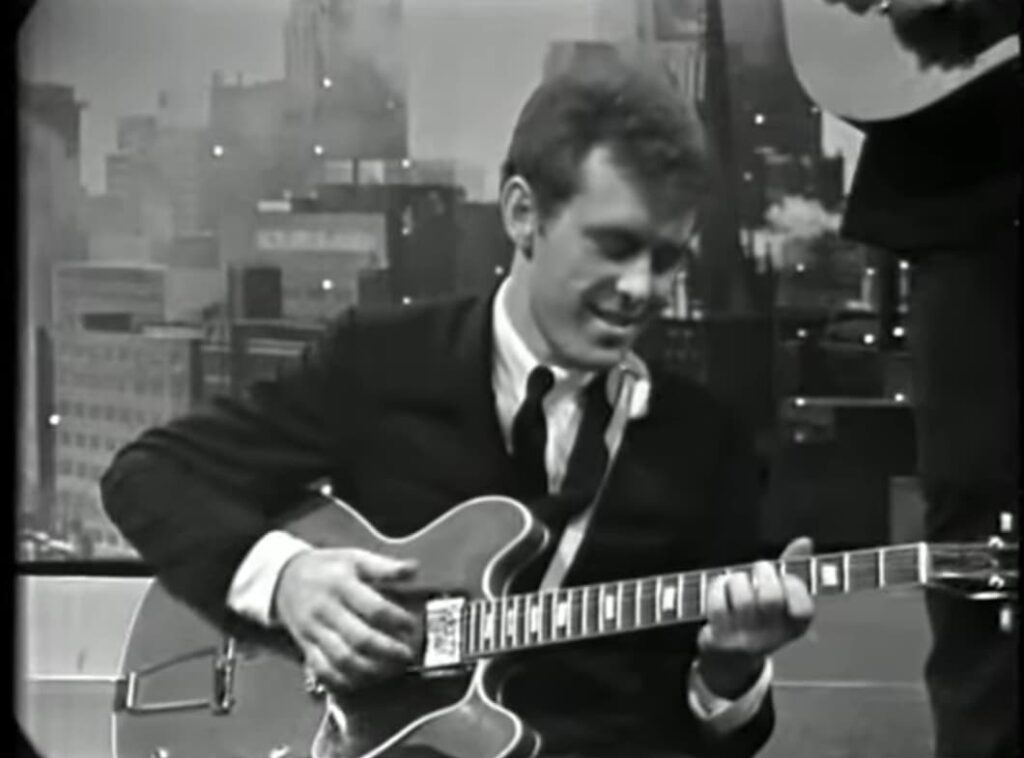
Musically, the recording is beautifully restrained. Lightfoot’s voice — still young, yet already carrying that deep, reflective tone — is supported by the elegant guitar work of Red Shea, whose lead lines never overwhelm but instead gently guide the melody forward. On bass, John Stockfish provides a steady, unobtrusive foundation, allowing the song’s emotional weight to breathe.
There is a simplicity here that speaks volumes.
It’s the sound of musicians listening to one another, of space being allowed between notes — something increasingly rare in later, more polished productions. Shortly after this recording, Stockfish would depart, and Rick Haynes would step in — beginning a musical partnership with Lightfoot that would endure for decades, becoming one of the most quietly remarkable collaborations in folk history.
But beyond its technical qualities, what makes “Spin, Spin” endure is its feeling.
There is a sense, when listening to it now, of standing at the threshold of something not yet fully realized. Lightfoot had not yet written “If You Could Read My Mind” or “Sundown,” but the emotional clarity that would define those masterpieces is already present here — just softer, less certain, but perhaps more intimate because of it.
In many ways, “Spin, Spin” feels like a conversation between past and future. It carries the innocence of an artist still discovering his voice, while quietly hinting at the depth he would later achieve. It reminds us that greatness rarely arrives fully formed — it begins in moments like this, almost unnoticed, carried on late-night radio waves and remembered by those who happened to be listening.
And perhaps that is why the song still matters.
Not because it was the biggest hit, or the most celebrated recording, but because it captures something far more fragile — the beginning of a journey that would go on to define Canadian music for generations. 🎶