
A Dream Preserved Beyond Applause — When Fame Faded, but Imagination Built a World of Its Own
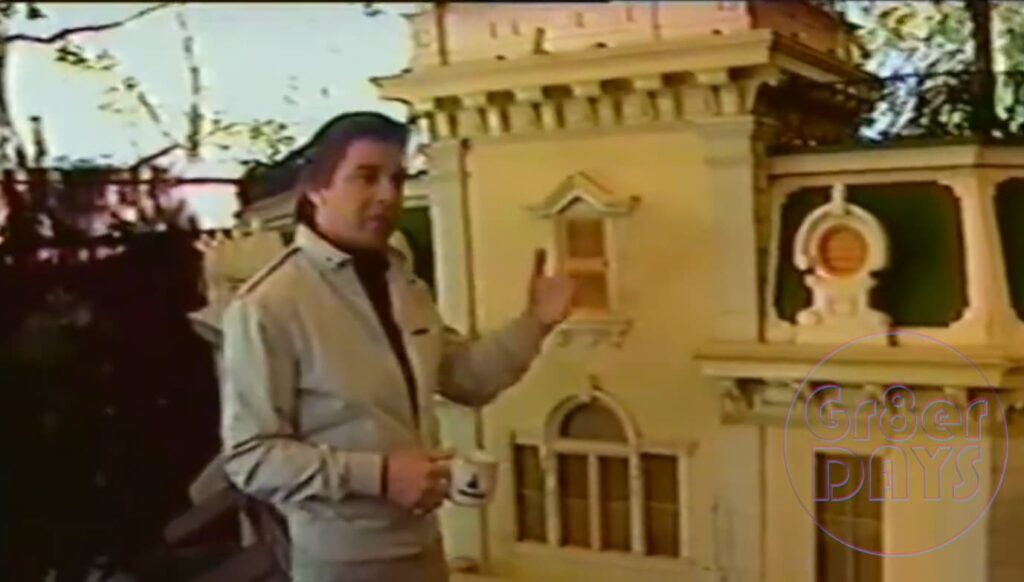
There is something quietly moving about the way certain artists step away from the spotlight—not with bitterness or regret, but with a kind of gentle curiosity about what life might offer beyond the stage. Bobby Sherman, once one of the most beloved teen idols of the late 1960s and early 1970s, embodies that rare transition with remarkable grace. As he marked his 81st birthday on July 22, 2024, reflections on his life inevitably returned not only to his music, but to an unusual and deeply personal project: the construction of a miniature Disneyland Main Street in his own backyard during the 1980s.
Before this quieter chapter, Bobby Sherman had already etched his name into the fabric of popular music. With hits like “Little Woman”, which reached No. 3 on the Billboard Hot 100 in 1969, and “Julie, Do Ya Love Me”, climbing to No. 5 in 1970, Sherman became a defining voice of a generation. His albums, including “Here Comes Bobby” (1970), performed strongly on the Billboard 200, reinforcing his position as a chart-topping artist whose appeal extended far beyond fleeting teenage adoration.
Yet, unlike many of his contemporaries who pursued longevity through reinvention, Sherman chose a different path. By the mid-1970s, he gradually stepped away from the music industry, turning instead toward public service and personal interests. It is within this context that the story of his backyard Disneyland begins to take on a deeper meaning.
The idea itself might initially seem whimsical—an artist recreating the charm of Main Street, U.S.A. within the confines of his own property. But for Bobby Sherman, this was not merely an exercise in nostalgia or eccentricity. It was, in many ways, an extension of the same creative spirit that once fueled his performances. Where music had once allowed him to create emotional landscapes, this project allowed him to build a physical one—a place where imagination could take shape in wood, paint, and careful detail.
There is a certain poetry in this transformation. The young man who once stood before crowds, delivering carefully crafted pop melodies, now found fulfillment in constructing something tangible and enduring. It suggests a shift from performance to creation, from being observed to quietly observing. And yet, the underlying impulse remains the same: a desire to bring joy, to evoke wonder, to connect in ways that transcend words.
Looking back at his musical legacy, one begins to see subtle connections between the songs and the man he would become. Tracks like “Easy Come, Easy Go” (which reached No. 9 on the Billboard Hot 100 in 1970) carried a lightness, a sense of acceptance that feels almost prophetic. There was never an urgency in Sherman’s music to hold onto fame at all costs. Instead, there was a calm understanding that moments pass, and that value lies not in their permanence, but in their sincerity.
The story of the backyard Disneyland, then, becomes more than an anecdote—it becomes a symbol. It reflects a life lived with quiet intention, where success is not measured solely by chart positions or public recognition, but by the ability to find meaning in new forms of expression. In an industry often defined by relentless visibility, Sherman’s choice to step away and build something for himself feels almost radical in its simplicity.
There is also a gentle reminder here about the nature of memory. Just as his songs continue to echo in the minds of those who first heard them decades ago, this miniature world he created stands as a physical manifestation of that same impulse to preserve joy. It is not about recreating the past exactly as it was, but about capturing its essence and allowing it to live on in a different form.
As Bobby Sherman reaches his eighth decade, the narrative of his life feels less like a series of separate chapters and more like a continuous thread—one that moves seamlessly from music to personal exploration. The applause may have faded, the charts may have shifted, but the creative spirit remains, quietly shaping new expressions of the same enduring desire: to build something meaningful, something lasting, something true.
And perhaps that is the most lasting legacy of all—not the hits that once climbed the charts, but the life that continued to unfold long after the music stopped.