
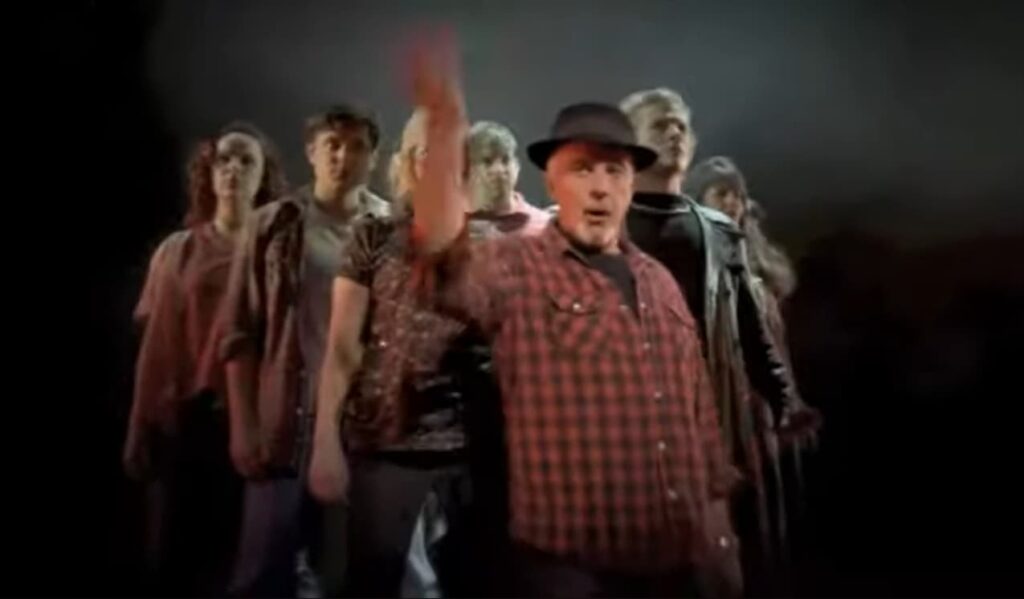
A tender portrait of fleeting joy and hard-earned redemption beneath the bright lights of the fairground
There are works that do not merely entertain, but quietly linger—like the echo of distant music drifting across an empty field at dusk. “All The Fun Of The Fair” by David Essex is one such creation. Originally conceived as a stage musical rather than a conventional chart-bound single, it first premiered in 2008 before reaching wider audiences through its UK touring production, notably captured at Sheffield’s Lyceum Theatre in 2012. Unlike the radio hits that defined Essex’s earlier career, this piece belongs to a different emotional register—one rooted in storytelling, reflection, and the fragile beauty of ordinary lives.
Because “All The Fun Of The Fair” is a theatrical work, it does not carry a traditional chart position upon release. Yet its success is measured in something far less quantifiable: the quiet resonance it found among audiences who recognized themselves in its characters. The 2012 filmed performance of the UK Touring Cast brought renewed attention to the production, preserving its atmosphere for those unable to witness it live—a significant achievement in an era where theatre often vanishes once the curtain falls.
At the heart of the musical lies the character of Levi Lee, a fairground worker whose life is shaped by movement, impermanence, and emotional restraint. Through him, David Essex crafts a narrative that feels both deeply personal and universally understood. The fairground itself becomes more than a setting—it is a metaphor for life’s transient pleasures, where laughter and heartbreak coexist under the same flickering lights. There is a sense that joy, like the rides and games, is temporary, always moving on to the next town, leaving only memories behind.
Musically, the score reflects Essex’s signature blend of melodic warmth and lyrical sincerity. Though he rose to fame in the 1970s with chart-topping hits like “Rock On,” here he trades youthful swagger for something more contemplative. The songs in “All The Fun Of The Fair” are not designed to dominate airwaves but to serve the narrative, gently unfolding the inner lives of its characters. There is a softness in the arrangements, a deliberate pacing that allows each emotion to breathe. One can almost feel the passage of time within the music—unhurried, reflective, and tinged with a quiet melancholy.
The story behind the creation of this musical reveals much about Essex himself. Having spent decades in the public eye, he turned inward, drawing inspiration from working-class experiences and the overlooked poetry of everyday existence. The fairground world, often romanticized, is here portrayed with honesty—its camaraderie, its struggles, its fleeting connections. Essex once spoke of wanting to tell a story that felt “real,” and in doing so, he moved away from the glamour of pop stardom toward something more enduring.
What gives “All The Fun Of The Fair” its lasting impact is its emotional truth. It speaks of love that arrives unexpectedly, of regrets that linger, and of the quiet hope that persists even in the face of disappointment. There is no grand resolution, no triumphant finale in the traditional sense. Instead, there is acceptance—a recognition that life’s beauty often lies in its imperfections. The fair may pack up and leave, but the echoes remain.
For those who encounter this work, especially through the 2012 Sheffield performance, it offers more than nostalgia. It becomes a mirror, reflecting moments long past yet never entirely gone. In the gentle rise and fall of its melodies, in the thoughtful pauses between lines, one finds a space to remember—to feel, once again, the bittersweet rhythm of days that seemed ordinary at the time, but now reveal themselves as quietly extraordinary.