
Audiences in 1957 Saw a Rising Singer. Today, We Are Watching the Birth of a Legend.
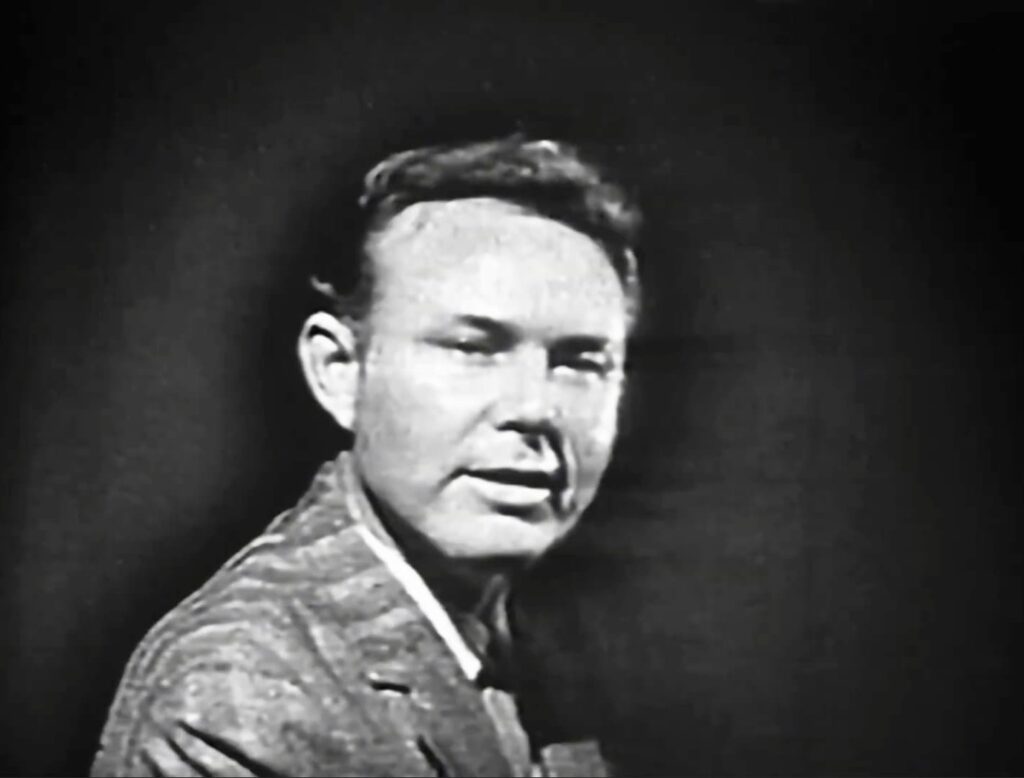
When Jim Reeves stepped onto the stage of The Ozark Jubilee to perform “Four Walls” in 1957, neither he nor the audience could have known they were witnessing a turning point in country music history. The show’s introduction described the song as a nationwide hit, and that was exactly what it was at the time. This was not a retrospective tribute to a famous artist. It was a live snapshot of a performer whose career was being transformed in real time.
Released in 1957, “Four Walls” quickly became one of the most important recordings of Reeves’ career. More than just a successful single, it helped establish the smooth and sophisticated style that would later become known as the Nashville Sound. At a time when country music was often dominated by honky-tonk rhythms, steel guitars, and rough-edged vocals, Reeves introduced something different. His delivery was gentle, restrained, and deeply intimate. He did not overpower listeners. He invited them closer.
Today, that style may sound familiar, but in the late 1950s it represented a significant shift in the direction of country music. “Four Walls” helped bridge the gap between country and pop audiences, opening doors for countless artists who followed.
One of the most fascinating aspects of this performance is the contrast between the song’s message and the setting in which it was sung. The lyrics tell the story of a lonely man left alone with his thoughts, surrounded only by four silent walls. Yet Reeves was performing before a national television audience. Millions of people were listening to a song about isolation.
That contradiction gives the performance a unique emotional depth. While the narrator of the song feels abandoned, the singer himself was becoming one of the most recognized voices in America.
The simplicity of the performance is equally striking. Watching the footage today, viewers may notice how little Reeves relies on physical gestures. There are no dramatic movements, elaborate stage effects, or attempts to command attention through spectacle. He simply stands at the microphone and sings.
And somehow, that is enough.
His calm presence and velvety voice create an atmosphere that feels almost timeless. The performance serves as a reminder that great artists often communicate their strongest emotions through subtlety rather than excess.
Historically, “Four Walls” also occupies a special place because it helped define the image that fans would come to know as “Gentleman Jim.” Before the song’s success, Reeves was still searching for the sound that would distinguish him from countless other country performers. After “Four Walls,” his path became clear. The smooth vocal style that later produced classics such as “He’ll Have to Go” had found its foundation.
What makes the video especially moving today is something that viewers in 1957 could never have anticipated. They were watching an artist on the rise. Modern audiences are watching a legend whose story is already known.
We know that Reeves would go on to become one of country music’s most beloved voices. We also know that his life would be tragically cut short in a plane crash in 1964 at just forty years old. That knowledge changes how the performance feels. Every lyric seems touched by a sense of fragility that was invisible at the time.
The true value of this rare television appearance lies not in its age but in what it captures. It preserves a moment before the awards, before the legacy, before history had finished writing Jim Reeves’ story.
For a few minutes on The Ozark Jubilee, viewers were simply watching a talented singer perform a hit song. Nearly seven decades later, the same footage feels like something far more precious: the moment a future legend quietly stepped into the spotlight and began changing country music forever.
 Music Legend