
A tender meditation on desire and distance, where love feels as vast and unreachable as the stars
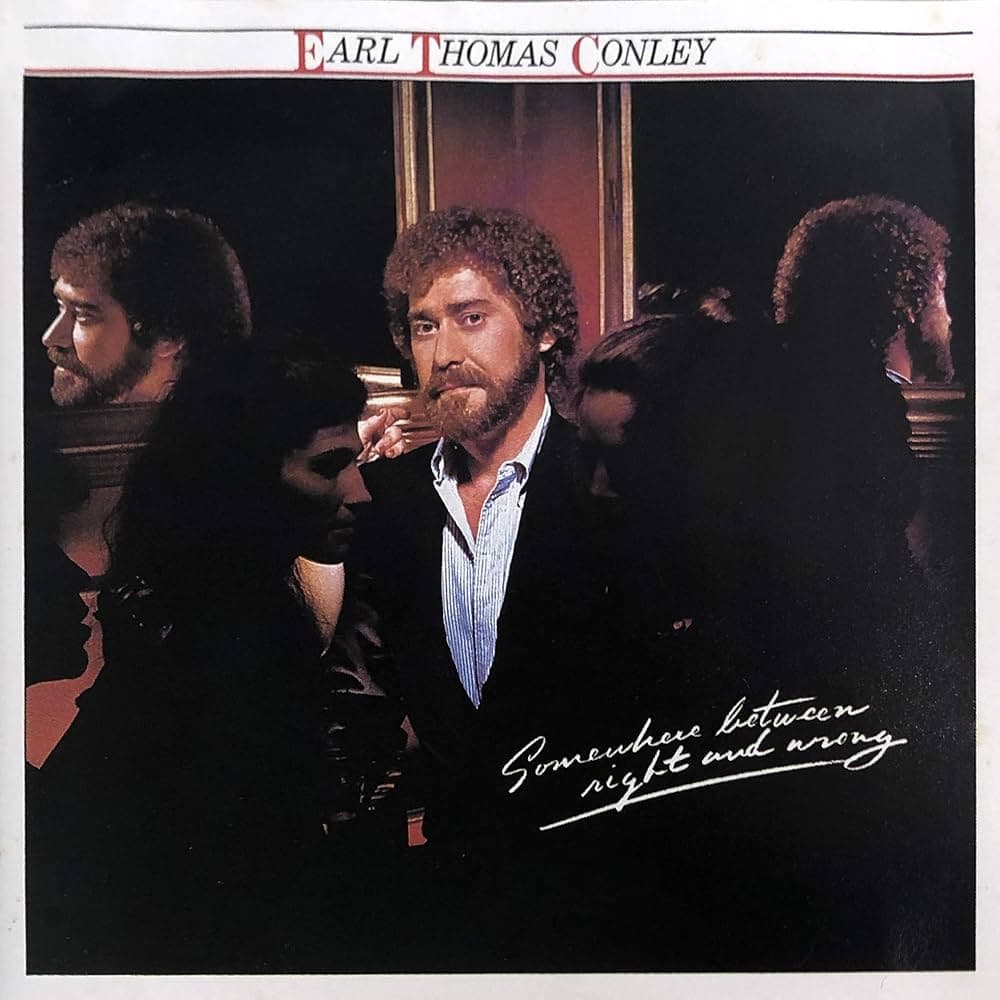
When Earl Thomas Conley released “Heavenly Bodies” in August 1982, he was already well on his way to becoming one of the defining voices of early-1980s country music. The single climbed to No. 1 on the Billboard Hot Country Singles chart in November 1982, marking his fourth consecutive chart-topper and reinforcing an extraordinary streak that would ultimately make him the country artist with the most No. 1 hits of the decade. The song was featured on his album Somewhere Between Right and Wrong (1982), a record that solidified his reputation as a thoughtful, emotionally nuanced songwriter in an era increasingly shaped by crossover ambitions.
At first glance, the title “Heavenly Bodies” might suggest something playful or even whimsical. Yet in Conley’s hands, the phrase becomes layered and poetic. Written by Earl Thomas Conley himself, the song explores longing with an almost cosmic metaphor — love compared to celestial objects: distant, luminous, beautiful, and often just out of reach. It is not a song driven by melodrama, but by quiet contemplation. That was Conley’s signature strength.
By 1982, country music was still feeling the aftershocks of the Urban Cowboy movement. Production values were smoother, radio-friendly arrangements were the norm, and artists were seeking broader appeal. Yet Conley managed to blend polish with introspection. “Heavenly Bodies” is built on a gentle mid-tempo rhythm, layered with warm electric piano textures and restrained guitar lines. The arrangement feels spacious, almost atmospheric — allowing the metaphor of stars and sky to breathe within the music itself.
What distinguishes Conley from many of his contemporaries is the psychological realism in his lyrics. In “Heavenly Bodies,” the narrator reflects on love not as an immediate possession but as something fragile and uncertain. The celestial imagery speaks of wonder and awe, but also of separation. Stars shine brightly, yet they are distant. The song subtly suggests that emotional distance can exist even between two people who once felt inseparable.
Conley’s vocal delivery is intimate, conversational. There is no need for vocal acrobatics; instead, he leans into subtle inflections and phrasing that convey vulnerability. When he sings of love drifting into orbit, one can almost feel the ache beneath the calm surface. His voice carries a softness tinged with resignation — the sound of someone who understands that not all love stories end in triumph, yet still holds reverence for what once was.
The success of “Heavenly Bodies” was not accidental. By this point, Conley had already achieved No. 1 hits with songs like “Fire and Smoke,” “Somewhere Between Right and Wrong,” and “Holding Her and Loving You.” But this particular single demonstrated his evolving artistry. It showed that he could explore themes of intimacy and distance without falling into cliché. He trusted imagery and restraint rather than overt declarations.
There is something profoundly reflective about listening to “Heavenly Bodies” decades after its release. The early 1980s now feel like another constellation in time — close enough to remember clearly, yet distant enough to feel dreamlike. The song captures that same paradox: clarity and distance coexisting in a single emotional space.
In retrospect, the album Somewhere Between Right and Wrong stands as a pivotal chapter in Earl Thomas Conley’s career. It balanced commercial appeal with lyrical sophistication, helping define a sound that influenced many country artists who followed. Conley’s ability to weave personal introspection into accessible melodies set him apart in a competitive era.
Ultimately, “Heavenly Bodies” endures because it speaks to a universal truth: love can feel infinite and luminous, yet it can also drift beyond our grasp. It reminds us that relationships, like stars, sometimes fade from view — but their light lingers long after. And in that lingering glow, we find both sorrow and beauty, held together in a melody that still feels as vast as the night sky.
 Oldies Songs