
A Regret That Echoes in Every Line — “How Could I Love Her So Much” Shows the Emotional Honesty That Defined Johnny Rodriguez
In the rich tradition of classic country music, some songs do not shout their emotions. Instead, they unfold slowly, carrying quiet regret and reflection in every note. “How Could I Love Her So Much” is one of those songs. When performed live by Johnny Rodriguez, the song becomes more than a recording from a studio album. It feels like a confession spoken aloud, a moment where memory and music meet with striking honesty.
Released in 1973 on the album Introducing Johnny Rodriguez, “How Could I Love Her So Much” played an important role in the remarkable rise of Johnny Rodriguez, one of the most distinctive new voices to emerge in country music during the early 1970s. The album itself reached No. 1 on the Billboard Top Country Albums chart, a remarkable achievement for a debut release and a clear sign that Rodriguez had arrived at a moment when country audiences were ready to embrace something both traditional and refreshingly new.
The song was written by Billy Sherrill, a legendary producer and songwriter who shaped much of the Nashville sound during that era. Sherrill had a unique ability to craft songs that combined simple storytelling with emotional depth. In “How Could I Love Her So Much,” he created a lyric built around a painful realization: loving someone deeply does not always protect a relationship from falling apart.
That quiet truth sits at the center of the song’s story. The narrator looks back at a love that once seemed certain, asking the question that lingers long after a relationship ends. How could feelings once so strong lead to such loneliness?
What makes Johnny Rodriguez’s performance especially powerful is the sincerity in his voice. Born in Sabinal, Texas, Rodriguez brought something slightly different to Nashville when he first appeared on the scene. His warm, expressive vocal style blended traditional country phrasing with subtle influences from Mexican and Spanish musical traditions, something rarely heard in mainstream country music at the time.
By 1973, he was already beginning to dominate the Billboard Hot Country Singles chart. That same year, he scored his first No. 1 country hit with “You Always Come Back (To Hurting Me)”, followed quickly by another chart-topper, “Ridin’ My Thumb to Mexico.” These successes helped establish Rodriguez as one of the brightest new stars of the decade.
Within this wave of early success, “How Could I Love Her So Much” stood out as one of his most emotionally direct recordings. The song does not rely on elaborate arrangements or dramatic orchestration. Instead, it moves forward with the steady rhythm of classic country storytelling: gentle steel guitar, soft rhythm guitar, and a melody that feels almost conversational.
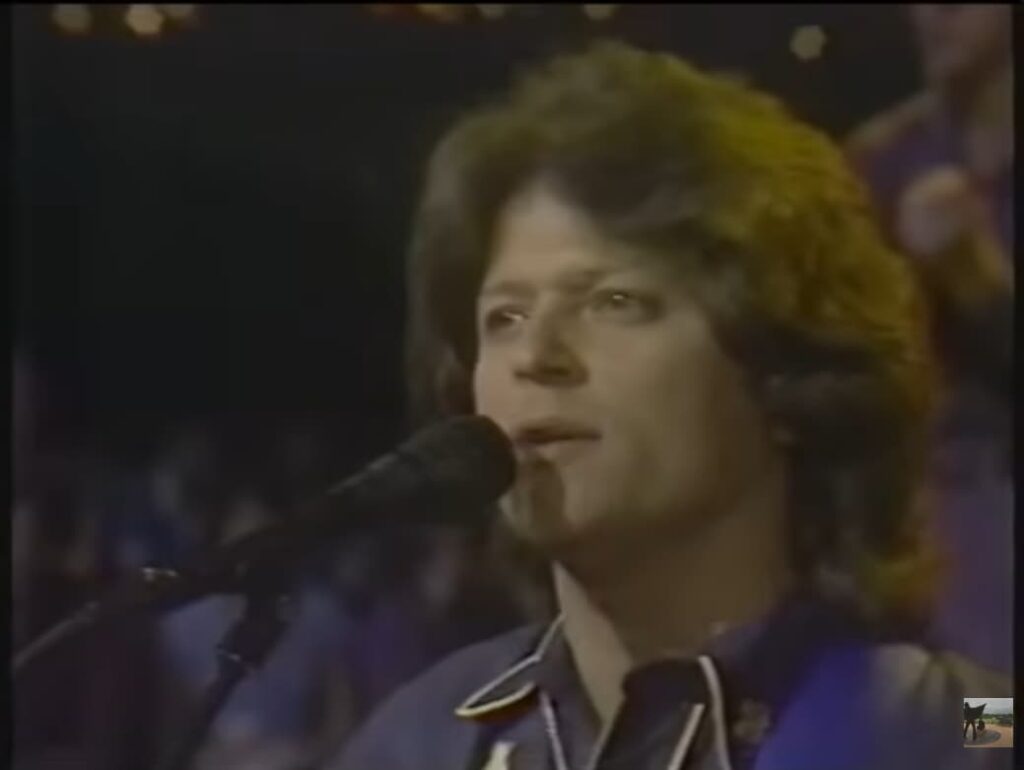
When Johnny Rodriguez performs the song live, the emotional weight becomes even more apparent. Without the protective distance of studio production, the lyric feels closer, more personal. Each line seems to carry the quiet reflection of someone revisiting a moment they still struggle to understand.
This kind of emotional honesty was one of the reasons Rodriguez connected so strongly with audiences during the 1970s. At a time when country music was evolving rapidly, he managed to maintain the storytelling spirit that had defined the genre since the days of Hank Williams while also bringing a fresh voice to the stage.
Listening to “How Could I Love Her So Much” today reveals something timeless about country music at its best. The song does not attempt to offer easy answers or dramatic conclusions. Instead, it lingers in the space between memory and regret.
There is a quiet dignity in that restraint. The narrator does not blame or accuse. He simply wonders how something that once felt so certain could have slipped away.
Perhaps that is why the song continues to resonate decades later. Love stories rarely follow perfect paths, and the question at the heart of the song remains deeply human.
As Johnny Rodriguez’s voice moves through the final lines, the melody fades gently, leaving behind the same lingering thought that began the song: sometimes the deepest feelings are also the ones that leave the greatest mysteries behind.