
A gentle benediction to love’s first promise, spoken with wisdom rather than innocence
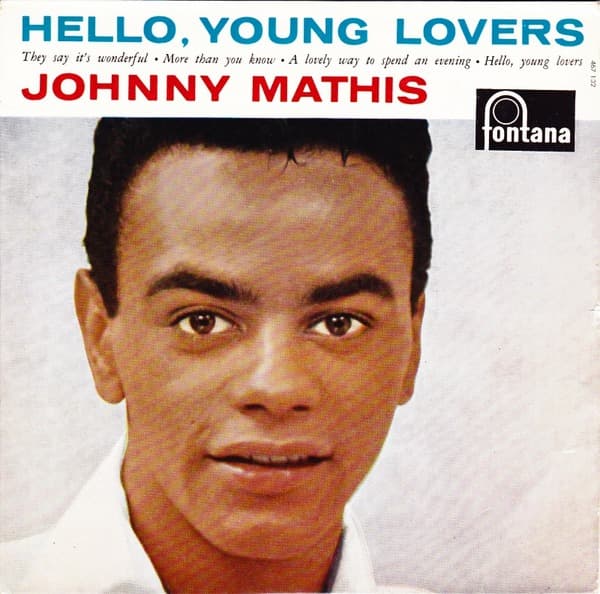
Hello, Young Lovers, as recorded by Johnny Mathis, is not a song about beginnings alone. It is a song about memory standing quietly beside hope, about experience offering its blessing to romance just taking shape. Released in 1956, Mathis’s recording arrived at a pivotal moment in his early career and quickly distinguished itself among the many interpretations of this beloved standard. His version reached No. 25 on the Billboard Hot 100, an impressive achievement for a song rooted in musical theatre rather than contemporary pop trends, and it helped establish him as a singer capable of bridging Broadway sophistication and popular sentiment with rare grace.
The song itself originates from “The King and I”, the celebrated 1951 Rodgers and Hammerstein musical. Written by Richard Rodgers and Oscar Hammerstein II, Hello, Young Lovers is sung in the stage production by Anna Leonowens as a reflective address to younger hearts, drawing on the wisdom of lived love rather than youthful infatuation. When Johnny Mathis chose to record the song, he approached it not as theatrical material but as an intimate confession, reshaping its context without betraying its emotional core.
By the mid 1950s, Johnny Mathis was emerging as a distinctive voice in American music. His tone, often described as velvety and restrained, carried an introspective quality that set him apart from more declarative singers of the era. In Hello, Young Lovers, that quality becomes essential. Rather than dramatizing the song, Mathis softens it. His phrasing suggests someone looking back with tenderness, not regret. The orchestration, elegant and understated, supports his voice without ever intruding, allowing the lyric to breathe and settle.
The meaning of Hello, Young Lovers lies in its remarkable emotional balance. It neither glorifies nor dismisses youthful romance. Instead, it acknowledges its beauty while quietly affirming that love deepens with time. The song’s perspective is unique because it speaks from experience without condescension. There is admiration rather than envy, reassurance rather than warning. Mathis’s interpretation enhances this nuance. His voice carries warmth but also restraint, as if understanding that certain truths are best offered gently.
Chart success aside, the cultural significance of Mathis’s version rests in how naturally it fit into the listening habits of its time. This was an era when popular music often shared space with Broadway melodies, when listeners were open to songs that unfolded slowly and thoughtfully. Hello, Young Lovers benefited from that openness, and Mathis’s recording became a bridge between theatrical tradition and personal reflection. It was not merely consumed, it was absorbed.
Within Johnny Mathis’s broader discography, the song represents an early example of his lifelong commitment to emotional sincerity. While he would go on to achieve massive commercial success with romantic pop ballads, this recording already reveals his instinct for subtlety. He understood that romance is not always about desire. Sometimes it is about recognition, about seeing love in others and remembering it within oneself.
The enduring appeal of Hello, Young Lovers also lies in its universality. The song does not belong to a specific moment or trend. Its message remains intact because it speaks to a cycle that never changes. Love begins, matures, and transforms into memory, yet it never truly disappears. Mathis’s voice, calm and luminous, becomes the ideal messenger for such a truth. He does not rush the song. He allows each line to unfold like a thought carefully chosen.
Decades later, listening to Johnny Mathis sing Hello, Young Lovers feels like opening a well preserved letter from another time. The language is formal, the sentiment refined, yet the emotion remains immediate. There is comfort in that continuity. The song reminds us that while styles evolve and eras pass, the emotional architecture of love remains remarkably constant.
In the end, Hello, Young Lovers is not a farewell to youth, nor a longing to return to it. Through Johnny Mathis, it becomes something rarer a peaceful acknowledgment that love, in all its stages, is worthy of respect. It is a song that stands quietly at the intersection of memory and hope, offering a gentle smile rather than a lesson, and trusting the listener to understand its meaning without being told.