
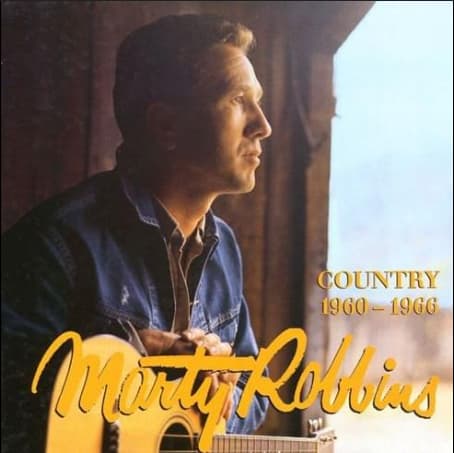
Marty Robbins – “Am I That Easy to Forget”: A “High-Fidelity” Masterclass in the Dignity of Heartbreak
In the sophisticated, gold-tinged landscape of 1962, Marty Robbins released a recording that would become a definitive “velvet” snapshot of his crossover era. When he recorded his version of “Am I That Easy to Forget,” included on the iconic album “Portrait of Marty,” he wasn’t just covering a popular standard; he was reclaiming it with a soulful, masculine sincerity. Originally penned by Carl Belew and W.S. Stevenson, the song had already touched the charts through various voices, but Marty’s interpretation brought a “high-level” elegance to the narrative. For those of us who remember the early sixties—the era of the Columbia Records “360 Sound” and the polished, synchronized strings of Nashville—this track was a revelation of the “Gentle Giant” at his most vulnerable and poised.
The “story” behind “Am I That Easy to Forget” is a masterclass in the “mini-movie” style of vocal restraint. The song follows a narrator who is watching a former love move on with someone new, pleading for a moment of honest reflection: Was our time together truly so fleeting? Marty’s delivery is a study in crystalline, “velvet” tenor; he navigates the narrator’s quiet desperation and underlying pride with a melodic grace that feels entirely authentic. It was an era where the “Nashville Sound” was reaching its absolute zenith, and Marty was its most relatable, sophisticated architect. He proved that a song about being forgotten didn’t need to be loud to be powerful; it simply needed to be phrased with the impeccable timing and soulful authority that were his trademarks.
For the sophisticated listener who has navigated the “twists and turns” of their own personal journey, hearing Marty sing “Am I That Easy to Forget” today is a deeply evocative experience. It brings back memories of wood-paneled dens, the soft glow of a record player’s light, and the realization that as we reach our silver years, the fear of being “replaced” or “forgotten” is a universal human milestone. The lyrics speak to a profound human yearning for significance—the hope that we left a mark on the hearts of those we loved. For a “qualified” reader who has seen the seasons of life turn and perhaps felt the “quiet desperation” of a fading connection, this song is a profound mirror of our own resilience and the quiet dignity of a heart that refuses to be erased.
The meaning of “Am I That Easy to Forget” lies in its unapologetic honesty. Marty Robbins possessed the unique, almost magical gift of being a “vocal chameleon” who could inhabit the psyche of a wounded soul with total, soulful sincerity. As we reflect on this 1962 masterpiece today, through the lens of our own decades of experience, we see it as more than just a track on a “Portrait” album; it is a testament to the enduring power of the narrative song to capture the subtleties of the human condition. The Master Storyteller may have eventually returned to the “El Paso” desert, but in the shimmering, rhythmic notes of this song, he remains the eternal observer of the heart’s most guarded questions. To listen to it now is to sit once more with Marty, acknowledging that while the world may change, the voice of the man who sang our memories into history remains eternally unforgettable.
 Music Legend