
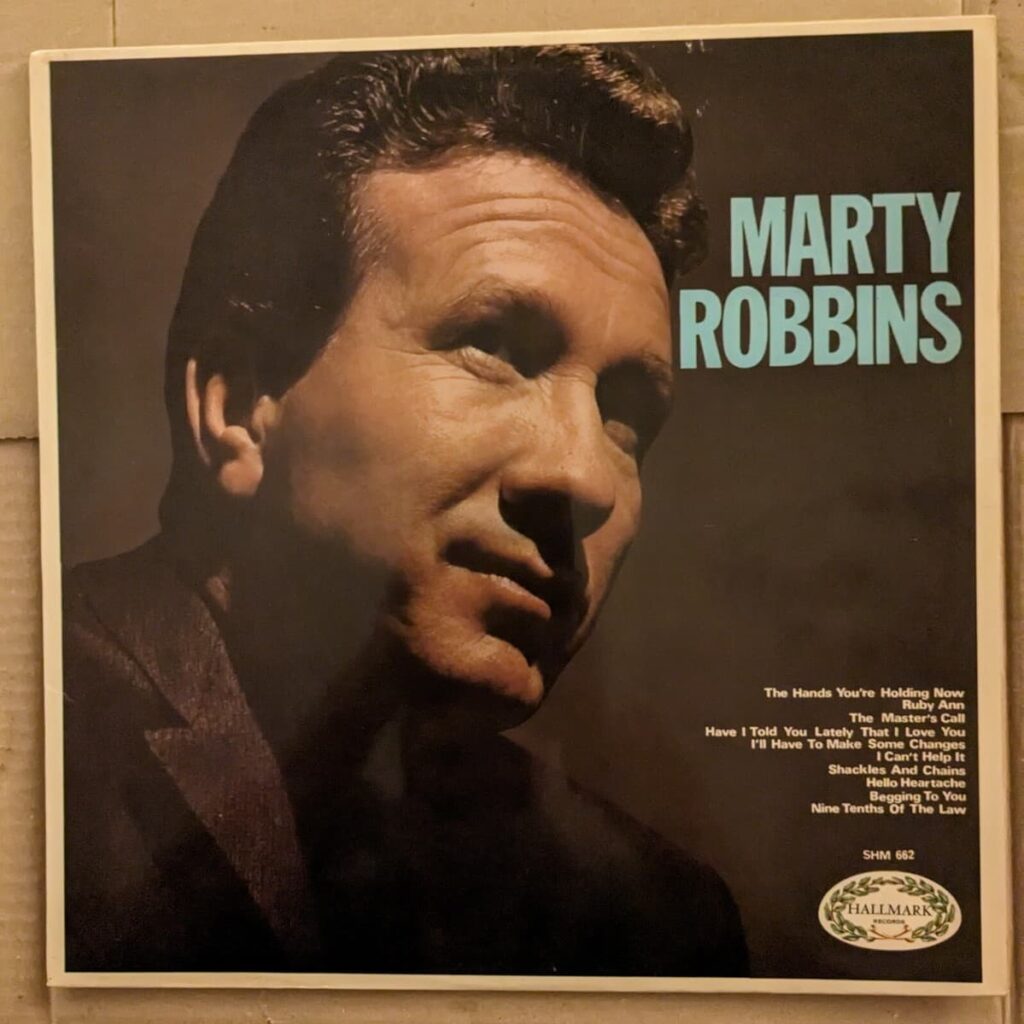
Marty Robbins and “Sundown / The Texas Ranger”: A Cinematic Masterclass in the Balladry of Justice and the Setting Sun
In the hallowed sanctuary of Western music, there are songs that do more than merely entertain; they paint sprawling, dust-covered landscapes upon the canvas of our imagination. When Marty Robbins released the album What Any Man Can Do in 1971, he included a piece of storytelling so vivid it felt like a lost chapter from his legendary Gunfighter Ballads era. “Sundown / The Texas Ranger” was not just a track; it was an epic narrative of duty, morality, and the heavy price of the law. While the 1970s saw country music drifting toward a more polished, “pop” sensibility, The Master Storyteller stood firm in the stirrups, delivering a performance that reminded a generation of the rugged, principled roots of the American West. It didn’t need to dominate the Billboard Hot Country Songs chart to find its immortality; it found its home in the hearts of those who still valued a story told with “velvet” authority and a steady, rhythmic pulse.
The “story” behind this recording is a testament to Marty Robbins’ obsession with the history of the frontier. By 1971, Marty had already redefined the genre with “El Paso,” but “Sundown / The Texas Ranger” offered a more mature, perhaps more weary perspective on the life of a lawman. The song follows a Texas Ranger as he tracks an outlaw through the unforgiving brush, culminating in a confrontation at “sundown.” Unlike the youthful bravado of his earlier hits, this performance carries a weight of experience. Marty’s vocal delivery is a masterclass in tension—he whispers the quiet moments of the hunt and lets his tenor soar as the inevitability of the showdown nears. It was a bridge between the classic “Singing Cowboy” tradition and the grittier, more psychological Western films that were popular at the time.
For the sophisticated listener who grew up in the mid-20th century, watching or hearing Marty perform this song evokes a powerful, visceral nostalgia. It brings back memories of Saturday matinees at the cinema and the quiet dignity of a generation that believed in “doing what a man can do.” The lyrics aren’t just about a chase; they are about the internal struggle of a man whose job requires him to take a life to preserve the law. For a “qualified” reader who has spent a lifetime navigating their own moral crossroads, this song is a profound mirror. It speaks to the realization that as the “sundown” of our own lives approaches, we look back not at the battles won, but at the character we maintained through the struggle.
The meaning of “Sundown / The Texas Ranger” lies in its atmosphere of “The End of an Era.” Don Williams may have been the “Gentle Giant” of comfort, but Marty Robbins was the “Gentle Giant” of the narrative. He possessed the unique gift of making the listener feel the heat of the Texas sun and the cold steel of a pistol. As we reflect on this masterpiece today, through the lens of our own silver years, we feel a bittersweet connection to a world that felt more certain, where right and wrong were as clear as the horizon. To listen to this track now is to sit once more with a legend, acknowledging that while the frontier has long since vanished, the spirit of the Ranger—and the voice of the man who sang him into existence—will never truly fade.
 Music Legend