
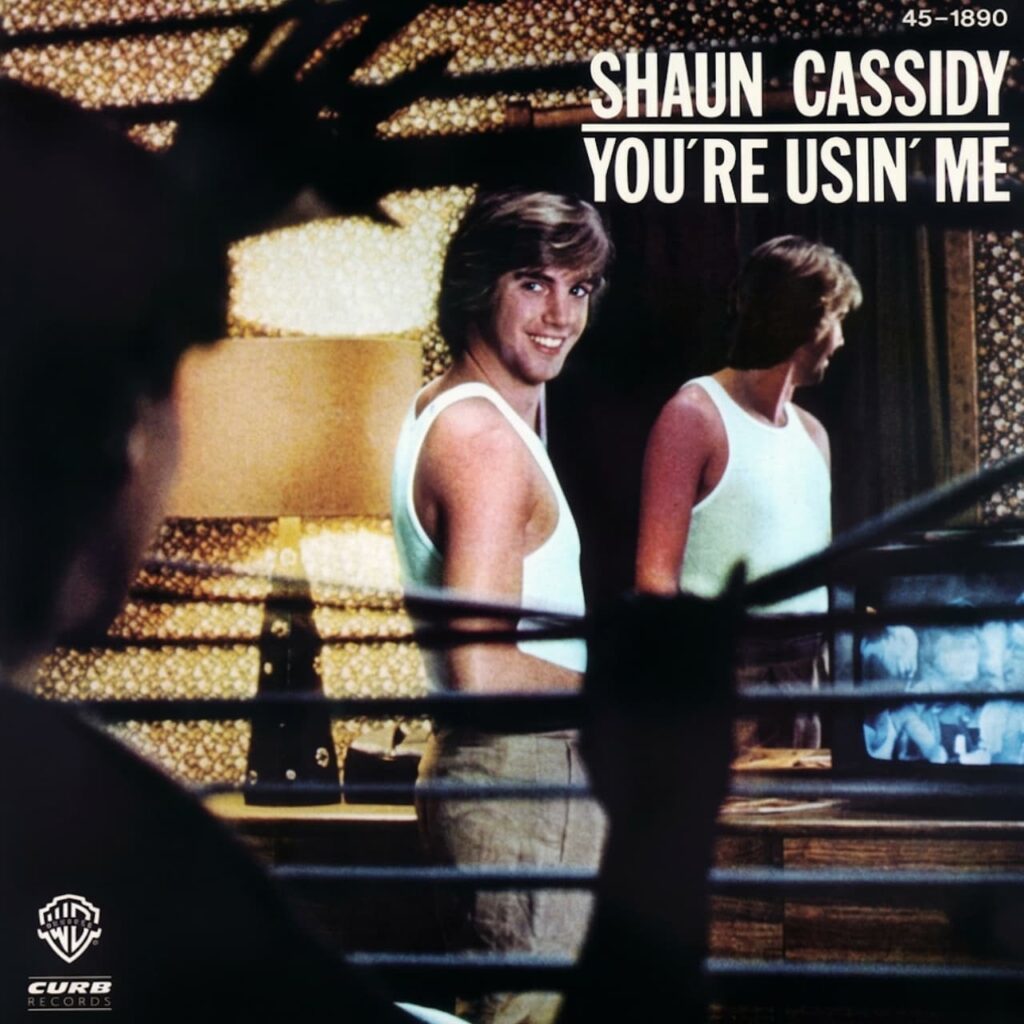
When Love Becomes One-Sided — “You’re Usin’ Me” Shows a More Mature and Emotional Voice from Shaun Cassidy
By the late 1970s, Shaun Cassidy was no longer simply the smiling teenage sensation whose voice had once dominated radio airwaves. The explosive success of “Da Doo Ron Ron”, which reached No. 1 on the Billboard Hot 100 in 1977, had already secured his place in pop history, while his debut album Shaun Cassidy became a multi-platinum phenomenon. Yet as the decade moved forward, Cassidy began exploring more reflective material, songs that hinted at emotional complexity rather than youthful innocence. One such example is “You’re Usin’ Me,” a track that quietly revealed the evolving depth of his musical expression.
The song appeared on Born Late, Cassidy’s 1978 album, which reached No. 6 on the Billboard 200 and continued his remarkable run of commercial success during the height of his popularity. While the album still contained upbeat pop numbers designed for radio play, it also included songs that carried a more introspective tone. “You’re Usin’ Me” belongs firmly within that quieter side of the record, offering a thoughtful reflection on the uneasy realization that affection may not always be returned with the same sincerity.
Unlike the bright, carefree energy that characterized many of Cassidy’s early hits, “You’re Usin’ Me” unfolds with a more measured emotional pace. The arrangement is gentle and restrained, built around soft guitar chords, subtle keyboard textures, and a rhythm section that moves almost cautiously beneath the melody. This musical simplicity creates space for the emotional story at the heart of the song.
The lyric itself speaks to a moment of awakening within a relationship. It captures that uncomfortable realization when trust begins to feel fragile, when kindness is mistaken for weakness, and when affection seems to be taken for granted rather than appreciated. Rather than presenting anger or dramatic confrontation, the song approaches the situation with quiet honesty.
This emotional tone gave Shaun Cassidy an opportunity to demonstrate a different side of his vocal character. His delivery in “You’re Usin’ Me” is noticeably more restrained than in his early chart-topping singles. Instead of projecting youthful exuberance, he sings with a reflective softness, allowing each line to feel almost conversational.
At the time, Cassidy was navigating the complex transition that many young pop stars face as their audience grows alongside them. The late 1970s marked a period when his music began shifting subtly toward a broader emotional palette. While his early career had been built largely on energetic pop arrangements and catchy hooks, songs like “You’re Usin’ Me” suggested an artist gradually interested in exploring deeper storytelling.
This shift also reflected broader changes within popular music during that era. The end of the 1970s saw audiences becoming more receptive to introspective songwriting. While disco rhythms and arena rock continued to dominate many charts, there was also an increasing appetite for songs that captured quieter emotional experiences.
Within that cultural moment, “You’re Usin’ Me” feels like a quiet confession. The melody flows gently, never rushing toward a dramatic climax. Instead, it allows the listener to sit with the emotional ambiguity at the center of the story.
Listening today, the song reveals a side of Shaun Cassidy that sometimes goes unnoticed when his career is remembered primarily through his biggest hits. Beneath the pop star image was a singer capable of expressing vulnerability with subtle sincerity.
There is also something timeless about the theme of the song. Relationships are rarely simple, and moments of doubt or emotional imbalance are part of the human experience. “You’re Usin’ Me” captures that delicate emotional territory without bitterness or accusation.
In the end, the song leaves behind a lingering sense of reflection. The music fades quietly, almost as if the narrator is still thinking through the situation, still searching for clarity.
And perhaps that gentle uncertainty is precisely what gives “You’re Usin’ Me” its enduring charm. It reminds listeners that even in the polished world of late-1970s pop, a simple melody and an honest voice could still reveal something deeply human about love, trust, and the fragile balance between them.