
“Footsteps” was a song about the memories that remain after love has gone, and in 1981 Showaddywaddy gave that old heartbreak a fresh voice for a changing musical age.
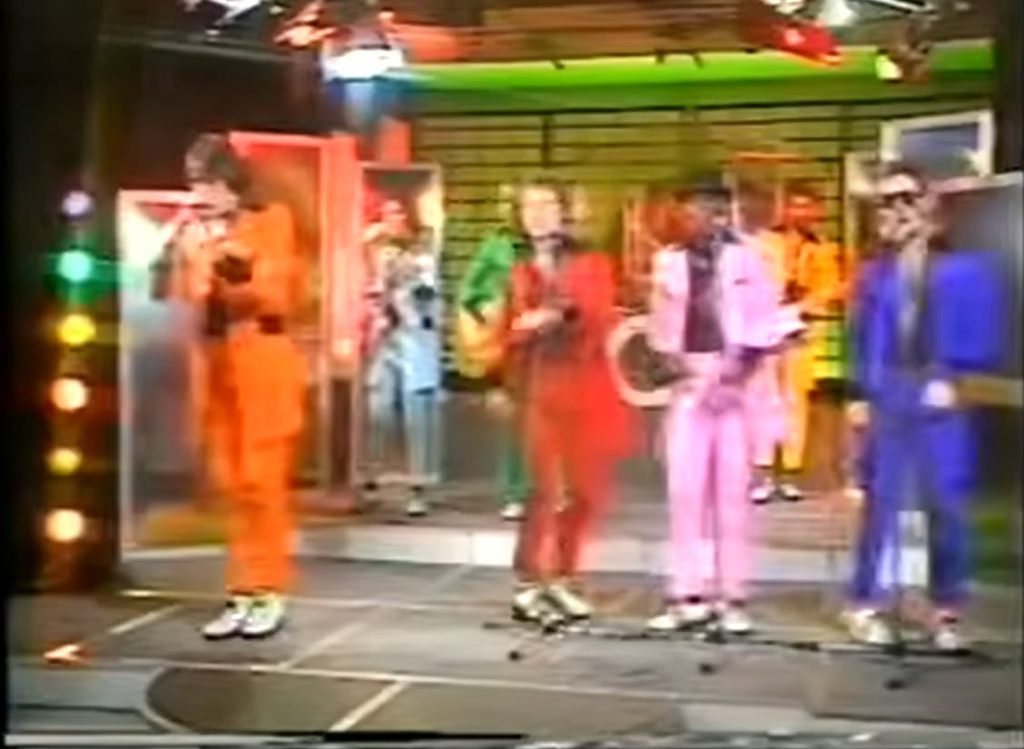
When Showaddywaddy performed “Footsteps” on BBC’s Pebble Mill at One on November 26, 1981, the band was standing at an interesting point in its long career. The great explosion of their mid 1970s success had passed, but they were still one of Britain’s busiest live acts and remained a familiar presence on television. Their version of “Footsteps” had been released as a single on November 6, 1981, backed with “Tribute,” and it would go on to reach No. 31 on the UK Singles Chart, spending nine weeks in the chart. The single entered the official chart at No. 71 on November 28, 1981, meaning that the Pebble Mill performance came just as the record was beginning its climb. For Showaddywaddy, it became another reminder that even as musical fashions were changing around them, there was still an audience waiting to hear the sound of classic rock and roll and the songs that carried the emotional memory of an earlier generation.
The story of “Footsteps” began long before Showaddywaddy recorded it. The song was written by Barry Mann and Hank Hunter and first became widely known through American singer Steve Lawrence, whose recording reached No. 7 on the Billboard Hot 100 in 1960. It is a deceptively simple song, but its emotional idea is one that never grows old. A man hears the footsteps of someone he once loved and imagines that she has returned to him. For a moment, hope rises again. Then comes the painful realisation that the sound belongs to someone else, and the person he longs for is still gone. The song captures one of heartbreak’s most familiar cruelties: the way memory can suddenly make us believe that the past has returned, only for reality to close the door again. That quiet sadness gave “Footsteps” a very different mood from the bright, energetic rock and roll numbers for which Showaddywaddy were best known.
Perhaps that is exactly why the song suited them so well in 1981. Showaddywaddy had built their reputation on bringing the spirit of the 1950s into the 1970s with enormous energy, colourful stage clothes, powerful harmonies, and a sound that made old rock and roll feel alive again. Yet by the early 1980s, the band had already travelled a long way from the days of “Hey Rock and Roll,” “Three Steps to Heaven,” “Heartbeat,” and their 1976 No. 1 hit “Under the Moon of Love.” Their single “Footsteps” showed another side of the group. Instead of relying entirely on the excitement of the dance floor, the song allowed them to explore the more reflective side of the old rock and roll repertoire. The familiar rhythm remained, but beneath it was a feeling of loss, the kind that arrives quietly when an ordinary sound brings back someone who is no longer there.
The Pebble Mill at One performance on November 26, 1981 is especially interesting because it came during a remarkably busy period for the band. Throughout 1981, Showaddywaddy were touring constantly and making regular television appearances. Their official history describes the early 1980s as a time when television remained kind to the group, with appearances on programmes including Top of the Pops, Cheggars Plays Pop, Razzmattazz, and Pebble Mill. Yet the music world around them was changing rapidly. New Wave, synth pop, post punk, and a new generation of British artists were dominating the charts. Showaddywaddy’s sound belonged openly to another musical tradition, but that was never something they tried to hide. They had always understood that the past could be exciting when performed with conviction, and “Footsteps” was part of their attempt to keep that tradition moving forward.
There is something particularly nostalgic about hearing “Footsteps” now. The song is built around a sound that has disappeared from everyday life, yet the feeling behind it remains instantly recognisable. A footstep in a hallway, a familiar voice heard from another room, a face glimpsed in a crowd, these small moments can bring the past rushing back before we have time to protect ourselves from it. That is the secret behind the song’s lasting appeal. It does not tell a complicated story. It simply understands how memory works.
By the end of 1981, “Footsteps” had become Showaddywaddy’s final UK charting single for their long associated Bell/Arista period before the band moved on to a new chapter with RCA. Its No. 31 peak was not among their biggest chart successes, but the record remains an important part of their story because it arrived during a period of transition. The band were no longer the unstoppable chart force they had been in the 1970s, yet they were still performing, still recording, and still finding ways to connect with audiences.
Watching Showaddywaddy perform “Footsteps” on that November day in 1981, it is easy to feel the distance between the bright confidence of their early years and the changing world that surrounded them. But perhaps that distance is what gives the song its meaning today. “Footsteps” is about listening for someone who has already gone, and Showaddywaddy’s version now carries its own echoes of another musical time, when eight musicians from Leicester could bring the sound of rock and roll into living rooms across Britain and make the past feel close enough to hear walking down the hall.