
A reflective song about innocence, longing, and the quiet passage of time beneath the surface of early glam rock
Released in 1972, “Fountain” stands as one of the most understated and emotionally revealing recordings by Sweet, a band more commonly remembered for glittering stomp anthems and explosive chart singles. Unlike the swagger of “Block Buster!” or the hard edged theatricality that would later define their global image, “Fountain” belongs to a quieter emotional space. It appears on their breakthrough album Funny How Sweet Co-Co Can Be, an album that reached No. 2 on the UK Albums Chart upon release, firmly establishing Sweet as a major force in British popular music. While “Fountain” itself was never released as a single and therefore did not enter the singles charts, its importance lies not in numbers but in what it reveals about the band at a crucial early moment in their career.
At the time, Sweet were navigating the delicate balance between studio crafted pop and the heavier, self driven sound they longed to pursue. Written by the legendary songwriting team Nicky Chinn and Mike Chapman, “Fountain” reflects the softer, introspective side of that collaboration. The song unfolds gently, built around acoustic textures, restrained harmonies, and a melody that seems to drift rather than declare itself. It feels almost suspended in time, like a memory half recalled, a feeling that lingers without demanding resolution.
Lyrically, “Fountain” reads as a meditation on youth, purity, and emotional vulnerability. The image of a fountain carries multiple layers of meaning. It suggests renewal and innocence, but also repetition, water rising only to fall again. There is a quiet sadness in that symbolism, an awareness that moments of clarity and beauty are fleeting. Unlike many pop songs of the era that leaned toward romantic certainty, “Fountain” is filled with hesitation and reflection. It speaks softly, trusting the listener to lean in rather than be swept along.
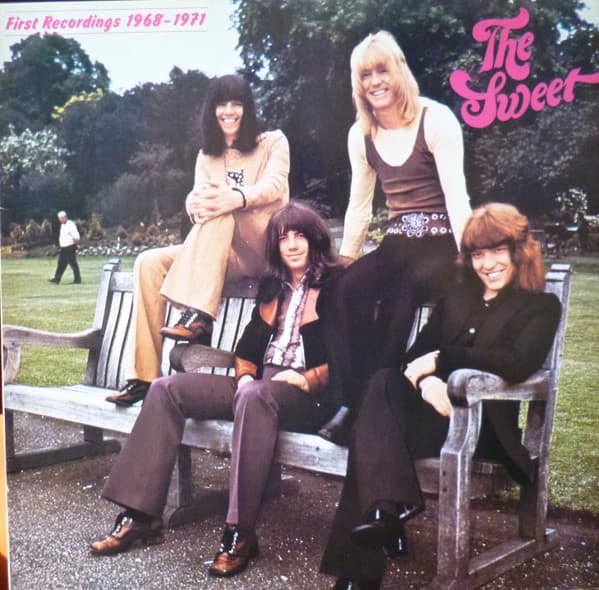
This gentler approach offered a contrast to the public image of Sweet at the time. On television and radio, they were often presented as bright, energetic hitmakers with carefully styled appearances. Yet within Funny How Sweet Co-Co Can Be, songs like “Fountain” reveal a band capable of emotional nuance and restraint. Brian Connolly’s vocal performance is especially notable here. He sings with tenderness rather than bravado, allowing vulnerability to take center stage. His voice carries a slight ache, as if aware that innocence is something already slipping away.
From a musical perspective, “Fountain” also hints at the broader ambitions that would later define Sweet’s evolution. The harmonies are carefully layered, the arrangement patient and unforced. There is no rush toward a chorus designed for instant impact. Instead, the song breathes. It invites reflection, rewarding repeated listening rather than immediate recognition. In this sense, “Fountain” feels closer to a personal diary entry than a commercial product, an unusual but valuable artifact within the band’s early catalog.
The early 1970s were a period of rapid change in popular music, and Sweet were often caught between expectation and aspiration. “Fountain” captures that tension beautifully. It belongs to a moment before the band fully embraced the harder glam rock sound that would bring international success, yet it already shows emotional depth and maturity. Listening to it now, one can hear a group still discovering who they were and who they might become.
Over time, “Fountain” has gained appreciation among listeners who explore beyond the hits. It stands as a reminder that Sweet were more than the glitter and the noise. They were storytellers capable of subtlety, capable of expressing longing and reflection without spectacle. In the quiet spaces of this song, there is a sense of looking back even while standing at the beginning, a feeling that resonates long after the final note fades.
In the broader story of Sweet, “Fountain” may not occupy a prominent place on charts or playlists, but it holds a deeper emotional weight. It represents a softer truth within a loud era, a moment of calm reflection flowing gently beneath the surface of early glam rock history.