
A defiant cry of longing and loss, where love lingers in absence and echoes through time with raw, unfiltered emotion
Few songs in the history of Australian rock carry the same enduring spirit and cultural resonance as “Am I Ever Gonna See Your Face Again” by The Angels. First released in 1976 on their self-titled debut album “The Angels” (also known internationally as “Face to Face” in later iterations), the track did not initially dominate the charts in a dramatic fashion. It reached a modest position on the Australian charts, but its true legacy would grow far beyond its original commercial performance. Over time, it became something far greater than a hit—it evolved into a ritual, a shared experience between band and audience that no chart position could ever fully capture.
Written by band members Doc Neeson, John Brewster, and Rick Brewster, the song was born from a deeply personal place. Contrary to the rowdy, almost rebellious energy it later came to embody in live performances, its origin is rooted in grief and loss. The lyrics were inspired by the passing of Doc Neeson’s partner, giving the song an emotional weight that is often overlooked by those who only remember its louder, more defiant stage presence. At its core, “Am I Ever Gonna See Your Face Again” is not about rebellion—it is about absence, about the haunting question that lingers when someone dear is gone.
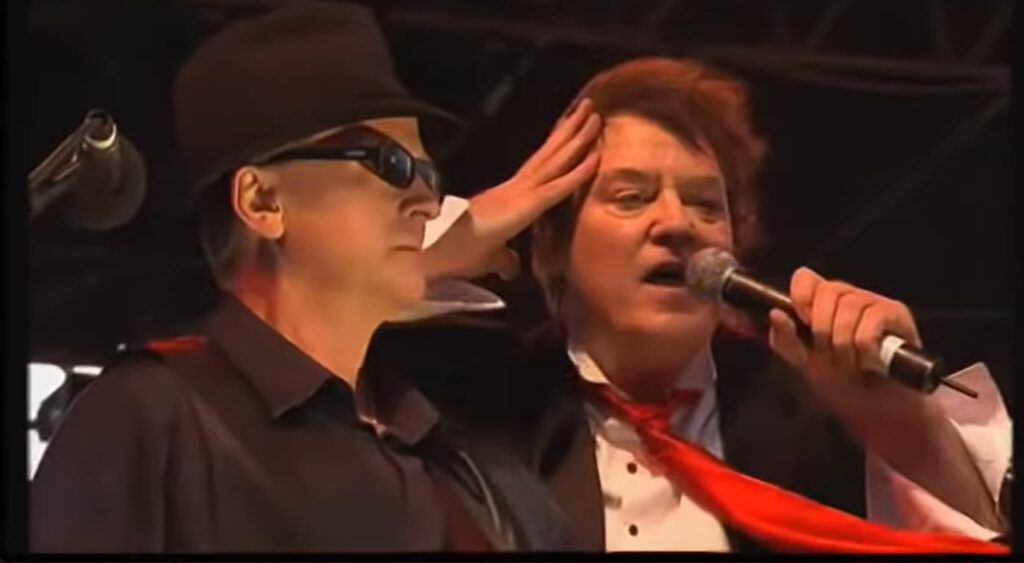
By the time The Angels performed the song during the Max Sessions 2014, it had already lived many lives. Decades had passed, yet the song retained its pulse, its urgency, its unmistakable identity. What makes this later performance so compelling is not just the sound, but the passage of time itself. The voices may carry a slightly weathered tone, the energy shaped by years rather than youth, but the emotion—if anything—feels even more authentic. There is a sense that the song has matured alongside those who perform and listen to it, deepening in meaning with each passing year.
One cannot speak of “Am I Ever Gonna See Your Face Again” without acknowledging its unique place in live music culture. The audience response—loud, unrestrained, and famously irreverent—became an inseparable part of the song’s identity. Yet, in the Max Sessions 2014 setting, there is a subtle shift. Stripped of the overwhelming crowd dynamic, the song breathes differently. It invites reflection. It allows the listener to reconnect with its original sentiment—the quiet, aching question at its center.
Musically, the track stands as a defining example of the raw, guitar-driven sound that characterized The Angels during their rise. The interplay between sharp riffs and steady rhythm creates a foundation that is both powerful and restrained. Unlike many rock songs that rely on excess, this one thrives on balance. The instrumentation never overshadows the message; instead, it carries it forward with a steady, almost relentless momentum.
The meaning of the song, when revisited in later years, takes on a broader dimension. It is no longer tied solely to one story of personal loss. It becomes universal—a reflection on all the moments and people that time inevitably takes away. The question posed in the title remains unanswered, suspended in a space between memory and longing. And perhaps that is why it endures. It does not offer closure; it offers recognition.
In the landscape of classic rock, where many songs are remembered for their energy or their chart success, “Am I Ever Gonna See Your Face Again” occupies a different space. It is remembered for how it feels—how it connects, how it lingers. The Max Sessions 2014 performance serves as a reminder that music is not confined to the moment of its creation. It evolves, it gathers meaning, it becomes part of a larger story.
And so, when listening to The Angels revisit this timeless piece, one is not simply hearing a song from 1976. One is hearing a conversation across decades—a voice asking a question that remains as poignant now as it was then. In that question lies the true power of the song: not in the answer, but in the echo it leaves behind.