
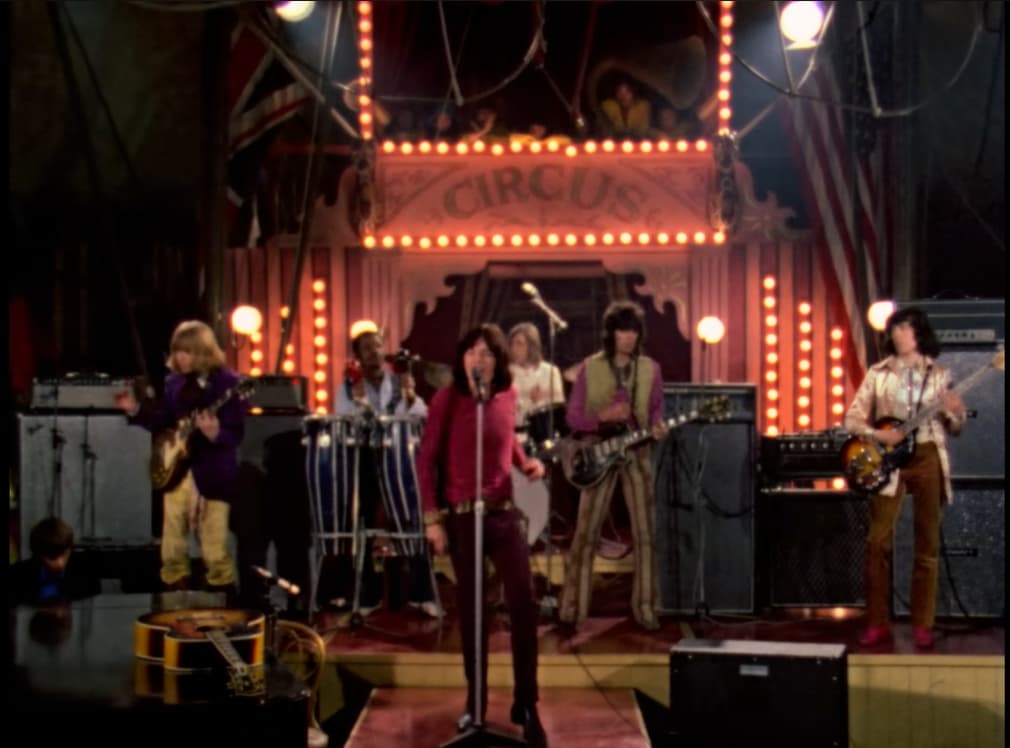
A thunderous declaration of survival and rebirth, “Jumpin’ Jack Flash” marked The Rolling Stones’ triumphant return to raw, electrifying rock.
When The Rolling Stones released “Jumpin’ Jack Flash” in May 1968, it was more than just another single—it was a statement of identity, a defiant reawakening after a period of uncertainty and experimentation. The song surged to No. 1 on the UK Singles Chart and climbed to No. 3 on the Billboard Hot 100 in the United States, reaffirming the band’s place at the forefront of rock music at a time when the cultural landscape was shifting rapidly beneath their feet.
The late 1960s had not been entirely kind to the Stones. Their previous album, Their Satanic Majesties Request (1967), while ambitious, had drawn mixed reactions, often unfavorably compared to the psychedelic explorations of their contemporaries. There was a sense—quiet but persistent—that the band had momentarily lost its footing. “Jumpin’ Jack Flash” changed that perception almost overnight. It was lean, gritty, and unapologetically direct—a return to the blues-infused rock that had always been their strongest voice.
The story behind the song’s creation has become something of legend. One early morning at Keith Richards’ countryside home, he and Mick Jagger were awakened by the heavy footsteps of someone outside. When Jagger asked what the noise was, Richards casually replied, “Oh, that’s Jack—that’s Jumpin’ Jack.” Whether apocryphal or not, the phrase stuck, sparking the seed of what would become one of the band’s most enduring anthems. From that simple, almost offhand moment grew a song that would resonate with millions.
Musically, “Jumpin’ Jack Flash” is built on a deceptively simple foundation. The iconic opening riff—reportedly achieved by recording an acoustic guitar through a cassette recorder to create a distorted effect—feels both raw and monumental. It is the sound of something breaking through, of energy barely contained. Charlie Watts’ steady, unembellished drumming anchors the track, while Bill Wyman’s bass provides a subtle but essential pulse beneath the surface.
Lyrically, the song is a celebration of endurance. “I was born in a crossfire hurricane / And I howled at my ma in the driving rain…” From its very first lines, it paints a picture of hardship and resilience. Yet, rather than dwelling in struggle, the song transforms adversity into triumph. The repeated refrain—“It’s all right now, in fact, it’s a gas!”—feels almost like a declaration of victory, a refusal to be defined by the past. There is a certain universality in that message. It speaks to the idea that life’s trials, however severe, can be overcome—not with quiet resignation, but with a kind of defiant joy. In this sense, Mick Jagger’s vocal performance is crucial. His delivery is both sneering and celebratory, carrying a sense of hard-earned confidence. It is not the voice of someone untouched by hardship, but of someone who has come through it and emerged stronger.
The cultural context of 1968 adds further depth to the song’s impact. It was a year marked by upheaval—political unrest, social change, a growing sense of disillusionment. Against that backdrop, “Jumpin’ Jack Flash” offered something grounding, something visceral. It did not attempt to explain the world; it simply met it head-on, with unfiltered energy. Over time, the song has become a cornerstone of The Rolling Stones’ live performances, often serving as a powerful opener that immediately ignites the audience. Its enduring appeal lies in its simplicity and honesty. There are no unnecessary flourishes, no attempt to chase trends—only a direct connection between rhythm, voice, and emotion.
Listening to “Jumpin’ Jack Flash” today, one can still feel that original spark—the sense of a band rediscovering its essence, reclaiming its voice. It is a reminder that sometimes, the most powerful statements are the simplest ones, delivered with conviction and clarity. And perhaps that is why the song continues to endure. It is not merely a relic of a particular moment in rock history, but a timeless expression of resilience—a declaration that, no matter the storms we weather, we can still stand, still sing, and still find that, somehow, it’s all right now.
 Music Legend