
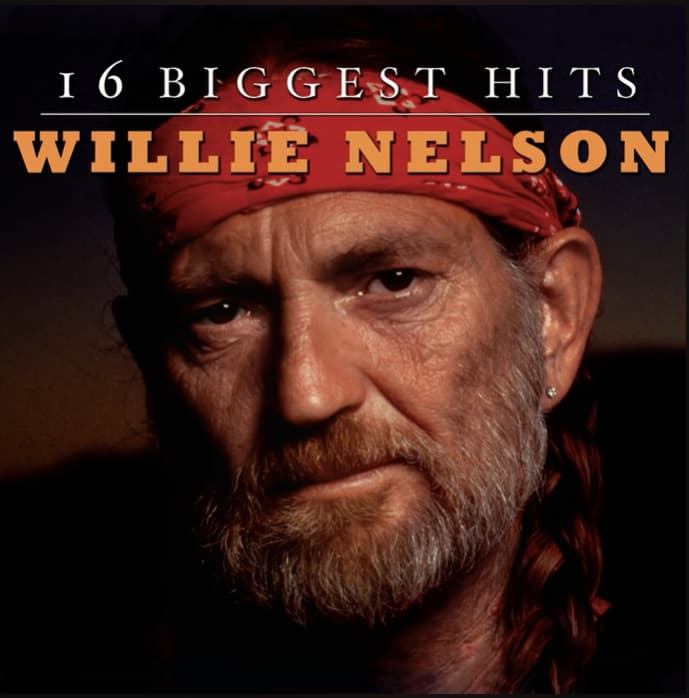
Willie Nelson – The Legend of “The Singing Sheriff”: Willie’s Account of Country Music’s Most Flamboyant Maverick
In the sprawling “cinematic journey” of country music history, few figures loom as large or as loud as Faron Young. While Willie Nelson is now a “Titan” of the outlaw movement, his early “backstory” in Nashville was inextricably linked to the man he considers the most flamboyant—and perhaps the most impulsively generous—character the industry ever saw. Known as “The Singing Sheriff,” Faron Young wasn’t just a hitmaker; he was a whirlwind of energy, rhinestones, and “unmitigated gall” who took a young, penniless Willie under his wing and provided the “foundation” for a career that would eventually change the world.
The “ranking” of Faron Young’s flamboyance is legendary, but for Willie, it was personal. In the winter of 1961, Willie was so “working-class” broke that he tried to sell his song “Hello Walls” to Faron for a mere $500 just to buy groceries. Faron, recognizing the song was a masterpiece, refused to buy it. Instead, he loaned Willie the money and recorded the track himself under Capitol Records. When the song became a massive number-one hit, Faron famously handed Willie a royalty check for $20,000—a life-changing sum that Willie celebrated with a legendary “thank you” kiss at Tootsie’s Orchid Lounge, a story Willie recounts with a mischievous glint in his eye to this day.
A Character Larger Than the Silver Screen
For the sophisticated listener, Faron Young represents a bygone era of “Passion and Danger.” He was a man who lived by the title of his own hit: “Live Fast, Love Hard, Die Young.” Willie’s personal accounts often highlight Faron’s “impulsive” nature—from his lavish Cadillacs and custom-tailored Nudie suits to his sharp, often unfiltered wit. He was the ultimate “storyteller” off-stage, a man whose presence could fill a room and whose generosity was as vast as the Texas plains.
“Faron was a study in contrasts… he’d give you the shirt off his back, but he might insult you while he was doing it.”
This duality made him a “beacon” for a new generation of songwriters like Willie and Bill Anderson. Faron didn’t just sing ballads; he lived them. He was a pioneer who understood that in country music, the “souvenir” you leave behind isn’t just the music, but the legend of the life you lived. His flamboyance wasn’t a mask; it was an extension of a “Gentle Giant” heart that was often hidden behind a brash exterior.
The Final Echo of a Flamboyant Era
As we look back at the grand legacy of The Singing Sheriff, we see a man who bridged the gap between the traditional honky-tonk and the modern era. His “farewell” in 1996 left a void in the industry that has never quite been filled. For Willie Nelson, Faron remains the definitive “most flamboyant” musician—not just for his style, but for the scale of his personality. He taught a young “Red Headed Stranger” that to survive in this business, you need more than a “Velvet Voice”; you need the courage to be exactly who you are, as loud as you can be.
Faron Young remains a monolith of authenticity because he was unapologetically himself. He took the “desert dust” of his own Louisiana beginnings and turned it into a technicolor career, proving that in the world of country music, there is always room for a little more flash and a lot more heart.
 Music Legend