
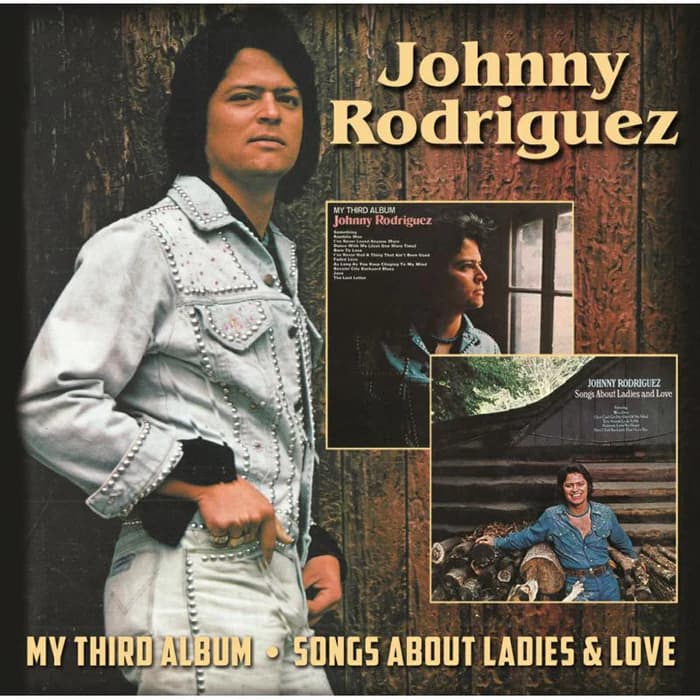
A tender reckoning with time and devotion, where love stands quietly proven rather than loudly proclaimed
Released in 1975, “Love, Look at Us Now” marked one of the most defining moments in the career of Johnny Rodriguez. Issued as a single from his self titled album Johnny Rodriguez, the song rose to No. 1 on the Billboard Hot Country Singles chart, becoming his third chart topping hit. In an era when country music was filled with stories of betrayal, wandering hearts, and dramatic endings, this song chose a different path. It did not argue for love. It simply stood still and pointed to what remained.
By the mid 1970s, Johnny Rodriguez had already established himself as a singular voice in country music. His background, shaped by hardship, resilience, and cultural duality, gave his recordings a sense of lived experience rather than theatrical performance. “Love, Look at Us Now” captures that essence perfectly. It is not a song about beginnings, nor about endings. It is about endurance. About staying. About the quiet astonishment that sometimes arrives when one looks back and realizes that love has survived more than expected.
From its opening lines, the song addresses love almost as a living presence, an unseen witness that has traveled through years of doubt, strain, and uncertainty. The narrator does not boast. He reflects. There is humility in the way the lyrics unfold, as if the singer himself is surprised by the strength of what remains. This reflective tone is central to the song’s emotional power. It invites contemplation rather than reaction.
Musically, “Love, Look at Us Now” is built on simplicity and balance. The arrangement leans on gentle acoustic guitars, understated steel, and a steady rhythm section that never draws attention away from the voice. This restraint allows Johnny Rodriguez’s vocal performance to carry the full emotional weight of the song. His delivery is calm, warm, and unforced. He does not rush a single phrase. Each line feels considered, spoken from a place of memory rather than impulse.
What makes this song especially resonant is its perspective on love as something tested by time. It acknowledges that love is not immune to struggle, yet it suggests that survival itself is a form of triumph. There is no denial of hardship here. Instead, there is recognition. The song understands that love is shaped not by perfection, but by persistence.
The success of “Love, Look at Us Now” on the charts reflected how deeply that message connected with listeners. Reaching No. 1 in 1975, it affirmed Rodriguez’s ability to articulate emotions that often go unspoken. While other hits of the time leaned toward dramatic storytelling, this song found its strength in understatement. It trusted the listener to recognize the truth within it.
Within the album Johnny Rodriguez, the song stands as a centerpiece of maturity and emotional clarity. The album itself showcased a balance between traditional country sounds and a reflective lyrical approach, but “Love, Look at Us Now” distilled those elements into their purest form. It felt less like a performance and more like a quiet conversation shared at the end of a long road.
There is also something timeless in the way the song addresses love directly, almost respectfully, as if acknowledging a companion that has endured alongside the singer. This personification gives the song its gentle authority. Love is not idealized here. It is recognized. Seen clearly. Appreciated for what it has withstood.
Decades later, “Love, Look at Us Now” continues to resonate because it speaks to a truth that does not age. It reminds us that love does not always announce itself in grand gestures. Sometimes its greatest statement is simply being there, unchanged by years that alter everything else.
In the broader legacy of Johnny Rodriguez, this song remains one of his most enduring achievements. It captures the essence of his artistry: honest, restrained, and deeply human. “Love, Look at Us Now” is not just a reflection on a relationship. It is a meditation on time itself, and on the quiet miracle of finding something still standing when so much else has passed.