
A Gentle Promise of Love, Gratitude, and the Quiet Joy of an Ordinary Life
When Anne Murray released her version of “Danny’s Song”, it arrived not as a dramatic declaration, but as something far rarer in popular music: a sincere, softly spoken expression of gratitude, devotion, and contentment. Originally written by Kenny Loggins in 1970 as a gift for his brother Danny upon the birth of his first child, the song had already found modest success before Murray gave it a new emotional gravity. Her recording, featured on the album Danny’s Song released in late 1972, reached its commercial peak in 1973, climbing to No. 7 on the Billboard Hot 100, No. 1 on the Adult Contemporary chart, and No. 3 on the Billboard Country chart. These achievements reflected not hype, but resonance. The song found its audience quietly, patiently, and stayed.
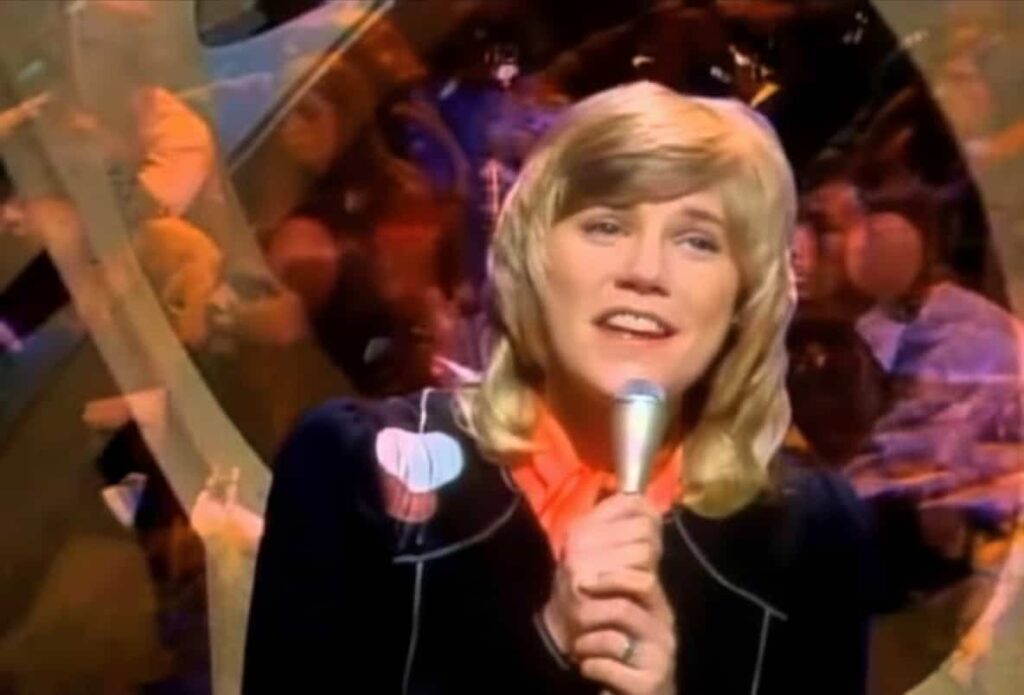
Murray’s performance of “Danny’s Song” on The Midnight Special in 1973 remains one of the most defining televised moments of her career. At a time when variety shows often favored spectacle, this performance stood apart through restraint. There was no theatrical excess, no vocal acrobatics. Instead, Murray stood calmly, letting the song speak in its own language. Her voice, warm and unforced, carried a sense of lived understanding, as though she were not performing the song, but remembering something deeply personal.
What makes “Danny’s Song” so enduring is its subject matter. It speaks of commitment not in grand romantic gestures, but in everyday responsibility. Lines about a baby’s laughter, the promise of lifelong partnership, and the willingness to work hard for family security give the song its emotional center. These are not the fantasies of youth, but the hard-earned values of adulthood. In Murray’s hands, the lyrics feel less like a youthful blessing and more like a reflective affirmation of life’s quieter victories.
By the early 1970s, Anne Murray had already established herself as a unique presence in popular music. A Canadian artist navigating the American charts, she brought a sense of calm clarity that contrasted sharply with the era’s louder trends. Her success was built on trust. Audiences believed her. Songs like “Snowbird”, “You Needed Me”, and “Danny’s Song” were not vehicles for image, but extensions of her natural emotional tone. This authenticity is precisely why her interpretation of Kenny Loggins’ composition became definitive for so many listeners.
The meaning of “Danny’s Song” deepens with time. In youth, it may sound like a tender promise. Later in life, it becomes a mirror. The lyrics remind listeners of choices made, sacrifices accepted, and the simple courage required to build a stable life. It honors love that endures routine, financial worry, and responsibility. There is wisdom in its optimism, a belief that happiness is not found in excess, but in commitment.
On The Midnight Special, Murray’s delivery carried an additional layer of significance. Television in the early 1970s had the power to enter living rooms intimately. For many, that performance became entwined with personal memory. A late night, a quiet room, a moment of reflection after a long day. The song did not demand attention. It invited it. That invitation remains open decades later.
Today, “Danny’s Song” endures not because of nostalgia alone, but because its message remains relevant. It speaks to a generation that understands time’s passage, that recognizes love as something built, not declared. Anne Murray’s version stands as a reminder that music does not need to shout to last. Sometimes, the songs that stay with us the longest are the ones that speak gently, honestly, and with gratitude for the life already lived.