
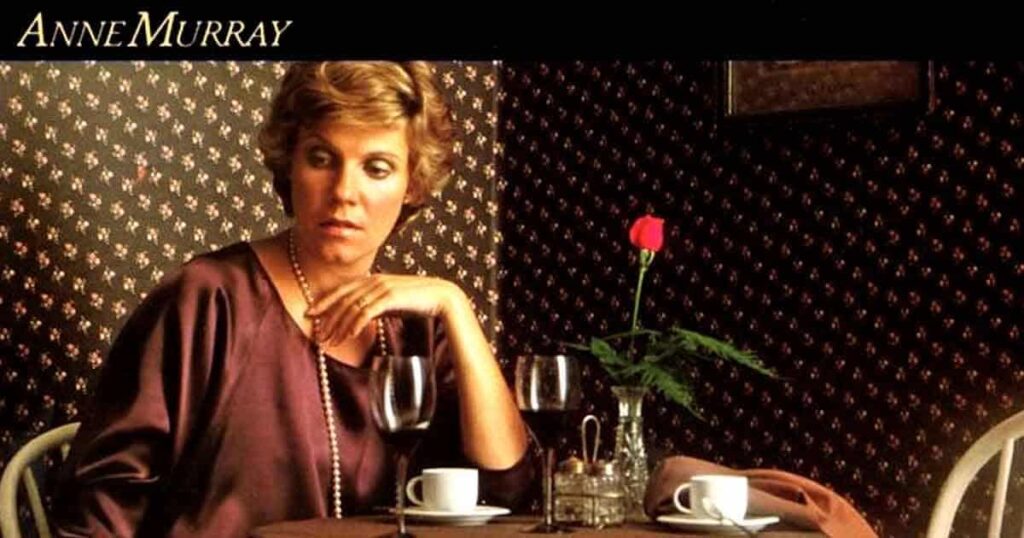
A Quiet Confession of Loss, Where Strength and Vulnerability Meet in Song
When Anne Murray released Broken Hearted Me in early 1979, popular music was standing at a crossroads. Disco dominated dance floors, soft rock filled living rooms, and country music was beginning one of its most successful crossover eras. Into that landscape came a song that did not shout, did not dramatize, and did not disguise its sorrow. Broken Hearted Me, written by Randy Goodrum, arrived as a calm, intimate confession of emotional ruin, and its restraint was precisely what made it so powerful.
Released as the lead single from the album I’ll Always Love You, the song quickly resonated across formats. It reached No. 1 on the Billboard Hot Country Singles chart, No. 1 on the Adult Contemporary chart, and climbed to No. 12 on the Billboard Hot 100. These chart positions were not merely commercial milestones. They reflected how deeply the song connected with listeners who recognized themselves in its quiet heartbreak. At a time when many breakup songs relied on dramatic imagery or overt anger, Broken Hearted Me spoke in a softer voice, one that trusted the listener to understand pain without spectacle.
The story behind the song begins with Randy Goodrum, a songwriter known for his melodic sensitivity and emotional clarity. Goodrum did not write heartbreak as a sudden wound but as a condition that settles into the soul. The lyrics of Broken Hearted Me center on an idea both simple and devastating: time does not heal all wounds. The narrator acknowledges the common advice to move on, to let time do its work, yet gently rejects it. This is not bitterness speaking, but honesty. Some losses change us permanently, and the song has the courage to admit that truth.
What transformed Broken Hearted Me from a well written composition into a timeless recording was Anne Murray’s interpretation. By 1979, Murray was already an established international star, admired for her clear tone, emotional discipline, and ability to bridge country, pop, and adult contemporary audiences. Her voice had always carried a sense of calm authority, but here it also carried vulnerability. She sang not as someone overwhelmed by grief, but as someone living with it. Each line is delivered with control, as if the singer is holding herself together even as the words reveal how fragile she feels inside.
This balance between strength and sorrow is the emotional core of the song. Broken Hearted Me does not plead for sympathy. It does not ask for reconciliation. Instead, it stands as a statement of acceptance. The heart is broken, and that reality must be faced honestly. For many listeners, especially those who had lived through long relationships, marriages, and losses that shaped entire chapters of their lives, this approach felt deeply authentic. It mirrored real emotional experience rather than idealized recovery.
Musically, the arrangement supports this emotional honesty. The production is clean and understated, allowing Murray’s voice to remain the focal point. Soft instrumentation, gentle pacing, and a melodic structure that unfolds patiently all contribute to the song’s reflective mood. There is no urgency here, no attempt to rush the listener toward closure. The song takes its time, just as healing is often expected to do, even while quietly questioning whether healing will ever fully arrive.
Within Anne Murray’s broader career, Broken Hearted Me stands as one of her most defining recordings. It earned her a Grammy Award for Best Female Country Vocal Performance and reinforced her reputation as an artist who could convey complex emotional states without excess. For listeners, it became a companion song, one revisited not only during moments of fresh heartbreak, but also years later, when memories resurface quietly and unexpectedly.
Today, Broken Hearted Me endures because it respects the listener’s intelligence and emotional history. It understands that heartbreak is not always loud, and that some of the deepest pain is carried with dignity and silence. For those who hear it now, decades after its release, the song does not feel dated. Instead, it feels like an old letter rediscovered, written in a familiar hand, reminding us that love, once lost, leaves marks that time may soften but never fully erase.
 Music Legend