
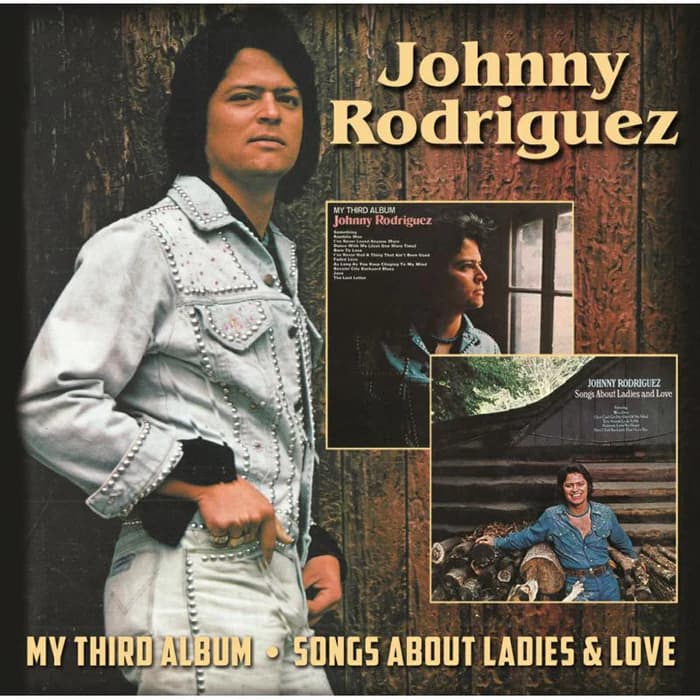
A tender confession of love worn thin by time, where memory lingers longer than hope and the heart learns to let go
When Johnny Rodriguez released Faded Love in 1975, the song arrived with a quiet authority that felt both timeless and deeply personal. Issued as a single from the album A Man Like Me, the recording rose to No. 3 on the Billboard Hot Country Singles chart, confirming that Rodriguez had found a way to bridge traditional country emotion with a voice shaped by lived experience. It was not a song that chased trends. It simply told the truth and trusted listeners to recognize it.
The roots of Faded Love reach far back into country music history. Written by Floyd Tillman in 1950, the song had already lived several lives before Rodriguez ever stepped into the studio. It was famously transformed into a Western swing standard by Bob Wills and His Texas Playboys, where it carried a sense of longing that danced just beneath the surface of its melody. Over the decades, many artists approached the song with reverence, but each interpretation revealed something different about the singer. When Johnny Rodriguez took it on, he stripped it back to its emotional core.
By the mid nineteen seventies, Rodriguez had already established himself as one of country music’s most expressive vocalists. His phrasing carried softness without weakness and sadness without self pity. On Faded Love, those qualities found the perfect setting. The arrangement is gentle and unhurried, allowing the melody to breathe. Steel guitar weaves through the song like memory itself, never demanding attention but always present.
What sets Rodriguez’s version apart is his understanding of restraint. He does not dramatize the pain. Instead, he lets it settle naturally into each line. The song speaks of love that has not ended in anger or betrayal, but in distance and time. The singer remembers affection that once felt certain and now feels unreachable. There is no attempt to reclaim it. Only an acknowledgment that it has faded, not vanished, but softened into something that can only be remembered.
The emotional power of Faded Love lies in its acceptance. Many heartbreak songs plead for return or rage against loss. This one does neither. It recognizes that love can be real and still slip away. That realization gives the song its quiet dignity. Rodriguez sings not as someone surprised by loss, but as someone who has had time to sit with it.
Its success on the charts reflected a moment when country music still made room for understatement. Reaching No. 3 was a testament not only to Rodriguez’s popularity, but to the enduring strength of songs that trust simplicity. At a time when production was becoming brighter and more polished, Faded Love stood firmly in tradition. It honored the past without sounding trapped by it.
The album A Man Like Me further reinforced Rodriguez’s image as an artist who understood emotional nuance. The record explored themes of identity, longing, and quiet resilience. Faded Love served as its emotional centerpiece, grounding the album in honesty. It felt less like a performance and more like a conversation remembered late at night.
Looking back now, Johnny Rodriguez’s interpretation of Faded Love feels like a passing of the torch. It carried the spirit of Floyd Tillman’s original sorrow and Bob Wills’ melodic grace, while adding a vocal intimacy that belonged entirely to Rodriguez. His voice does not overpower the song. It listens to it.
Today, Faded Love remains one of those recordings that does not announce itself loudly. It waits. When it is heard again, it brings with it the weight of things once felt deeply and now carried quietly. In that space between what was and what remains, Johnny Rodriguez found a song that continues to speak with remarkable clarity, reminding us that some loves do not disappear. They simply fade into memory, where they stay, unchanged and unresolved, for as long as the heart remembers.