
A Quiet Conversation About Love, Timing, and the Grace of Waiting Until Morning
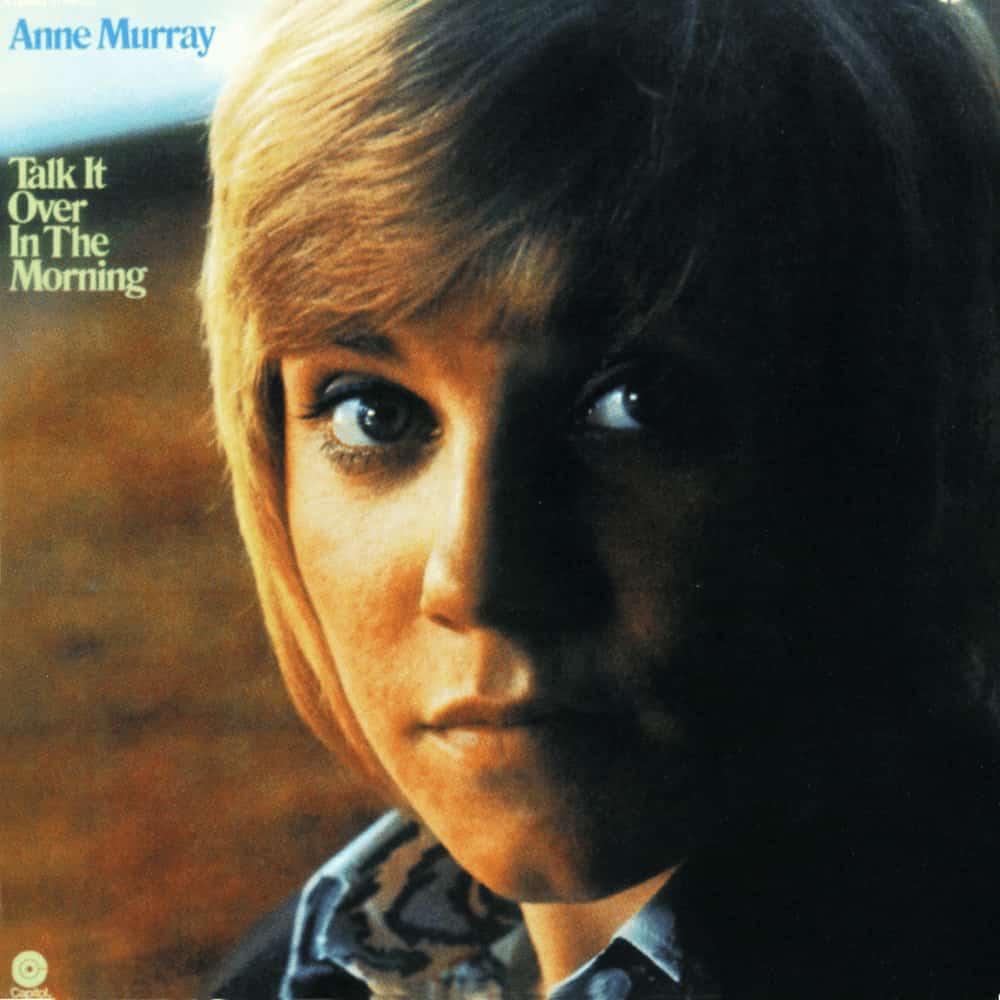
Released in August 1971, “Talk It Over in the Morning” stands as one of the most quietly decisive moments in Anne Murray’s early career. It was the first single from her album Talk It Over in the Morning, and it did not arrive with drama or spectacle. Instead, it entered the musical landscape the same way the song itself unfolds: gently, thoughtfully, and with emotional restraint. Upon release, the song reached No. 1 on Canada’s RPM Country Tracks chart, confirming Murray not merely as a crossover curiosity, but as a serious and trusted voice in country music. In the United States, it also performed solidly, climbing into the Top 5 on Billboard’s Hot Country Singles chart and finding a receptive audience on adult-oriented radio formats. These chart positions mattered, but they were never the real story.
The deeper importance of “Talk It Over in the Morning” lies in how clearly it defined Anne Murray’s artistic identity at a time when country and pop were negotiating their boundaries. The early 1970s were restless years. Music was often loud with change, full of urgency, protest, and emotional extremes. Against that backdrop, this song offered something almost radical in its calm. It suggested patience. It trusted silence. It believed that not every feeling needed to be resolved in the heat of the moment.
The song was written by Gene MacLellan, a fellow Canadian songwriter who understood Murray’s voice instinctively. MacLellan had already contributed to her breakthrough with “Snowbird,” and here again he crafted a lyric that felt conversational rather than theatrical. There is no melodrama in the song’s premise. Two people are at an emotional crossroads, perhaps after an argument, perhaps after a confession that arrived too late in the evening. The narrator does not demand answers. She asks for time. She suggests sleep, reflection, and the wisdom that sometimes arrives only with daylight.
What makes “Talk It Over in the Morning” endure is how naturally Anne Murray inhabits that emotional space. Her vocal performance is measured, warm, and deeply human. She does not push the lyric. She trusts it. There is a steadiness in her phrasing that conveys maturity without sounding resigned. This was a crucial distinction. Murray’s voice carried empathy, not defeat. She sounded like someone who had learned that love is not weakened by waiting, but often strengthened by it.
The arrangement reinforces this emotional clarity. Soft acoustic textures, understated rhythm, and a clean melodic line leave room for the lyric to breathe. Nothing intrudes. Nothing rushes. The production reflects a philosophy that many listeners, especially those who had lived through complicated seasons of life, recognized immediately. Problems are not always solved at night. Some truths require distance. Some conversations deserve the calm of morning.
For older listeners, the song resonated because it mirrored real experience rather than romantic fantasy. It acknowledged that relationships are built not only on passion, but on restraint, respect, and timing. The idea of postponing a difficult conversation was not avoidance; it was wisdom. That message felt honest in 1971, and it remains honest decades later.
Within Anne Murray’s broader catalog, “Talk It Over in the Morning” represents a turning point. It confirmed her ability to bridge country, pop, and adult contemporary audiences without compromising sincerity. She did not rely on vocal acrobatics or fashionable trends. She relied on tone, phrasing, and emotional intelligence. This song helped establish the template she would follow throughout the 1970s: music that felt personal, calm, and quietly reassuring.
Today, listening to “Talk It Over in the Morning” feels like opening a letter written in careful handwriting. It does not demand attention. It earns it. It reminds the listener that some of life’s most important decisions are not made in moments of noise, but in the quiet after. In that sense, the song remains timeless, not because it belongs to the past, but because it understands something enduring about the human heart.
 Music Legend