
A Quiet Song of Snow and Memory — “A Winter’s Tale” Reveals the Gentle, Reflective Side of David Essex in One of His Most Enduring Seasonal Performances
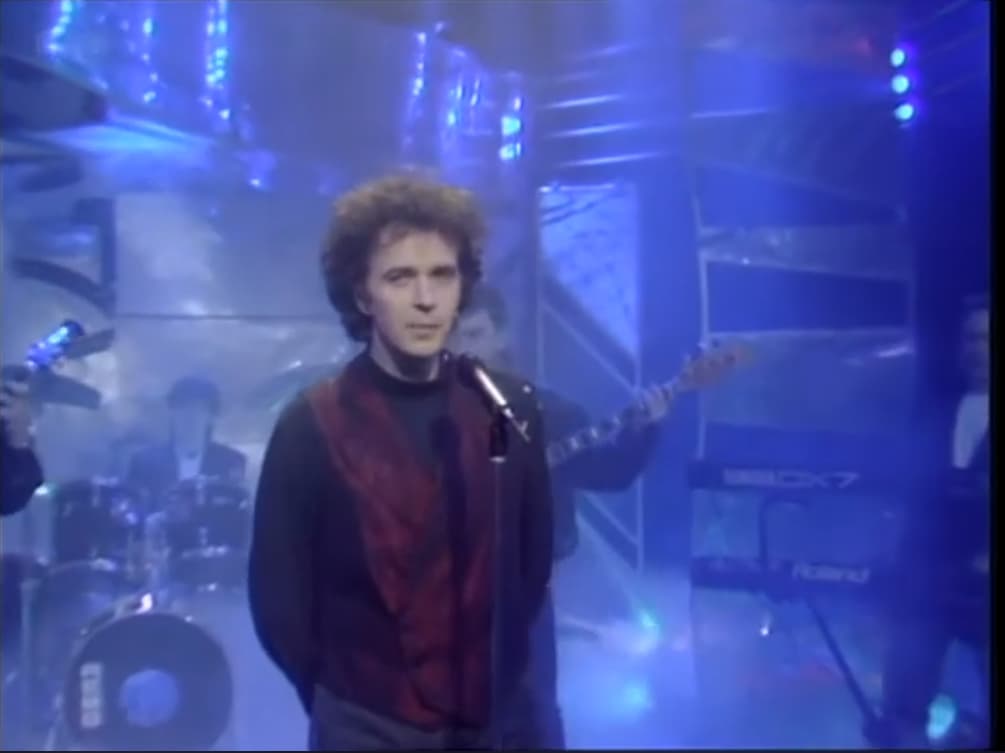
Among the many songs that arrive with the winter season, few carry the same quiet charm and reflective warmth as “A Winter’s Tale” by David Essex. When he performed the song on Top of the Pops on December 28, 1989, the moment felt less like a typical television appearance and more like a gentle return to a musical memory that had already lived in listeners’ hearts for several years. The performance reminded audiences why the song had become one of the most beloved winter recordings of the 1980s.
Originally released in December 1982, “A Winter’s Tale” quickly found a special place on the UK Singles Chart, climbing to No. 2 during the Christmas season that year. At a time when holiday charts were often dominated by novelty records or large charity collaborations, Essex’s recording stood apart with its simple sincerity. The song was included on his 1983 album The Whisper, a record that captured a more mature stage of his career, blending pop songwriting with gentle seasonal imagery.
Unlike many winter songs that focus heavily on festive celebration, “A Winter’s Tale” offers something more subtle. The lyric paints a picture of snow falling softly over quiet streets, a couple walking together beneath the glow of winter lights. There are no dramatic declarations or grand emotions. Instead, the song captures the stillness that sometimes arrives during the coldest months of the year.
That quiet atmosphere became one of the reasons the song resonated so strongly with listeners when it first appeared in 1982. By that point, David Essex was already well known for his energetic pop hits and his success both as a recording artist and as an actor. Earlier in his career he had scored major chart success with songs like “Gonna Make You a Star,” which reached No. 1 on the UK Singles Chart in 1974, and “Hold Me Close,” another UK No. 1 hit in 1975. These songs established him as one of the most recognizable pop figures in Britain during the mid-1970s.
Yet “A Winter’s Tale” revealed a different side of Essex’s musical personality. Instead of driving rhythms and bold hooks, the song unfolds with calm patience. Soft piano chords introduce the melody, joined by delicate orchestral touches that evoke falling snow and quiet streets under winter skies. The arrangement never rushes forward. It moves slowly, almost thoughtfully, allowing the listener to settle into the mood of the moment.
By the time David Essex returned to perform the song on Top of the Pops in December 1989, the recording had already begun its transformation into a seasonal classic. Unlike many pop songs that fade from memory after their initial chart run, “A Winter’s Tale” gradually developed a tradition of returning to radio playlists each December. The song’s gentle melody and nostalgic lyric made it perfectly suited for those reflective days between Christmas and the arrival of a new year.
Watching the 1989 performance reveals an artist who understood the quiet strength of the song. Essex delivers the vocal with calm assurance, never exaggerating the emotion. His voice carries a warmth that feels almost conversational, as though he is sharing a small winter memory rather than performing for a television audience.
Part of the song’s enduring appeal lies in its imagery. Snow falls softly, footsteps echo along silent streets, and the world seems to pause for a moment of quiet reflection. These simple details create a sense of peaceful nostalgia that listeners often associate with the closing days of the year.
There is also something universal within the song’s message. Winter has always carried a symbolic meaning in music and literature—a time when the world grows quiet, when people gather closer together, when memories feel especially vivid.
In “A Winter’s Tale,” David Essex captures that feeling with remarkable elegance. The song does not attempt to overwhelm the listener with spectacle. Instead, it gently invites them into a moment of calm.
As the melody fades and the final lines drift softly into silence, the listener is left with the same feeling that follows a peaceful winter evening: a quiet sense of warmth in the middle of the cold season.
And perhaps that is why “A Winter’s Tale” continues to return every December, year after year. Long after the holiday lights dim and the snow melts away, the song remains like a memory carried gently through the winter air.