
A Quiet Wish for Redemption, Where Time Softens Regret but Never Erases It
By the time David Essex brought “If I Could” to the stage during The Secret Tour Live in 2009, the song had already traveled far beyond its original moment of release, settling into something deeper than a simple pop ballad. First appearing on his 1975 album “All the Fun of the Fair,” the same record that produced his No. 1 UK single “Hold Me Close,” “If I Could” was never designed as a chart contender. It did not climb the rankings, nor did it carry the immediate commercial weight of his more recognizable hits. And yet, over time, it became something quieter, more enduring—a song that seemed to wait patiently for the years to catch up with its meaning.
In 1975, David Essex stood at a unique intersection of fame and reinvention. Having already achieved major success with songs like “Rock On” (which reached No. 5 on the Billboard Hot 100 and No. 3 in the UK), he could have continued along a path of energetic, youth-driven anthems. Instead, “All the Fun of the Fair” revealed a more reflective side, blending theatrical storytelling with a sense of emotional introspection that was less immediate, but far more lasting.
“If I Could” belongs to that quieter space within the album. It is not built around hooks or dramatic shifts. Instead, it unfolds gently, almost cautiously, as though aware that its message is not something to be rushed. The song speaks of longing—not the kind that reaches outward, but the kind that looks back. It imagines the possibility of change, of doing things differently, of understanding something too late.
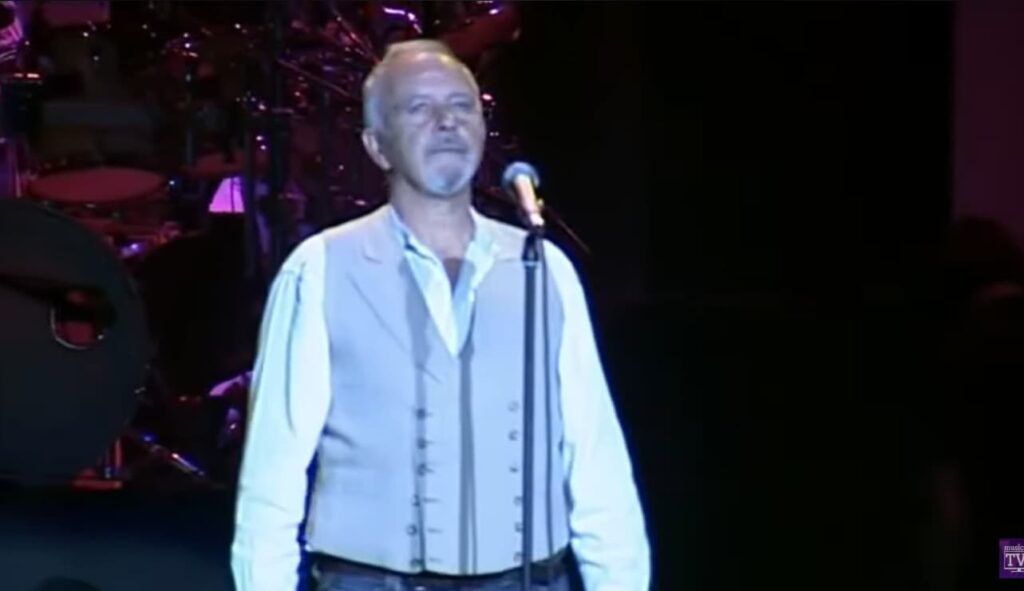
By 2009, during The Secret Tour Live, that message had transformed. The performance is no longer about imagining regret; it feels as though it has lived through it. David Essex, older now, carries the song with a different kind of weight. His voice, still recognizable, has gained a texture that cannot be taught—a slight roughness, a softness around the edges that gives each line a sense of lived experience.
There is something deeply affecting in the way he approaches the song on that stage. He does not attempt to recreate the exact sound of the original recording. There is no effort to preserve youth artificially. Instead, he allows the song to exist as it is now—changed, matured, shaped by time. The arrangement is restrained, often leaning toward acoustic simplicity, giving space for the words to resonate more clearly.
The meaning of “If I Could” rests in its conditional phrasing. It does not say what is, but what might have been. This subtle distinction is what gives the song its emotional depth. It is not about fixing the past—that is no longer possible. It is about acknowledging it, understanding it, and perhaps, in doing so, finding a quiet kind of peace.
There is a universal quality to that idea. Everyone, at some point, reaches back toward a moment that cannot be changed, wondering how it might have unfolded differently. David Essex does not dramatize that feeling. He presents it simply, allowing the listener to recognize it without instruction.
During the 2009 performance, there are moments where the phrasing slows, where a line is held just long enough to suggest that it carries more meaning now than it once did. These small shifts are where the true power of the performance lies. They reveal an artist who is not merely revisiting his work, but reinterpreting it through the lens of experience.
In the broader arc of his career, “If I Could” stands as a reminder that not all songs are meant to succeed immediately. Some are meant to wait—to gather meaning over time, to become more relevant as life itself unfolds. It is a different kind of success, one that cannot be measured by charts or sales, but by the quiet recognition it inspires.
As the performance draws to a close, there is no dramatic conclusion. The song does not resolve its question. It leaves it open, as it always has. And in that openness, there is something profoundly honest.
Because in the end, “If I Could” is not about finding answers. It is about accepting the absence of them. It is about understanding that some things remain unfinished, not out of failure, but simply because that is the nature of time.
And in that gentle, reflective performance from 2009, David Essex does not attempt to change the past. He simply stands beside it, giving voice to a feeling that has only grown quieter, deeper, and more real with every passing year.