
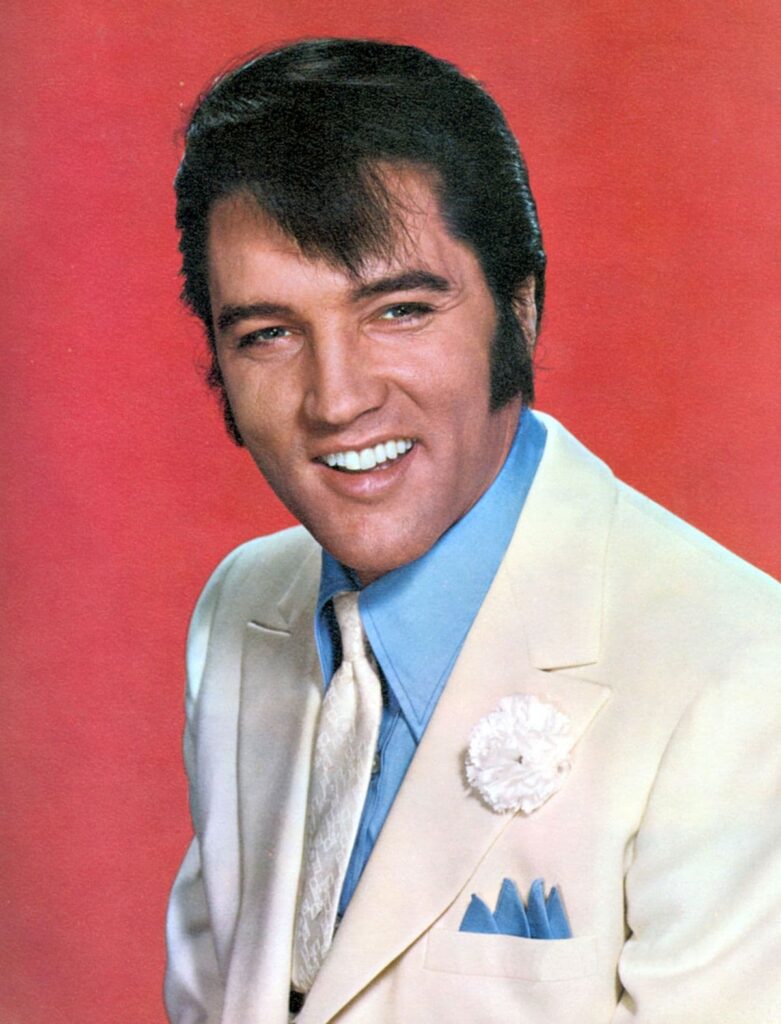
The Night Elvis Presley Sang to the World and Turned a Concert Into Global Mythology
On January 14, 1973, Elvis Presley walked onto a stage in Honolulu wearing the now-iconic white eagle jumpsuit and delivered what would become one of the most ambitious live broadcasts in music history: Aloha from Hawaii Via Satellite. More than just another concert, the performance represented a cultural event unlike anything popular music had attempted before. Beamed internationally through satellite technology to dozens of countries across Asia and Europe, the show transformed Presley from an American superstar into something even larger, a global symbol of entertainment at the exact moment television and modern celebrity culture were beginning to reshape the world.
By the early 1970s, Elvis had already survived multiple artistic reinventions. After dominating the 1950s with revolutionary rock-and-roll energy and enduring a creatively uneven Hollywood film period during the 1960s, Presley reclaimed his artistic relevance through the triumphant 1968 Comeback Special and a relentless return to live performance. Albums like Elvis Country (I’m 10,000 Years Old) and the live recordings from Las Vegas reintroduced audiences to a performer who sounded older, deeper, and emotionally more complex than the rebellious young star who first scandalized America. Yet Aloha from Hawaii elevated his career into an entirely different realm. It was not merely a comeback anymore. It was coronation.
The numbers surrounding the broadcast quickly became legendary. The concert reportedly reached over a billion viewers worldwide through delayed and live telecasts combined, an astonishing figure for its era. While exact audience estimates have long been debated, the cultural significance remains undeniable. In 1973, the idea of a live global concert broadcast still carried a sense of futuristic wonder. Satellite television itself felt almost miraculous. And there stood Elvis Presley, framed against glowing blue stage lights, singing as though the entire planet had briefly gathered into one room.
What makes the performance endure, however, is not simply its technological milestone. It is the emotional contradiction at the heart of the concert itself.
Onstage, Presley appears larger than life. His charisma remains overwhelming. Songs like “Burning Love,” “Suspicious Minds,” “Steamroller Blues,” and “American Trilogy” showcase a performer still capable of commanding extraordinary emotional intensity. His voice during this era possessed a dramatic richness absent from the youthful sharpness of the 1950s recordings. Age and physical strain had deepened his phrasing, giving even familiar songs an almost operatic gravity.
And yet beneath the spectacle, there are visible signs of exhaustion.
By 1973, Presley was already battling the physical and emotional deterioration that would increasingly define his final years. Prescription drug dependency, isolation, insomnia, and the crushing psychological weight of fame had begun taking a visible toll. That tension gives Aloha from Hawaii much of its haunting power today. The concert captures Elvis simultaneously at his most globally powerful and personally vulnerable. He appears almost suspended between triumph and collapse.
Perhaps nowhere is this duality more evident than during “American Trilogy.” The performance has become one of the defining moments of Presley’s later career because it reveals his ability to merge theatrical grandeur with genuine emotional conviction. As the arrangement swells through themes of loss, patriotism, and spiritual longing, Presley does not simply perform the song. He seems consumed by it. The moment transcends entertainment and enters something closer to ritual. Watching it now feels less like witnessing a concert and more like observing an artist trying to carry the emotional weight of his own mythology.
Part of what made Elvis uniquely suited for an event like Aloha from Hawaii was his instinctive understanding of emotional connection across cultural boundaries. Long before globalization became an industry buzzword, Presley’s music already blended influences from gospel, blues, country, rhythm and blues, and pop into something universally accessible. Audiences across continents recognized something emotionally immediate in his voice even when language barriers existed. The satellite broadcast merely formalized what his music had already accomplished organically for years.
Today, the concert remains one of the most iconic live performances ever preserved on film because it captures Elvis at the precise intersection of innovation, celebrity, vulnerability, and cultural dominance. Modern viewers often focus on the jumpsuit, the scale, or the historical significance, but the true emotional force of Aloha from Hawaii lies elsewhere.
It lies in watching a man who had already become myth still desperately trying to sing like a human being.
And for one extraordinary night in 1973, the entire world listened.
 Music Legend