
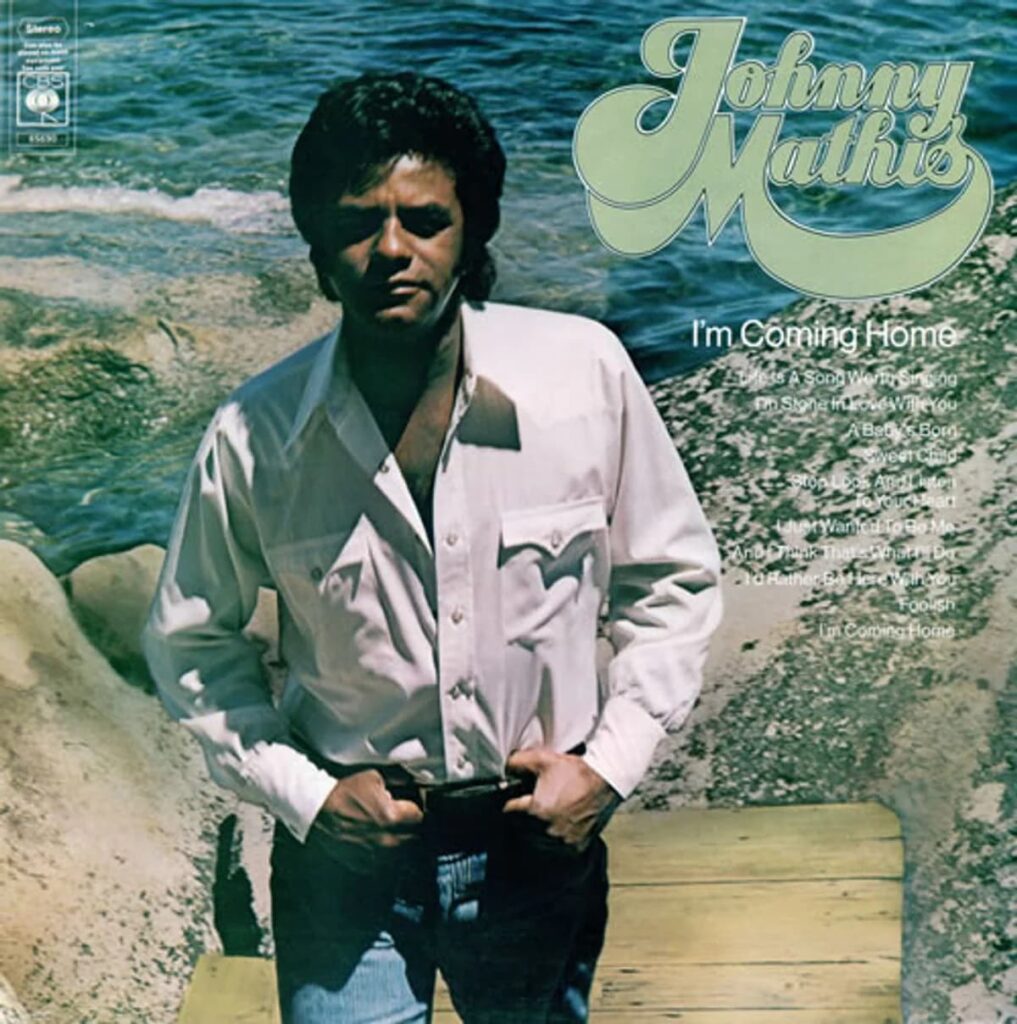
A song about return and reconciliation, where the long road inward finally leads back to the heart
When Johnny Mathis released I’m Coming Home in 1973, it arrived at a moment when popular music was filled with searching voices and unsettled emotions. Audiences had lived through a decade of social change, personal questioning, and musical experimentation. Against that backdrop, I’m Coming Home felt like a quiet answer rather than a bold statement. It spoke of return instead of escape, of emotional grounding instead of restless motion. Upon its release, the song quickly resonated with listeners, reaching No. 1 on the Billboard Easy Listening chart and climbing to No. 19 on the Billboard Hot 100, marking one of Johnny Mathis’s most significant commercial successes of the early nineteen seventies.
Recorded for the album I’m Coming Home, the song represented a subtle but important shift in Johnny Mathis’s career. By this point, he was already an established icon, known for romantic standards and velvet toned ballads that had defined an earlier era. Yet this recording did not rely on nostalgia alone. Instead, it met its time honestly, blending contemporary songwriting with the emotional clarity that had always been his strength. The production was modern but restrained, allowing his voice to remain at the center, calm and unforced, carrying a message that felt deeply personal.
The story behind I’m Coming Home is rooted less in spectacle and more in emotional truth. The song tells of someone who has wandered far, not only in distance but in spirit. It speaks to mistakes made, lessons learned, and the quiet realization that fulfillment is often found not in forward motion, but in return. There is no grand confession in the lyrics, no dramatic plea. Instead, there is certainty, spoken softly, that the journey has reached its end. In the hands of Johnny Mathis, that certainty becomes deeply reassuring.
Musically, the song balances warmth and restraint. The arrangement leans on gentle rhythms, understated strings, and a steady tempo that mirrors the emotional resolve of the narrator. There is a sense of forward movement, but it is unhurried, reflective. Johnny Mathis sings with maturity here, his voice slightly deeper, more seasoned, carrying the weight of experience without losing its signature clarity. Each phrase feels measured, intentional, as though he understands that the song’s power lies not in embellishment, but in honesty.
The meaning of I’m Coming Home extends beyond the literal idea of returning to a place. It speaks to emotional reconciliation, to the act of choosing connection over distance. Home in this song is not just a physical space, but a state of belonging, acceptance, and peace. It suggests that no matter how far one travels, there remains a pull toward what is familiar and true. This universal theme is what allowed the song to cross generational lines and find success on both pop and adult contemporary charts.
Within Johnny Mathis’s discography, I’m Coming Home stands as a testament to his adaptability as an artist. While many of his peers struggled to remain relevant in the changing musical landscape of the nineteen seventies, he embraced songs that reflected growth rather than resisting it. This track did not attempt to recreate past triumphs. Instead, it acknowledged time, change, and emotional evolution. That honesty is why the song still feels sincere decades later.
Listening to I’m Coming Home today feels like opening a quiet chapter in a long life story. It does not demand attention, but it rewards it. It reminds us that music can be a place of return, a familiar voice waiting patiently, ready to welcome us back. In Johnny Mathis’s gentle delivery, the song becomes more than a hit record. It becomes a moment of recognition, a reminder that sometimes the most meaningful journeys are the ones that bring us home.