
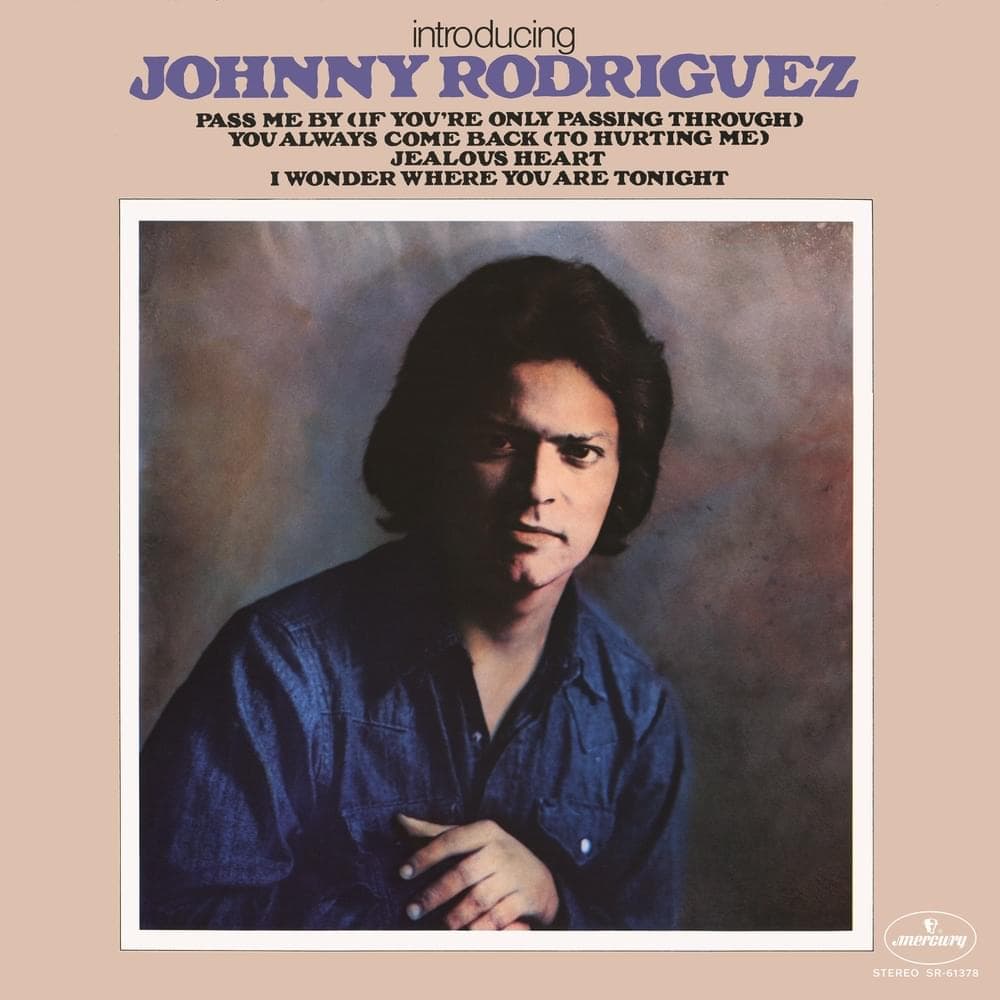
A late night confession shaped by distance and memory, where longing speaks louder than regret
When Johnny Rodriguez released I Wonder Where You Are Tonight in 1975, the song arrived with the quiet force of a thought that refuses to fade. It was not a dramatic breakup record or a declaration of heartbreak in flames. Instead, it was something far more intimate and unsettling: a late night question spoken into the dark, with no expectation of an answer. The song resonated deeply, rising to No. 1 on the Billboard Hot Country Singles chart, becoming one of the defining moments of Rodriguez’s career. It was featured on his 1975 album Just Get Up and Close the Door, an album that captured emotional restraint rather than excess.
By the mid 1970s, Johnny Rodriguez had already established himself as one of country music’s most emotionally precise voices. His phrasing carried a natural sadness, never exaggerated, never rushed. I Wonder Where You Are Tonight fit seamlessly into that identity. It sounded less like a performance and more like a private reflection that somehow found its way onto the radio.
The song tells its story through absence rather than action. There is no argument, no farewell scene, no explanation of why two people are no longer together. What remains is the echo. The narrator lies awake, wondering where the other person is, who they are with, and whether they ever pause to remember what once was. That uncertainty gives the song its weight. It is not grief in its rawest form, but something quieter and often more enduring: unresolved longing.
Musically, the arrangement is understated and deliberately sparse. Gentle acoustic guitar, restrained rhythm, and soft steel guitar lines create a sense of space, allowing the lyrics to breathe. Nothing intrudes on the mood. Johnny Rodriguez’s voice carries the song with remarkable control. He never raises it in desperation. Instead, he lets the question linger, trusting that silence can say as much as sound.
What makes I Wonder Where You Are Tonight especially powerful is its refusal to assign blame. There is no accusation, no bitterness, no demand for closure. The song accepts that some endings do not come with explanations. That emotional maturity set it apart from many country hits of the era and helped it connect with listeners who understood that not all losses announce themselves clearly.
The success of the song at No. 1 was not driven by novelty or production tricks. It succeeded because it spoke honestly. At a time when country music often balanced between traditional storytelling and commercial polish, Rodriguez delivered something that felt timeless. The album Just Get Up and Close the Door reflected that same sensibility. While it contained songs of warmth and optimism, I Wonder Where You Are Tonight stood as its emotional anchor, grounding the record in reflection rather than romance.
Behind the scenes, the song also marked a period when Johnny Rodriguez was transitioning artistically. His early hits often carried youthful urgency, but this recording revealed a deeper patience. It suggested a man who had learned that not every question can be answered, and not every feeling needs resolution to be valid. That perspective gave the song its quiet authority.
Over the years, I Wonder Where You Are Tonight has remained one of Rodriguez’s most enduring recordings. It is frequently cited as a prime example of how country music can convey emotional complexity without dramatic excess. Its influence can be heard in later generations of artists who favor understatement over spectacle.
Listening to the song today, its power has not diminished. If anything, time has deepened its meaning. It captures that familiar moment when memory surfaces unexpectedly, when a name returns uninvited, and when curiosity gently replaces pain. Johnny Rodriguez did not offer answers. He offered recognition. And in doing so, he created a song that continues to feel personal, honest, and profoundly human long after its first night on the charts.