
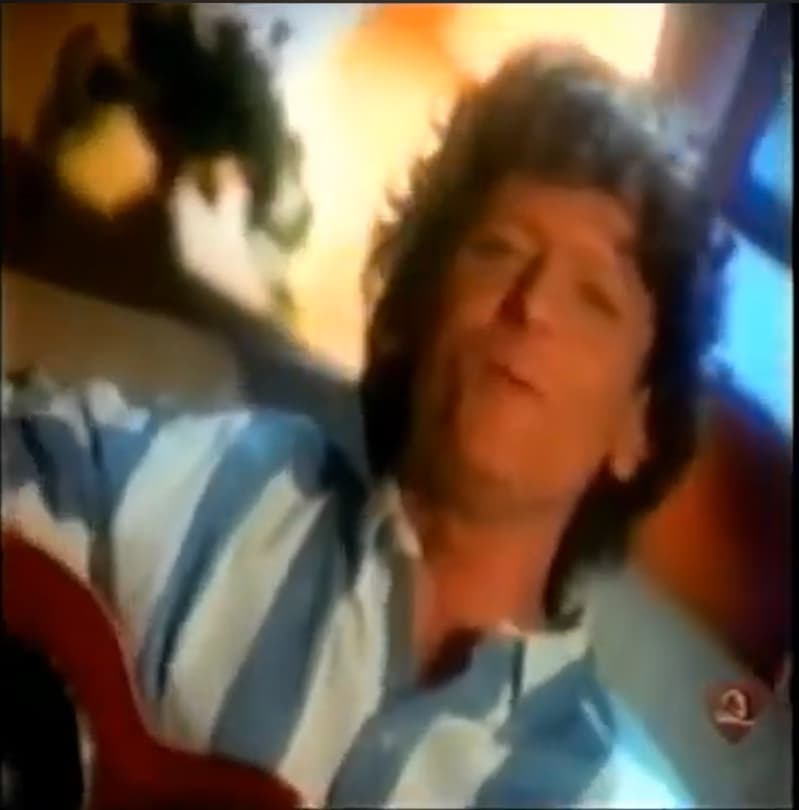
A quiet echo of understanding—where love is not declared loudly, but recognized in the soft repetition of truth
In 1979, when Johnny Rodriguez released “You Can Say That Again,” he was already a well-established figure in country music, a voice that had risen swiftly through the early 1970s with a string of remarkable hits. This particular song, however, marked a more reflective chapter in his career. It climbed to No. 2 on the Billboard Hot Country Singles chart, reaffirming his enduring connection with audiences at a time when country music itself was gently evolving toward a smoother, more polished sound.
The song was included on the album Rodriguez (1979), a project that showcased a matured artist—one who had moved beyond the youthful urgency of earlier hits like “Ridin’ My Thumb to Mexico” (No. 1, 1973) and “That’s the Way Love Goes” (No. 1, 1973), and into a space where emotion was expressed with greater subtlety and restraint. By the end of the decade, Rodriguez was no longer simply a rising star; he was a storyteller seasoned by experience, capable of conveying complex feelings with remarkable simplicity.
“You Can Say That Again” is, at its heart, a song about agreement—not the casual kind, but the deeply felt recognition that comes when two hearts finally understand one another. The title itself suggests repetition, but not redundancy. It implies affirmation, the quiet comfort of hearing something true spoken aloud, and knowing instinctively that it resonates. In a world where so much is uncertain, that kind of clarity becomes profoundly meaningful.
What makes the song particularly compelling is its emotional restraint. There is no dramatic confession, no sweeping declaration. Instead, Johnny Rodriguez delivers the lyrics with a calm assurance, as though he is recounting something already known, already felt. His voice carries a warmth that feels unforced, a natural ease that invites the listener to lean in rather than be overwhelmed.
The arrangement reflects this sensibility. Gentle instrumentation—steel guitar, soft rhythm, and understated orchestration—creates a backdrop that supports rather than competes with the vocal. It is music designed to be lived with, not merely heard. Each note seems to arrive exactly when it should, never rushing, never lingering too long. This balance is part of what gives the song its enduring appeal.
Behind the scenes, the late 1970s were a transitional period for many country artists. The genre was beginning to embrace elements of pop production, leading to what would later be known as the “countrypolitan” sound. Johnny Rodriguez, however, managed to navigate this shift without losing the authenticity that defined his earlier work. “You Can Say That Again” stands as a testament to that balance—modern in its polish, yet rooted firmly in traditional storytelling.
There is also a deeper layer to the song’s meaning when viewed through the lens of time. It speaks not just of romantic understanding, but of reflection—of looking back on moments shared, words exchanged, and realizing that some truths only become clear in hindsight. The repetition implied in the title begins to feel almost philosophical: a recognition that life itself often echoes, that certain feelings return, refined by experience.
Listening to “You Can Say That Again” today, one cannot help but feel a sense of quiet nostalgia. It is not the kind that overwhelms, but rather the kind that settles gently, like a familiar melody remembered after many years. The song does not demand attention; it earns it through sincerity.
In the end, Johnny Rodriguez offers something rare—a reminder that not all emotions need to be expressed with intensity to be profound. Sometimes, the most meaningful moments are those of quiet agreement, where words are few, but understanding is complete.
And so, the song lingers—not as a bold statement, but as a soft echo. A voice saying, simply and sincerely, that what has been felt once can be felt again… and perhaps understood even more deeply the second time.