
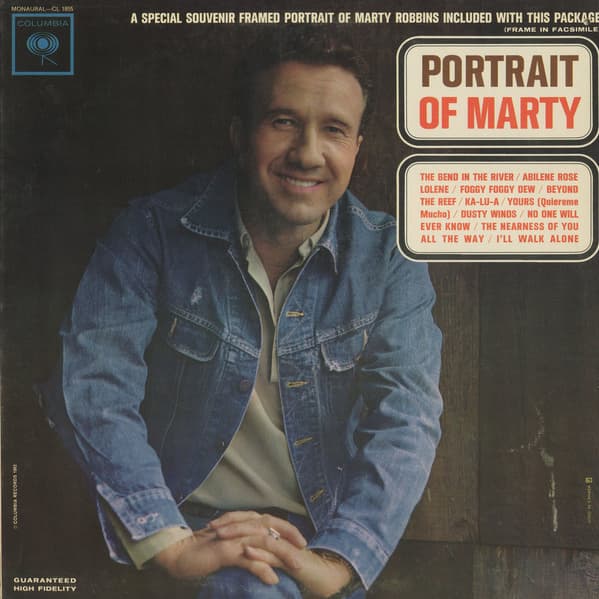
By 1978, Marty Robbins No Longer Needed to Prove Greatness — He Simply Walked on Stage and Became Country Music Itself
When Marty Robbins performed his celebrated medleys during the late 1970s, audiences were not merely watching a country singer revisit old hits. They were witnessing one of the last true masters of musical storytelling moving effortlessly through the many identities that had defined his extraordinary career. By 1978, Robbins had already spent more than two decades reshaping country music through Western ballads, romantic standards, rockabilly recordings, and crossover pop success. Yet what made performances like “Marty Robbins – Medley 1978” so unforgettable was not nostalgia alone. It was the astonishing ease with which Robbins reminded audiences just how vast his artistry truly was.
Unlike many performers whose careers become trapped within a single defining sound, Marty Robbins resisted limitation from the very beginning. Long before genre fluidity became fashionable, he moved naturally between styles without losing emotional authenticity. Songs like “El Paso,” “Big Iron,” and “Cool Water” established him as the cinematic voice of the American West, while recordings such as “A White Sport Coat (And a Pink Carnation)” revealed an entirely different side: youthful vulnerability wrapped inside polished country-pop elegance. By the late 1970s, that versatility allowed Robbins to approach medley performances not as simple hit compilations, but as living journeys through the emotional landscapes of his own career.
The 1978 performances carry a particularly rich emotional atmosphere because Robbins was entering a different stage of life by then. He no longer sang with the restless ambition of a rising star. Instead, there was a calm confidence in the way he carried himself onstage. His smooth tenor voice retained remarkable clarity, but age had added warmth and gravity beneath it. When he transitioned between songs during these medleys, the effect felt almost conversational, as though he were guiding listeners through shared memories rather than delivering rehearsed entertainment.
That emotional intimacy became one of Robbins’ greatest strengths as a live performer.
Part of what makes these medleys so compelling today is how naturally they reveal the breadth of American country music itself during the mid-20th century. Robbins embodied a generation of artists who viewed genre boundaries as flexible rather than restrictive. Within a single performance, he could move from tragic Western storytelling to tender romantic balladry without creating emotional dissonance. The transitions worked because every song carried the same underlying sincerity. Robbins approached each lyric as narrative rather than product.
And few artists in Nashville history understood narrative better than Marty Robbins.
His landmark 1959 album Gunfighter Ballads and Trail Songs permanently altered country music by proving that elaborate storytelling could become commercially dominant without sacrificing emotional depth. Songs like “El Paso” unfolded almost like short films, filled with danger, regret, longing, and fatalism. By 1978, audiences hearing those songs within medley performances were not simply revisiting radio hits. They were reconnecting with stories that had become deeply embedded in American musical culture.
There is also something uniquely moving about seeing Robbins perform these songs later in life because his voice carried visible affection for the material itself. Some veteran performers eventually seem detached from their biggest hits, treating them as obligations to audience expectation. Robbins rarely projected that fatigue. Even during medleys designed to move quickly through familiar classics, he sang with the warmth of someone who still respected the emotional connection listeners held toward the music.
That relationship between artist and audience became especially poignant during the late 1970s as country music itself was beginning to change dramatically. The polished “Urban Cowboy” era loomed ahead, commercial production styles were evolving rapidly, and many traditional forms of storytelling-centered country music were slowly fading from mainstream dominance. In that environment, Robbins’ medleys felt almost archival in the best possible sense, preserving the emotional richness of an earlier generation while still sounding fully alive.
Looking back now, “Marty Robbins – Medley 1978” represents far more than a collection of songs performed by a veteran entertainer. It captures a moment when one of country music’s last great traditional showmen stood before an audience carrying decades of musical history inside his voice. Every transition between songs feels weighted with memory: memories of radio broadcasts, dance halls, long highways, heartbreak, and an America that once gathered around voices like Robbins’ to make sense of its own emotions.
And perhaps that is why performances like this continue to resonate so powerfully decades later. Because when Marty Robbins stepped into a medley, he was never just revisiting old songs. He was reopening entire chapters of people’s lives.
 Music Legend