
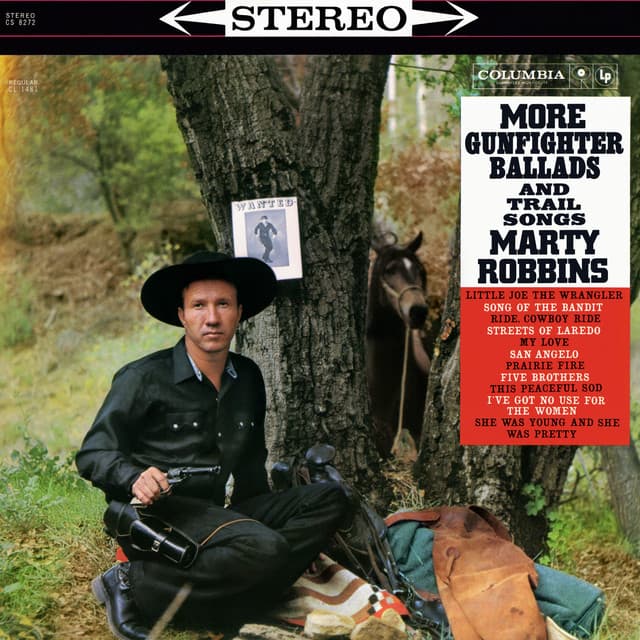
Marty Robbins – When The Work’s All Done This Fall: The Cowboy’s Quiet Farewell
In the heart of Marty Robbins’ legendary 1959 album, Gunfighter Ballads and Trail Songs, lies a track that transcends simple entertainment to become a piece of American folklore. “When The Work’s All Done This Fall” is perhaps the most famous “occupational” ballad of the Old West. While the album is often remembered for the high-stakes drama of “El Paso,” this song provides the grounding reality of the cowboy’s life—a life defined by grueling labor, simple dreams, and the ever-present shadow of mortality. It is a song for those who understand that the most important promises we make are often the ones we don’t live to keep.
To listen to Marty’s rendition is to hear a master storyteller paying his respects to the past. The story behind this song is one of ancient heritage; it was originally written as a poem by D.J. O’Malley in the 1890s, based on a real-life tragedy on a Montana cattle ranch. By the time Marty recorded it, the song had been passed down through generations of real ranch hands. Robbins, with his deep respect for Western history, stripped away the artifice of the recording studio to deliver a performance that feels as authentic as a campfire conversation on a cold night.
The story within the lyrics is a poignant tragedy of unfulfilled longing. It begins with a group of cowboys sitting around a campfire, talking of home. One “jolly” young puncher confesses that he’s tired of the wandering life; he plans to head home to see his mother—whom he left “all alone”—just as soon as the autumn roundup is over. It is a narrative of cruel irony. That very night, a storm breaks, the cattle stampede, and the young cowboy is crushed beneath his fallen horse. His final words are a plea to his comrades to send his earnings to his mother, for he knows he will never see the “fall” he so looked forward to.
The profound meaning of this ballad resonates deeply with a mature audience because it honors the solemnity of duty and the fragility of life:
- The Weight of Unfinished Business: It acknowledges the universal fear of leaving things unsaid or undone. For those of us who have lived through many “falls,” the song is a reminder to cherish the present and the people we intend to return to.
- The Reality of the Working Man: Unlike the romanticized “gunfighter,” this song honors the laborer. It reflects a nostalgia for an era where a man’s worth was measured by his stamina and his loyalty to his outfit, even in the face of danger.
- The Mother-Son Bond: The young man’s regret over leaving his mother is the emotional anchor of the song. It reflects a time-honored value system where “going home” was the ultimate goal of every weary traveler.
Marty Robbins delivers this performance with a voice that is remarkably understated and respectful. He avoids excessive sentimentality, letting the inherent tragedy of the lyrics speak for itself. His phrasing is rhythmic and steady, mirroring the “clip-clop” of a horse at a walk. The arrangement is quintessentially Gunfighter Ballads—featuring a simple, percussive acoustic guitar and the soft, mournful harmonies of the Jordanaires that rise like smoke into the night sky. For our generation, “When The Work’s All Done This Fall” is a timeless piece of Western history; it reminds us that while the work never truly ends, the spirit of the ones who did the labor lives on in the songs we sing.
 Music Legend