
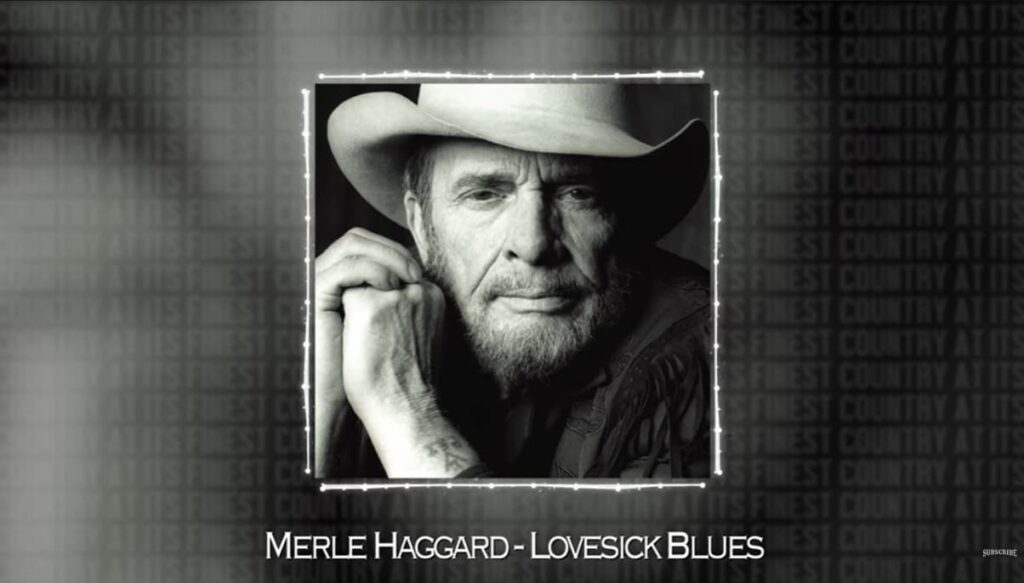
Merle Haggard and “Lovesick Blues”: A “High-Fidelity” Salute to the Hillbilly Shakespeare
In the sophisticated, gold-tinged landscape of 1977, Merle Haggard released a recording that would become a definitive “velvet” snapshot of his deep respect for country music’s foundations. Included on his tribute album “A Tribute to the Best Damn Guitar Player in the World (or, My Salute to Bob Wills),” and often performed as a nod to Hank Williams, Merle’s version of “Lovesick Blues” stands as a profound “high-level” exploration of the genre’s “twists and turns.” For those of us who have followed “The Poet of the Common Man” through the decades—from the rhythmic grit of the Bakersfield Sound to his status as a legendary architect of song—this recording was a visceral experience. It caught Merle at a vocal peak where his crystalline authority could navigate the delicate boundary between a jaunty yodel and the “velvet” ache of a restless heart.
The “story” behind “Lovesick Blues” is a masterclass in the “mini-movie” style of vocal versatility. While the song had been immortalized by Hank Williams decades earlier, Merle brought his own “high-level” sincerity to the narrative of a man “lovesick” and wandering. Backed by the polished, synchronized swing of The Strangers, he transforms the rhythmic, up-tempo melody into a study of emotional resilience. It was an era where Merle was reaching a point of absolute, “high-fidelity” sophistication, proving that “The Truth” in a voice didn’t need to be original to be authentic—it simply needed the impeccable timing and soulful phrasing that were his trademarks.
For the sophisticated listener who has navigated the “ebbs and flows” of several decades, hearing Merle sing this classic today is a deeply evocative experience. It brings back memories of wood-paneled dens, the soft glow of a record player’s light, and the realization that as we reach our silver years, the songs that defined our youth are the threads that bind our history together. The lyrics speak to a “qualified” reader who understands that true resilience is found in the ability to find joy even in the “quiet desperation” of a wandering spirit. For those of us who have seen the seasons turn, this performance is a profound mirror of our own history and the quiet dignity of a heart that remains “kin to the wind.”
The meaning of “Lovesick Blues” lies in its unapologetic celebration of tradition. Merle Haggard possessed the unique, almost magical gift of being a “vocal chameleon” who could inhabit the psyche of a rambler with total, soulful power. As we reflect on this 1977 masterpiece today, through the lens of our own decades of experience, we see it as more than just a cover; it is a testament to the enduring power of the narrative song to bridge the gap between generations. The Master Storyteller may have eventually walked his last earthly trail, but in the shimmering, rhythmic notes of this song, his “velvet” legacy remains eternally clear.
 Music Legend