
A Quiet Promise of Second Chances and the Courage to Love Again
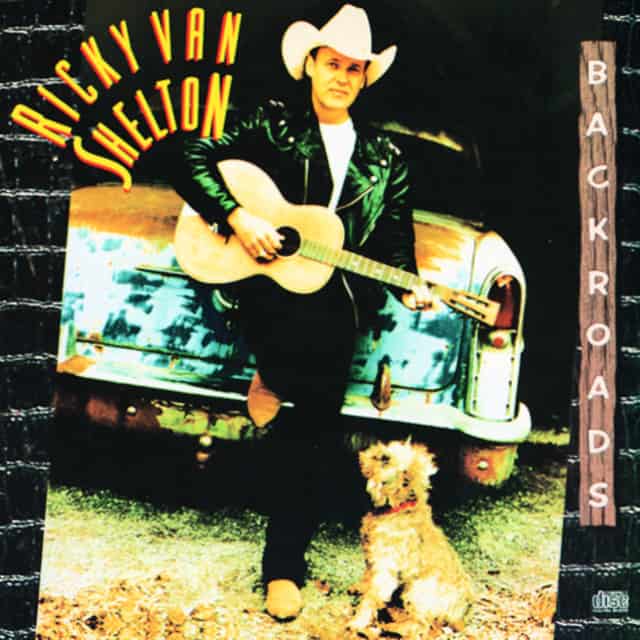
Released at a moment when traditional country storytelling still ruled the airwaves, If You’re Ever in My Arms Again stands as one of the most emotionally measured and mature recordings in Ricky Van Shelton’s catalog. Issued in 1991 as a single from the album Backroads, the song quickly resonated with listeners who valued restraint over spectacle and sincerity over excess. Upon its release, If You’re Ever in My Arms Again reached No. 1 on the Billboard Hot Country Songs chart, becoming one of Shelton’s final chart-topping singles and affirming his place among the most dependable voices of late 1980s and early 1990s country music.
By the time Backroads arrived, Ricky Van Shelton was no longer the new traditionalist sensation who had exploded onto the scene with Wild-Eyed Dream in 1987. He was an established artist with a reputation for consistency, emotional honesty, and a vocal style that never chased trends. The album itself climbed to No. 2 on the Billboard Top Country Albums chart and went on to achieve platinum certification, reflecting a career at full stride yet quietly approaching its final peak. Within that context, If You’re Ever in My Arms Again felt less like a hit engineered for radio and more like a personal statement delivered with calm conviction.
The song was written by Troy Seals and Max D. Barnes, two of Nashville’s most respected craftsmen. Both writers were known for songs that spoke plainly but cut deeply, and this composition is a masterclass in emotional economy. There are no dramatic ultimatums, no bitterness, no raised voices. Instead, the lyric unfolds as a gentle pledge. If fate allows love to return, it will be met with patience, tenderness, and gratitude rather than fear. That restraint is precisely what gives the song its lasting power.
Musically, the arrangement mirrors the sentiment. The production is clean and understated, anchored by traditional instrumentation and a tempo that allows every word to breathe. Ricky Van Shelton’s baritone does not beg or plead. It waits. His delivery suggests a man who has already endured loss, learned from it, and understands that real love does not need to shout. This was a quality Shelton brought to many of his recordings, but here it feels especially lived in.
The emotional center of If You’re Ever in My Arms Again lies in its understanding of time. It does not promise eternal happiness or claim that wounds vanish. Instead, it acknowledges distance, mistakes, and the quiet hope that sometimes survives despite them. The narrator does not demand forgiveness. He simply offers a better version of himself if the door ever opens again. For listeners who have lived long enough to know that love often arrives more than once, and rarely in the same form, the song feels deeply truthful.
In the broader arc of Shelton’s career, this single also carries a subtle historical weight. Shortly after this period of success, Ricky Van Shelton began stepping away from the spotlight, eventually retiring from recording and touring in the mid 1990s. Looking back, If You’re Ever in My Arms Again sounds almost like an unintended farewell to an era when country music still trusted silence, space, and emotional maturity.
Decades later, the song endures not because it was loud or revolutionary, but because it was honest. It respects the listener’s experience and assumes an understanding of love shaped by time rather than fantasy. If You’re Ever in My Arms Again remains a reminder that some of the most powerful moments in music are not declarations, but quiet promises whispered with sincerity and meant to last.
 Music Legend