
A youthful anthem that captures the restless heartbeat of a generation discovering freedom through sound and rhythm.
When Shaun Cassidy released “That’s Rock ’n’ Roll” in 1977, it arrived not merely as a cover, but as a carefully polished reflection of a musical spirit that had already begun to evolve. Originally written and recorded by Eric Carmen in 1975, the song had achieved notable success—reaching No. 3 on the Billboard Hot 100. Yet, in Cassidy’s hands, it transformed into something more immediate, more youthful, and perhaps more accessible to a new audience standing on the edge of late-1970s pop culture.
Cassidy’s version of “That’s Rock ’n’ Roll” also climbed to No. 3 on the Billboard Hot 100 in 1977, a remarkable feat that confirmed his growing presence in the music world. It was featured on his debut album, Shaun Cassidy, an album that would go on to achieve multi-platinum success. The timing of its release—paired with his rising fame from television—created a perfect convergence of media and music, allowing the song to resonate deeply across radio waves and living rooms alike.
But beyond chart positions and commercial triumphs lies the deeper essence of the song itself. At its core, “That’s Rock ’n’ Roll” is a declaration—simple, direct, and unpretentious. It speaks of fleeting moments, late-night drives, jukebox melodies, and the quiet rebellion embedded in everyday life. There is no grand philosophical statement here, yet in its simplicity, it reveals something profoundly human: the need to feel alive, even if only for a few fleeting minutes between dusk and dawn.
Cassidy’s vocal delivery is key to this emotional landscape. Where Eric Carmen’s original carried a slightly more reflective tone, Cassidy injects a sense of immediacy—his voice lighter, almost conversational, as though he is sharing a secret rather than performing a rehearsed piece. It is this quality that makes the song feel personal, as if it belongs not just to the artist, but to anyone who has ever found solace in music during uncertain times.
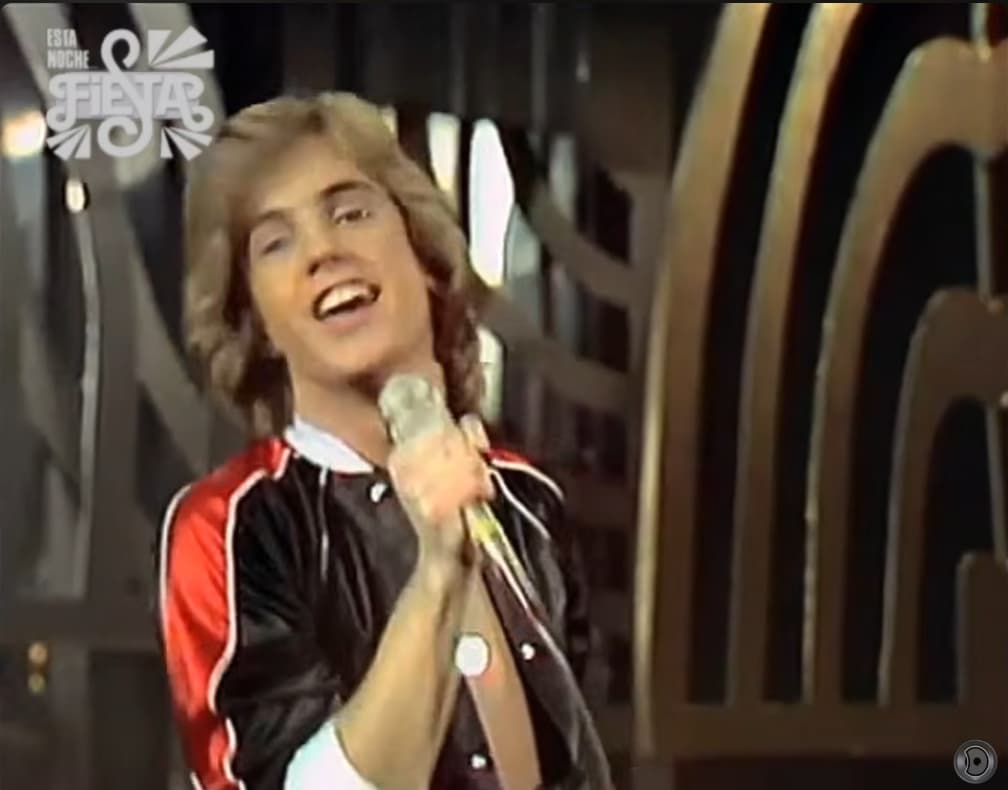
The televised performance from May 10, 1977, further cements this impression. Watching Cassidy perform, one senses not just a singer interpreting a song, but a young man embodying a cultural moment. The staging is modest by modern standards, yet it possesses an authenticity that is difficult to replicate. There are no elaborate effects, no overwhelming production—only the music, the performer, and the audience’s quiet understanding of what it all means.
In many ways, “That’s Rock ’n’ Roll” stands as a bridge between eras. It carries the DNA of early rock influences while embracing the polished sensibilities of late-1970s pop. It does not challenge the listener with complexity, nor does it demand deep analysis. Instead, it offers something far more enduring: a feeling. A memory. A gentle reminder of nights when the world seemed both vast and within reach.
There is also a subtle melancholy woven into its fabric. Beneath the upbeat tempo lies an awareness that such moments cannot last forever. The laughter fades, the music stops, and life moves on. Yet, the song suggests that perhaps this is precisely what gives those moments their value. Rock ’n’ roll, in this sense, is not just a genre—it is a fleeting state of being.
Looking back, Cassidy’s rendition of “That’s Rock ’n’ Roll” may not have redefined the genre, but it preserved something essential within it. It captured a snapshot of youth, of possibility, and of the quiet magic found in ordinary experiences. And perhaps that is why it endures—not because it is grand or revolutionary, but because it feels true.
In the end, the song leaves us with a simple understanding: sometimes, the most meaningful expressions are the ones that ask for nothing more than a moment of listening—and a willingness to remember.