
A Psychedelic Dream Painted in Simple Lines, Where Innocence and Uncertainty Drift Through Sound
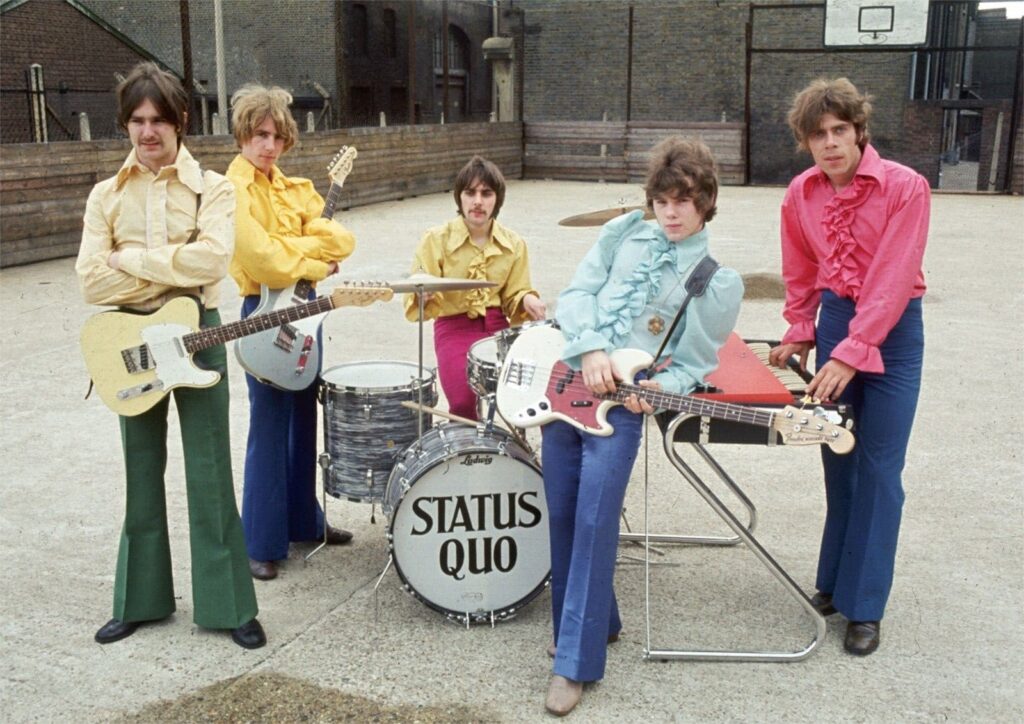
When Status Quo released “Pictures of Matchstick Men” in January 1968, few could have predicted that this understated, almost fragile piece of psychedelic pop would become their first great success — and, in many ways, their most enigmatic. The single climbed to No. 7 on the UK Singles Chart and reached an impressive No. 12 on the Billboard Hot 100 in the United States, giving the band an international breakthrough at a time when British music was already overflowing with innovation and competition. It would later appear on their debut album, “Picturesque Matchstickable Messages from the Status Quo”, a title as whimsical and curious as the song itself.
Written by Francis Rossi, the track stands apart not only within the band’s catalog, but within the broader landscape of late 1960s music. Before Status Quo became synonymous with their hard-driving boogie rock sound, before denim and relentless rhythm defined their identity, there was this — a quiet, almost introspective song that seemed to drift rather than drive. It was born during a period when the boundaries of popular music were expanding rapidly, shaped by the influence of psychedelia, art, and a growing desire to explore the inner workings of the mind.
The story behind “Pictures of Matchstick Men” is often told with a certain modesty. Francis Rossi reportedly wrote the song while working in a factory, sketching out ideas in the margins of ordinary life. The title itself was inspired by the paintings of L. S. Lowry, whose distinctive “matchstick men” figures captured scenes of industrial England with a simplicity that was both childlike and deeply evocative. That influence can be felt throughout the song — in its imagery, in its sense of distance, in the way it observes rather than declares.
Musically, the track is defined by its restraint. The guitar, processed through a phasing effect, creates a shimmering, almost dreamlike texture that feels suspended in time. The rhythm is steady but never forceful, allowing the melody to unfold at its own pace. And then there is the vocal — soft, slightly detached, carrying a sense of quiet introspection. Status Quo, at this early stage, were not trying to overwhelm the listener. Instead, they invited them into a space that felt personal, almost private.
Lyrically, the song resists easy interpretation. It speaks of images, of repetition, of something seen again and again without fully understanding why. There is a subtle unease beneath the surface, a suggestion that what is being observed is not entirely comforting. And yet, it is never expressed in dramatic terms. The emotion remains understated, almost elusive, as if the song itself is unsure of what it wants to reveal.
This ambiguity is part of what gives “Pictures of Matchstick Men” its lasting power. It does not demand attention; it lingers. It allows the listener to bring their own memories, their own reflections, into its quiet framework. Over time, it becomes less about the original context and more about the feeling it evokes — a sense of looking back, of trying to make sense of something that once seemed clear but has since become distant.
In the years that followed, Status Quo would move decisively away from this sound. They would find enormous success with a more direct, energetic style, building a reputation as one of the most consistent and enduring bands in rock music. And yet, this early recording remains — a reminder of a different path, a different voice, one that existed briefly before being set aside.
Listening to “Pictures of Matchstick Men” now, there is a certain stillness that stands in contrast to much of what came after. It feels like a moment captured before everything accelerated, before identities were firmly established. There is something almost fragile in its construction, as though it could fade at any moment, leaving only the impression it made behind.
And perhaps that is its true significance. Not just as a hit single, not just as the beginning of a long career, but as a piece of music that captures uncertainty itself — the feeling of standing at the edge of something not yet defined, looking out at a landscape that is both familiar and strangely distant. In that space, Status Quo created something rare: a song that does not insist on being understood, but instead invites quiet reflection, lingering long after the final note has disappeared.