
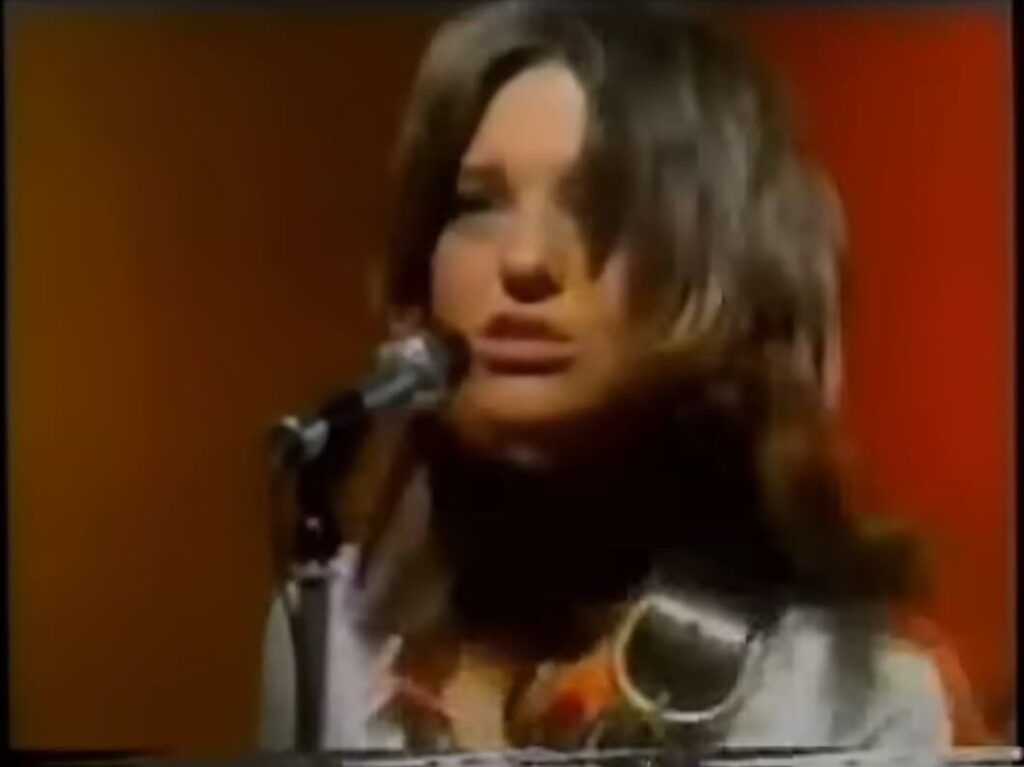
A roaring declaration of independence and speed, “Daytona Demon” captures the restless spirit of youth racing against time, freedom, and expectation
When Suzi Quatro released “Daytona Demon” in 1973, she was already carving out a space that few dared to occupy. Coming off the success of her breakthrough hit “Can the Can,” she followed quickly with this high-octane single, which climbed to No. 14 on the UK Singles Chart. While it did not surpass the explosive chart-topping success of its predecessor, “Daytona Demon” solidified her presence as a formidable force in the early 1970s rock landscape—a landscape still largely dominated by men.
The track was later included on her self-titled debut album, “Suzi Quatro” (1973), a record that introduced the world to a new kind of rock star—one dressed in leather, bass guitar slung low, voice sharp with attitude, and entirely unapologetic. Produced by the hit-making duo Mike Chapman and Nicky Chinn, the song carries their signature blend of glam rock energy and pop sensibility, but it is Quatro’s personality that gives it its enduring pulse.
The story behind “Daytona Demon” is rooted in imagery rather than narrative. It evokes the American fascination with speed, cars, and rebellion—particularly the legendary Daytona racing culture. Yet this is not a song about motorsport in any literal sense. Instead, the “demon” becomes a metaphor, a symbol of an untamed spirit, of someone who cannot be slowed down or confined. There is a sense of danger woven into the rhythm, a feeling that the road ahead is uncertain but irresistible.
One cannot speak of “Daytona Demon” without acknowledging its place in the early evolution of music videos. Often referred to as “The Very First Clip Ever” in connection with Quatro’s early promotional visuals, the song was accompanied by one of the earliest forms of what would later become the modern music video. These clips were simple by today’s standards—performance-based, raw, and unpolished—but they carried a certain immediacy, a sense of presence that felt almost intimate. Watching Quatro perform in those early recordings, there is a striking authenticity: no elaborate staging, no digital gloss, just a musician fully immersed in her sound.
Musically, the song is driven by a relentless rhythm. The bassline—Quatro’s own instrument—anchors the track with a gritty, almost mechanical force, while the guitars slice through with sharp precision. Her vocal delivery is confident, slightly defiant, and tinged with a playful sneer that became her trademark. There is no excess here, no unnecessary ornamentation. Everything serves the forward momentum, as if the song itself refuses to slow down.
Lyrically, “Daytona Demon” is sparse, almost minimalistic, but that is precisely its strength. It leaves space for interpretation, allowing listeners to project their own sense of escape, of longing, of rebellion. It speaks to a time when the open road symbolized possibility, when movement itself felt like a form of liberation. There is something deeply nostalgic in that idea now—the notion that freedom could be found simply by driving fast enough, far enough, away from whatever held you back.
Looking back, Suzi Quatro’s impact goes far beyond chart positions. With songs like “Daytona Demon,” she helped redefine what it meant to be a woman in rock music. She did not ask for acceptance; she demanded it through sheer presence and talent. Her influence can be traced through generations of artists who followed, many of whom have cited her as a pioneer.
Listening to “Daytona Demon” today feels like opening a time capsule. The sound is unmistakably of its era, yet the energy remains undiminished. It carries with it the echo of a moment when rock music was still discovering new shapes, new voices, new possibilities. And in that moment, Suzi Quatro stood at the wheel, pressing forward, unafraid of the speed, unafraid of the road ahead.
There is a certain beauty in that kind of fearlessness—a reminder that sometimes, the most important journeys are not about where you arrive, but about the courage to keep moving.