
A Quiet Declaration of Love, Pride, and Plain Truth in Country Music
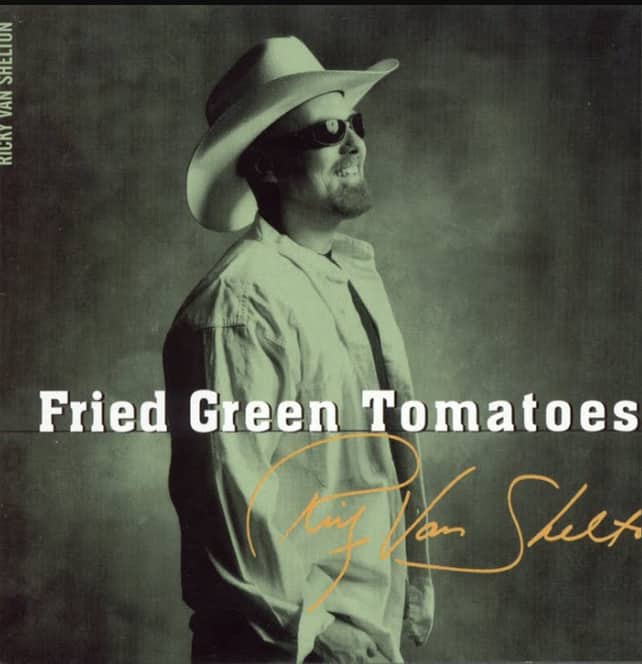
“All I Have to Offer You Is Me” stands as one of the most unadorned and emotionally honest declarations ever written in classic country music. The song is best known through Charley Pride, who first recorded it in 1969 and carried it to the very top of the Billboard Hot Country Singles chart in early 1970, marking one of the defining moments of his remarkable career. Decades later, the song found renewed life through Ricky Van Shelton, whose respectful and deeply felt interpretation appeared on his 2000 album Fried Green Tomatoes. Though Shelton’s version was not released as a single and did not chart, its presence in his catalog reveals much about his artistic identity and his reverence for country music’s emotional core.
When Charley Pride released “All I Have to Offer You Is Me”, he was already reshaping the landscape of country music. Written by Dallas Frazier and A.L. “Doodle” Owens, the song arrived at a time when Pride was breaking racial barriers while quietly redefining what sincerity sounded like in Nashville. The single reached number one on the country charts and became one of Pride’s signature recordings, reinforcing his image as a singer who did not need spectacle or excess to make a lasting impression. The song’s success was rooted in its restraint. There was no grand promise, no fantasy of wealth or conquest, only the plainspoken truth of a man offering himself honestly, without illusion.
At its heart, “All I Have to Offer You Is Me” is a song about humility and emotional courage. The narrator does not disguise his limitations. He admits he has no riches, no castles in the sky, no guarantees of an easy life. What he offers instead is constancy, loyalty, and presence. This emotional posture was especially powerful in the late 1960s, when country music was often caught between traditional values and the changing expectations of a restless world. The song did not resist change by shouting. It resisted by whispering something timeless: love, if it is real, begins with honesty.
Ricky Van Shelton, long admired for his smooth baritone and traditionalist instincts, returned to this song three decades later on Fried Green Tomatoes, an album released in 2000. By that point, Shelton was no longer chasing chart dominance. His earlier career had already produced multiple number one hits and established him as one of the leading voices of late 1980s and early 1990s country music. Including “All I Have to Offer You Is Me” on this album was not an attempt to revive a hit, but rather an act of musical reflection. Shelton approached the song with maturity, allowing the lyrics to breathe and the melody to unfold gently, as if spoken rather than performed.
Shelton’s interpretation carries a slightly different emotional weight from Pride’s original. Where Pride’s version feels like a young man laying his cards on the table, Shelton sounds like someone who has lived long enough to understand the cost of making such an offer. The simplicity remains, but it is tinged with experience. This subtle shift gives the song renewed depth, demonstrating how great country compositions grow richer as time passes and voices change.
The enduring power of “All I Have to Offer You Is Me” lies in its refusal to embellish love with false promises. It speaks to a generation shaped by hard work, patience, and earned trust. The song does not ask for admiration. It asks for understanding. In doing so, it captures one of country music’s most enduring virtues: emotional truth delivered without pretense.
Across decades, through Charley Pride and Ricky Van Shelton, this song remains a quiet reminder that the most meaningful offerings are often the simplest. In a genre built on stories of real lives and real choices, “All I Have to Offer You Is Me” endures not because it reached number one, but because it continues to sound like something worth saying, even after all these years.
 Music Legend