
A drifting heart in search of belonging: “Rolling Stone” by David Essex reflects the restless soul of a man who keeps moving, yet never quite arrives
There is a different shade of emotion in “Rolling Stone” by David Essex—one that feels less like the stylized mystery of “Rock On”, and more like a quiet confession carried on the wind. Released in 1975 as part of the album “All the Fun of the Fair”, the song did not reach the towering chart heights of his earlier hits such as “Gonna Make You a Star” (UK No. 1 in 1974), yet it occupies a deeply reflective corner of Essex’s musical identity. It is one of those songs that may not dominate the charts, but lingers in memory with a peculiar, almost personal resonance.
By the mid-1970s, David Essex had already established himself as more than just a pop figure. He was an artist navigating between glam rock visibility and introspective songwriting. “Rolling Stone” emerges from this transitional space—a song that strips away some of the theatrical shine and replaces it with something more grounded, more human. It speaks not of stardom itself, but of the emotional cost that often accompanies a life in constant motion.
The title alone carries a long musical lineage. The phrase “rolling stone” has echoed through blues, folk, and rock traditions for decades, often symbolizing a restless spirit, someone unable—or unwilling—to settle. In Essex’s interpretation, however, the idea takes on a softer, more introspective tone. This is not the defiant wanderer of earlier blues mythology, but a figure marked by quiet longing, someone who moves not out of rebellion, but מתוך an inability to find stillness.
Listening to “Rolling Stone”, one immediately notices the warmth in Essex’s vocal delivery. There is a gentle weariness in his voice, as though each line carries the weight of experience. Unlike the hypnotic minimalism of “Rock On”, this song leans into melody with a more traditional structure, allowing the listener to follow its emotional arc with ease. The arrangement is understated, giving space for the lyrics to breathe and for the sentiment to unfold naturally.
The meaning of the song reveals itself gradually. It speaks of movement, of roads taken and perhaps regretted, of connections that never quite rooted themselves deeply enough to last. There is a sense of reflection here—of looking back rather than forward. And in that reflection, one senses both acceptance and a quiet sadness. The life of a “rolling stone” is not glamorized; it is simply acknowledged for what it is.
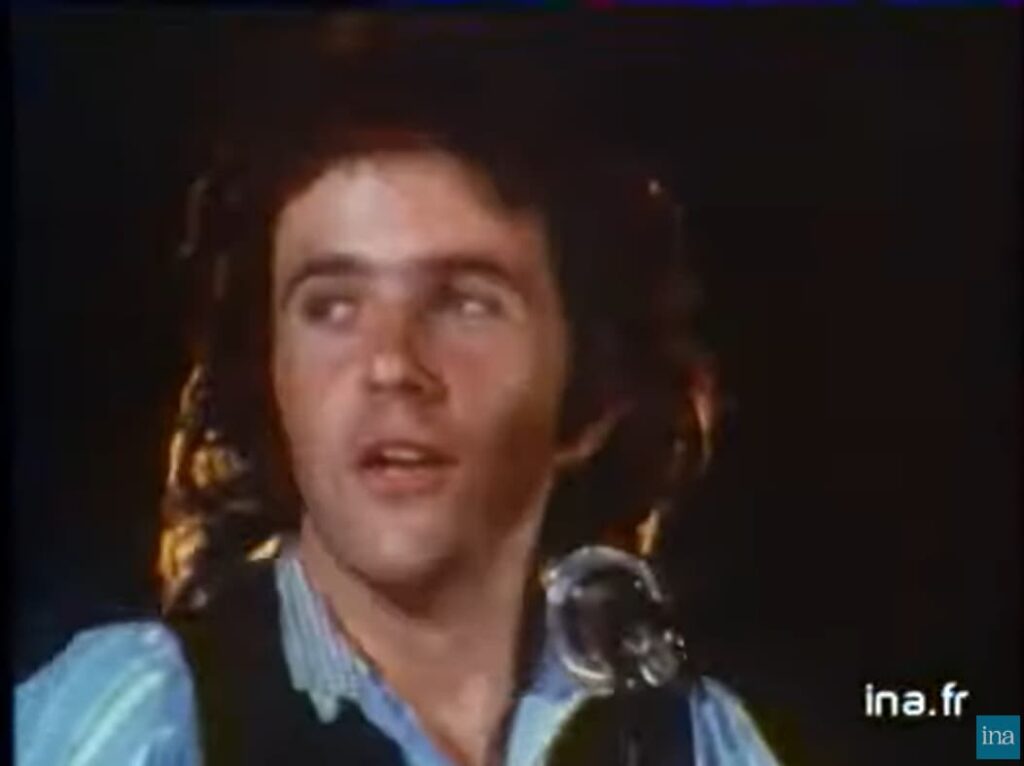
Archival television performances, particularly those preserved by INA, offer a fascinating glimpse into how David Essex presented this song to audiences beyond the recording studio. On French television stages, there is a noticeable intimacy in his performance style. He does not rely on elaborate gestures or dramatic flourishes. Instead, he stands almost still, allowing the song’s emotional core to carry the moment. It is a performance approach that feels honest—unadorned, yet deeply affecting.
There is something profoundly nostalgic about revisiting “Rolling Stone” today. It evokes a time when songs were allowed to be contemplative, when not every track needed to declare itself loudly to be heard. The pacing is gentle, the emotion sincere. It invites the listener not to be impressed, but to feel—to sit quietly with the music and let it stir something within.
In the broader context of David Essex’s career, the song serves as a reminder of his versatility. While he could easily command attention with chart-topping hits and charismatic performances, he was equally capable of turning inward, crafting songs that spoke to more private emotions. “Rolling Stone” belongs to that quieter side of his artistry—a side that perhaps reveals more about the man behind the fame than any headline ever could.
And perhaps that is why the song endures, even without the weight of major chart statistics behind it. It resonates because it feels real. It reflects a universal truth: that movement, no matter how constant, does not always lead to fulfillment. Sometimes, it simply becomes a way of life.
In the end, “Rolling Stone” is less about the journey itself and more about the feeling that accompanies it—the subtle, persistent awareness of something left behind, something not quite found. Through David Essex, that feeling is given a voice—soft, reflective, and lingering long after the music fades.