
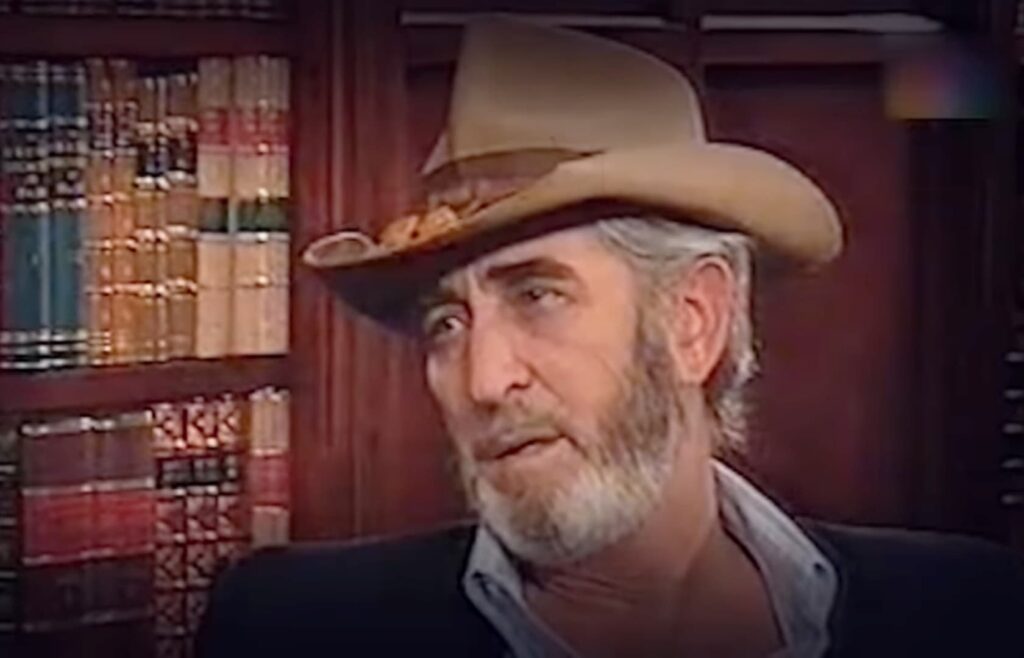
Behind Don Williams’ Quiet Legacy Was a Life Defined by Two Worlds: Fame on Stage and Peace at Home
For decades, Don Williams was known as country music’s “Gentle Giant,” a man whose calm voice and understated presence seemed untouched by the turbulence that often followed fame. Songs such as “You’re My Best Friend,” “I Believe in You,” and “Lord, I Hope This Day Is Good” made him one of the most beloved artists in country music history. Yet behind the sold-out concerts, chart-topping records, and international acclaim was another life that few people ever truly saw.
A recently resurfaced discussion about Williams’ career has reminded fans that for nearly thirty years, he quietly balanced two very different worlds. One was the public life of a country superstar whose music comforted millions. The other was the deeply private life of a man who never seemed entirely comfortable with celebrity itself.
That contrast may be the most fascinating part of his story.
While many performers spent their careers chasing bigger stages, brighter spotlights, and greater visibility, Williams often appeared to be moving in the opposite direction. Fame arrived, but he never seemed eager to embrace everything that came with it. Friends and colleagues frequently described him as reserved, humble, and happiest when surrounded by family rather than publicity.
The tension between those two identities became increasingly visible as the years passed. Even at the height of his success, Williams valued simplicity over spectacle. His music reflected that philosophy. Instead of dramatic vocal flourishes or elaborate production, his recordings felt like conversations between old friends. Listeners trusted him because he sounded genuine.
That authenticity helped fuel one of the most remarkable runs in country music history. Between the mid-1970s and early 1990s, Williams became one of the genre’s most consistent hitmakers, placing dozens of singles in the Top 10 and building a global audience that extended far beyond the United States.
Yet success carried a cost.
As he grew older, health challenges began to make touring increasingly difficult. Williams battled respiratory issues, including emphysema, while also dealing with physical limitations that made life on the road more demanding. In 2006, he announced his retirement from touring, only to return several years later after realizing how much he missed the connection with live audiences.
That return produced late-career projects such as “And So It Goes” and “Reflections,” albums that demonstrated his voice had lost none of its warmth or emotional power. But even then, there was a sense that Williams was carefully weighing two competing desires: the joy of performing and the peace he longed to find at home.
Looking back today, those years feel especially poignant.
What once appeared to be a simple retirement story now seems more like a lifelong balancing act between public duty and private contentment. The man fans saw on stage was genuine. So was the man who quietly stepped away from it.
The emotional weight of that story has only grown since Williams’ passing in 2017. For many listeners, his music remains tied to memories of family gatherings, long drives, small-town evenings, and simpler times. His songs never demanded attention. They offered companionship.
Perhaps that is why his legacy endures.
In an era increasingly defined by noise and self-promotion, Don Williams built a career through restraint, kindness, and sincerity. He showed that a performer did not need to be loud to be unforgettable.
Today, when fans revisit his recordings, they hear more than a smooth voice and timeless melodies. They hear the story of a man who spent decades living between two worlds, carrying the responsibilities of fame while never losing sight of the quiet life he cherished most.
And in many ways, that may be the most remarkable thing about Don Williams. The superstar and the private man were never separate people at all. They were simply two sides of the same gentle soul.